Miami opens Reefline, underwater sculpture park doubles as coral reef
A 22-car underwater traffic jam off Miami Beach is meant to grow into a 7-mile reef, a test of whether art can also rebuild habitat.

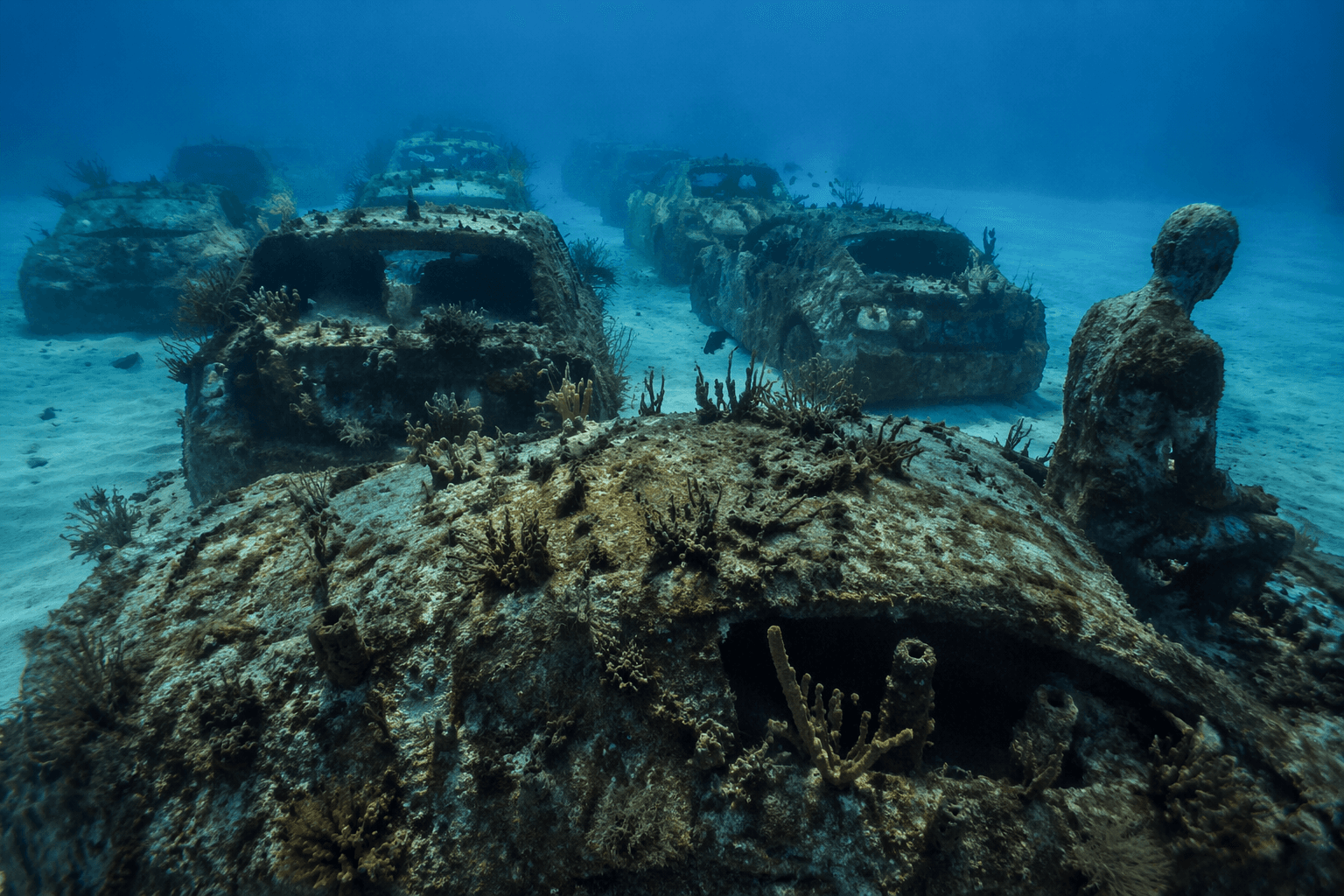
Miami Beach has turned a stretch of open water into a wager on climate adaptation, public art and tourism at once. Reefline, a planned 7-mile underwater sculpture park, snorkel trail and hybrid reef, has begun with a surreal traffic jam of 22 life-sized concrete cars set about 20 feet below the surface and roughly 780 feet offshore between 4th and 5th Streets.
The first installation, Concrete Coral by Leandro Erlich, was lowered from a 159-foot construction barge in two deployment windows in October 2025. The cars are marine-grade concrete, and organizers said the structure is expected to be seeded with 2,200 corals grown at the Miami Native Coral Lab in Allapattah using Coral Lok technology. City officials said fish were already beginning to gather around the piece, an early sign they hope will repeat across the larger corridor.
Reefline’s supporters are casting the project as more than a photo stop. Miami Beach Mayor Steven Meiner has described healthy reefs as a long-term economic safeguard, arguing that living coral can help reduce storm surge and erosion. That climate claim matters because the site once held a natural coral reef that vanished beginning in the 1970s as sand was repeatedly added to build and maintain Miami Beach. Reefline is trying to replace some of what was lost, not with a pure restoration project, but with an engineered blend of sculpture, habitat and coastal protection.
Ximena Caminos, the Argentinian-born curator behind the project, has spent years building that argument into a civic platform. Reefline received early backing from the Knight Foundation’s Knight Arts Challenge in 2019, and Miami Beach voters approved a $5 million bond in 2021. The city later said it received a $5 million grant in November 2022 through its Arts & Culture General Obligation Bond, and that the full 11-phase plan is seeking $40 million to extend the underwater corridor across Miami Beach.
The science arm is built around Colin Foord, Reefline’s director of science and the manager of the Miami Native Coral Lab, where thousands of corals are being grown for the project. That laboratory pipeline is central to Reefline’s claim that it can do more than decorate the seafloor. The project says it aims to enhance marine ecosystems, create new marine habitats and inspire global ocean stewardship, a test that will ultimately be judged by whether the corals take hold, fish life thickens and the reef structure proves useful in a coast increasingly exposed to warming seas and rising water.
Reefline is also being sold as a destination, not just an intervention. Caminos and master planner Shohei Shigematsu of OMA have framed it as a model that joins art, science, education and community action, with Miami positioned as a place where eco-tourism and cultural innovation overlap. The larger question is whether that formula can scale beyond Miami Beach, to other vulnerable coastlines where cities need projects that can attract visitors, absorb environmental stress and justify the cost of building into the sea.
Know something we missed? Have a correction or additional information?
Submit a Tip