Micah Lasher wins crowded Manhattan primary, Schlossberg finishes third
Micah Lasher won Manhattan’s crowded Democratic primary as Jack Schlossberg, despite the Kennedy name, finished third with 10.8%.

Micah Lasher won the Democratic nomination for New York’s 12th Congressional District on June 23, 2026, finishing ahead of Alex Bores and Jack Schlossberg in a race that was still only about 87% to 94% counted when it was called. Lasher took about 39.1% of the vote, Bores finished with 35.0%, and Schlossberg came in third at 10.8%.
The result gives Lasher the edge in an all-Manhattan district that runs through the Upper West Side, Upper East Side, Midtown and nearby neighborhoods, where local ties and government experience were central themes. Jerrold Nadler opened the seat after announcing on Sept. 2, 2025, that he would not seek re-election after 32 years in Congress and 50 years in continuous elected public service. Nadler endorsed Lasher, his former policy director and a state Assemblymember who later served as Kathy Hochul’s director of policy.
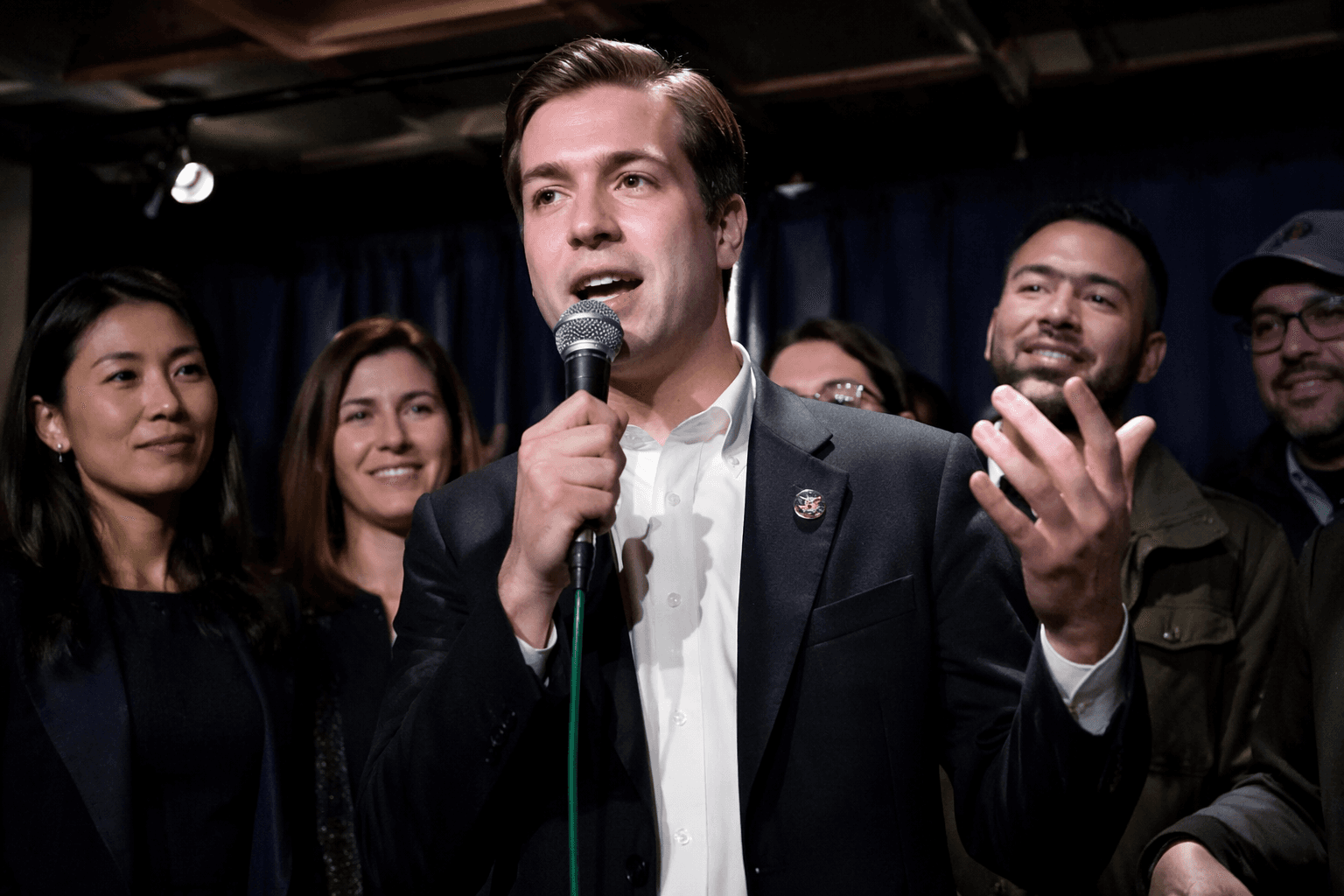
Schlossberg’s showing was the sharpest rebuke to the race’s celebrity undertone. The grandson of President John F. Kennedy entered the contest in November 2025 and drew heavy attention from the start, but his name recognition did not overcome doubts about organization, discipline and local grounding. In the weeks before the primary, his campaign was marked by staff turnover and missed meetings, problems that contrasted with Lasher’s argument that voters wanted a candidate who already understood government and could be effective from day one.

The race also became a test of money and political network power. Bores was swamped by outside spending tied to the artificial intelligence policy fight, which made AI a defining issue in the district’s Democratic primary. Lasher, meanwhile, benefited from roughly $10 million in super PAC support linked to Michael Bloomberg, helping him consolidate backing in a crowded field that also included George Conway and Nina Schwalbe.
Lasher’s win keeps the seat in the hands of Nadler’s political circle and sets up a likely succession for one of Manhattan’s most durable congressional power centers. Nadler has held the district in one form or another since 1992, and the primary showed that in a deeply Democratic, highly educated electorate, inherited fame was no substitute for organization, local alliances and a resume built inside government.
This article was produced by Prism’s automated news system from verified source data, official records, and press releases, then run through automated quality and moderation checks before publishing. The system is built and supervised by the people who set the standards it runs under. Read our full AI policy.
Did this article answer your question?

