Michael Jordan Wins NASCAR Charter Battle, Reshaping Stock-Car Racing's Future
Jordan refuses to call his NASCAR settlement a win, but charter values doubled overnight — from $45M to $90M+ — reshaping stock-car racing's ownership economics.
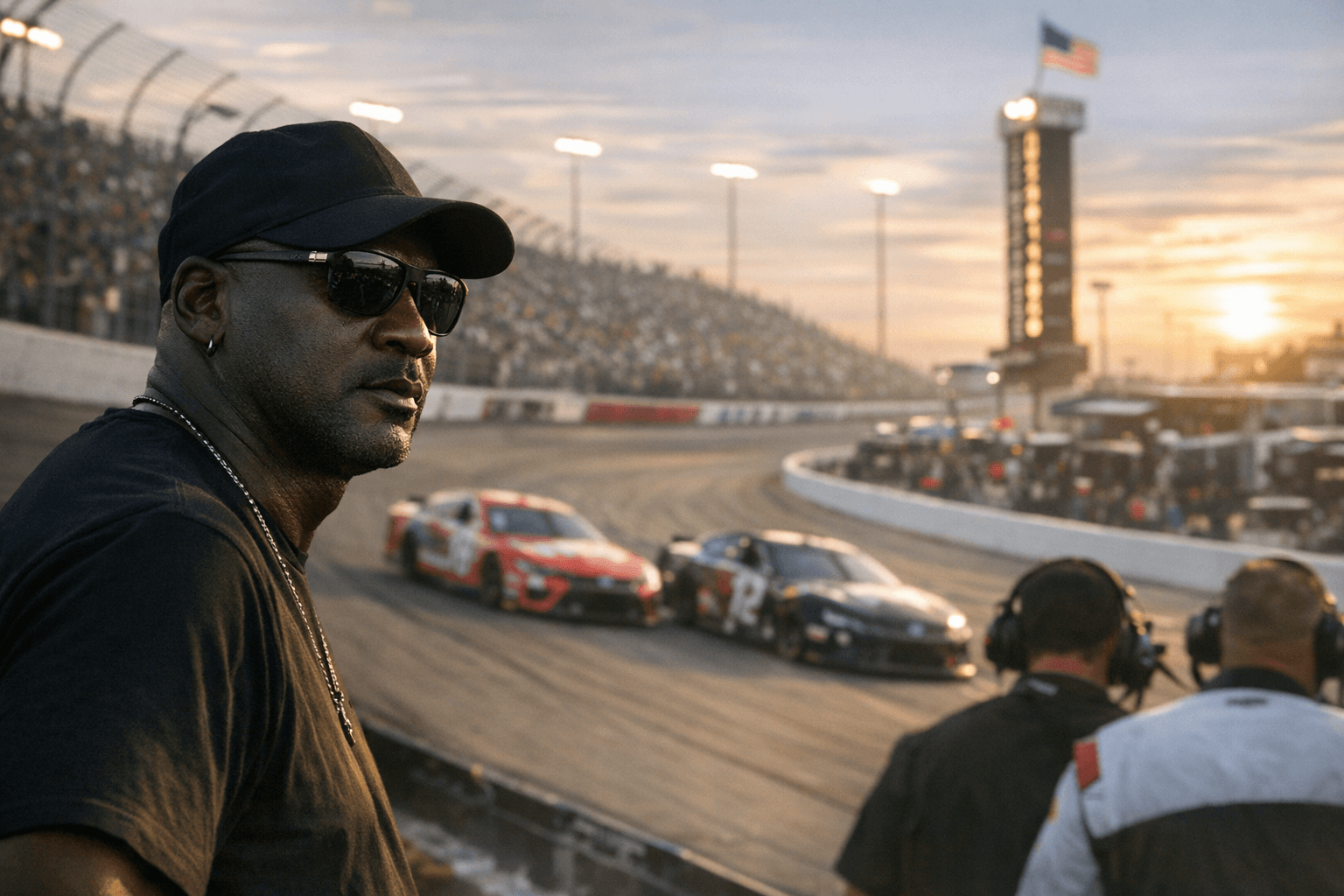
Six NBA titles hang from Michael Jordan's legacy. He'll take credit for every one of them. The NASCAR settlement he forced last December? He won't call that a win.
Jordan drew the distinction himself: the parties settled, which in his competitive framework falls short of a verdict. But charter values across the sport roughly doubled overnight, and that particular scorecard belongs to him regardless of what he calls it.
Before the settlement, the last NASCAR charter to change hands sold for $45 million, a price constrained by the fact that the charter system could be dissolved in 2031 if no new agreement was reached. Within days of the December 11 settlement, team executives were telling Sports Business Journal that values had climbed to between $90 million and $100 million, with Dale Earnhardt Jr. speculating on his podcast the figure could reach $150 million. The settlement converted a depreciating leasehold into something resembling a permanent franchise asset, the kind of ownership right that protects team investors in the NFL and NBA.
Getting there required Jordan to take the stand. The six-time NBA champion, whose 23XI Racing team had already won the Daytona 500 in February with driver Tyler Reddick and four of the first six races of the 2026 season overall, testified in a Charlotte courtroom to challenge NASCAR's revenue-sharing model and charter system. He admitted the setting rattled him.
"Don't get me wrong, I was nervous," Jordan said. "Any courtroom makes me nervous because that's not where I want to be, really, 100 percent."
He went anyway. Ten days into the trial, NASCAR agreed to settle with 23XI Racing and Front Row Motorsports. The terms gave all Cup Series teams permanent, evergreen charters. For the first time in the sport's charter era, team owners hold something structurally comparable to the franchise rights their counterparts in other major leagues have long taken for granted. The total NASCAR payout to teams climbed to $431 million in 2025, up from $333 million the prior year, and chartered teams can now earn between $7 million and $18 million per season before sponsorship is factored in.
Jordan had framed the lawsuit not as an attack on NASCAR but as an effort to reshape it. He insisted throughout the litigation that his goal was a partnership, not a demolition, and said he was willing to risk his race team's existence to achieve change. What he got instead was a settlement that protected the team and restructured the economics for every team owner in the sport.
"When we filed the lawsuit, and people became aware that we were suing NASCAR, I was all-in. I was aggressively gonna win. I became a competitor all over again," Jordan said.
After the settlement was reached, Jordan spoke to reporters on the courthouse steps alongside NASCAR chairman and CEO Jim France, a visual that a few months earlier would have seemed improbable. For years, the charter dispute had blocked Jordan from becoming the sport's most visible ambassador, a role his brand profile made him uniquely qualified for. The settlement reopened that door.
The New York Times called the outcome historically significant for stock-car racing and noted that Jordan can now claim a legacy in NASCAR alongside the one he built in basketball. Jordan himself would push back on the word "win." The charter market logged a different answer.
Know something we missed? Have a correction or additional information?
Submit a Tip