Michigan cyclosporiasis outbreak tops 700 cases, largest in state history
Michigan’s cyclosporiasis outbreak passed 700 cases in days, with no source found as the parasite spread across eight counties and prompted produce-safety warnings.

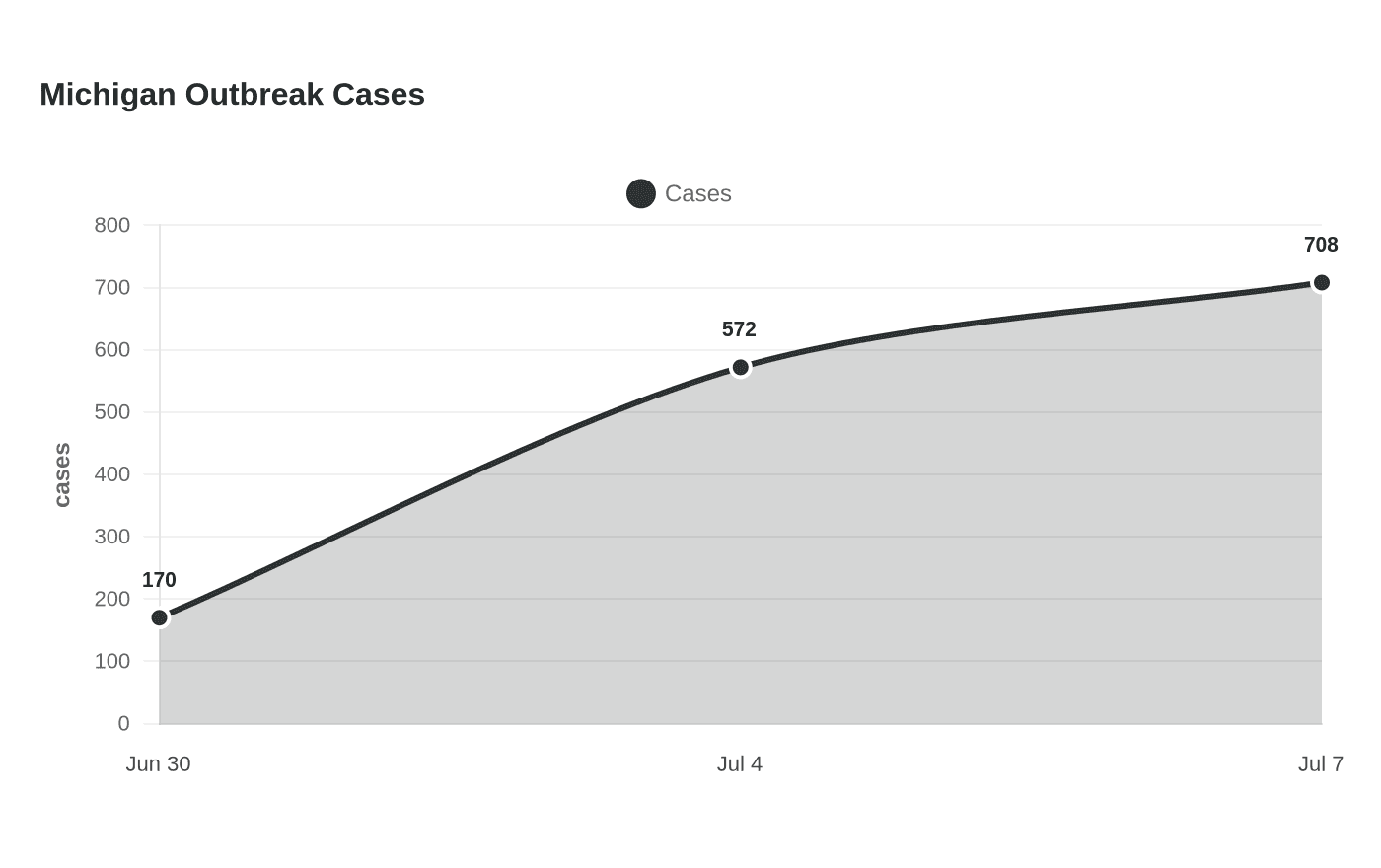
Michigan’s cyclosporiasis outbreak surged past 700 cases, the largest in state history, after starting with more than 170 infections reported across seven counties by June 30. By July 4, the count had jumped to 572, and by July 7 it had climbed beyond 708, with the sharpest rise in southeast Michigan and new cases in Oakland County.
Cyclosporiasis is an intestinal illness caused by the microscopic parasite Cyclospora cayetanensis. It spreads through food or water contaminated with feces and is not known to spread person to person. Michigan typically identifies about 50 cases in a year, so the speed and size of this outbreak stand far outside the state’s usual pattern.
The illness can begin two days to two weeks after exposure and often brings frequent watery and explosive diarrhea, abdominal cramps, bloating, nausea, loss of appetite, weight loss and low-grade fever. Untreated, it can last from a few days to more than a month, and symptoms may fade and return. The disease is usually not life-threatening, but dehydration can make it severe, especially in younger and older people and in those with weakened immune systems.
Dr. Natasha Bagdasarian and the Michigan Department of Health and Human Services have warned that no specific produce grower, supplier or produce type had been identified as the source as of July 4.
Cyclosporiasis is a nationally notifiable disease, reportable in 47 states, the District of Columbia and New York City. Its seasonal window in the United States usually runs from May 1 through Aug. 31. CDC surveillance as of June 16 recorded 145 U.S.-acquired cases in 17 states since May 1, including 20 hospitalizations and no deaths, and investigators found no evidence of one single multistate outbreak linking all cases. They were examining several clusters.
Previous U.S. outbreaks have been tied to imported fresh produce, including bagged salad mixes and kits, fresh cilantro, basil, raspberries, snow peas and green onions. In Michigan, officials urged restaurants and commercial kitchens in southeast Michigan to take extra produce-safety steps, including using whole heads of lettuce instead of bagged prewashed mixes when possible, discarding outer leaves and washing produce under running water. MDHHS said it was working with local health departments, the Michigan Department of Agriculture and Rural Development, the CDC and the FDA as the investigation continued.
This article was produced by Prism’s automated news system from verified source data, official records, and press releases, then run through automated quality and moderation checks before publishing. The system is built and supervised by the people who set the standards it runs under. Read our full AI policy.
Did this article answer your question?