Michigan sues oil majors and API, accusing them of acting as cartel to block clean energy
Michigan's attorney general filed a federal antitrust suit alleging major oil companies coordinated to hinder clean energy, a move with broad public health and equity stakes.
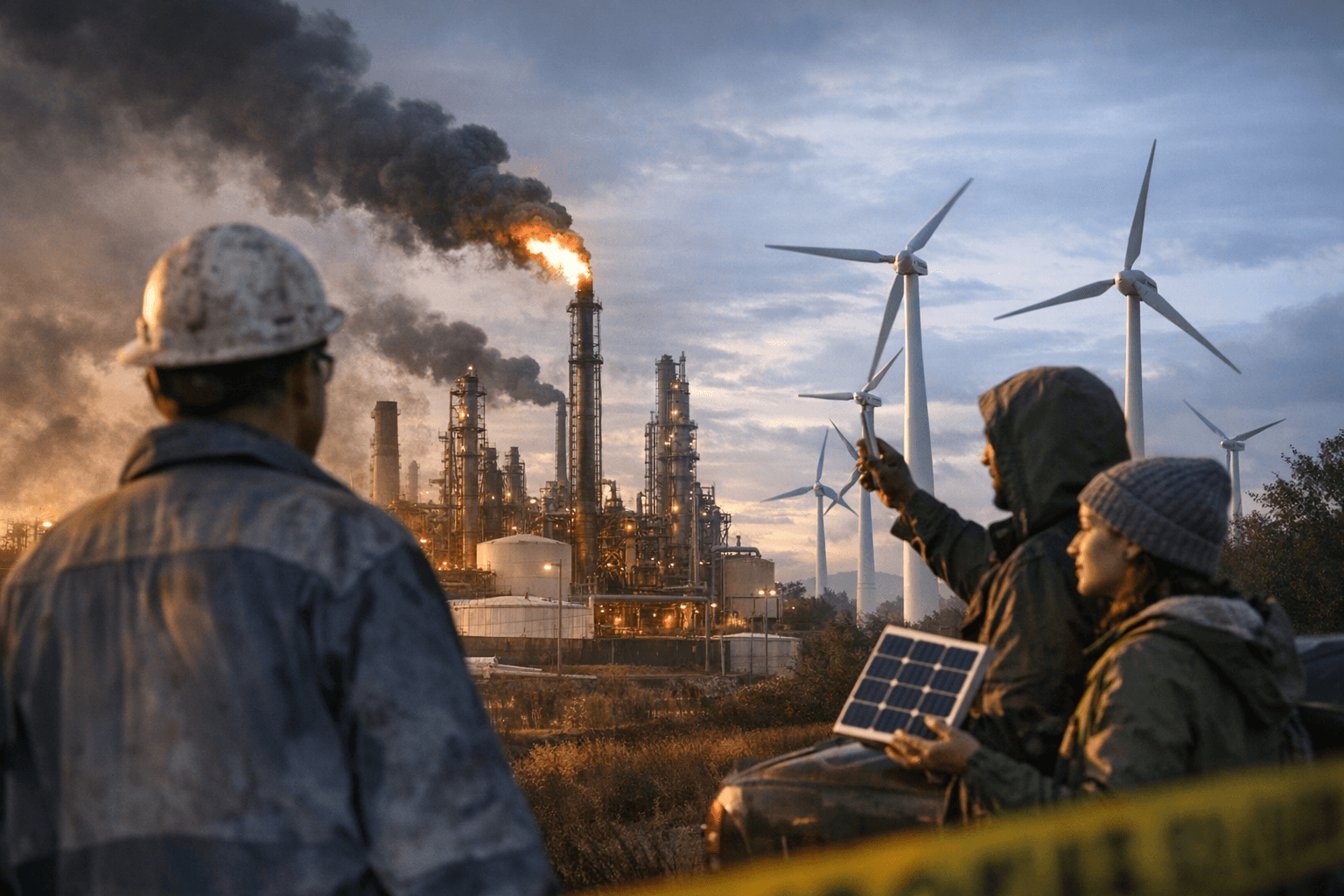
Michigan Attorney General Dana Nessel filed a federal antitrust complaint on Jan. 23, 2026, in the U.S. District Court for the Western District of Michigan accusing BP, Chevron, Exxon Mobil, Shell and the American Petroleum Institute of operating as a "cartel" to block the rise of clean energy. The complaint, announced in a press release from the attorney general's office, frames the alleged conduct as an anticompetitive concerted effort to preserve the fossil fuel market and frustrate policies and technologies that would reduce reliance on oil and gas.
The suit seeks to treat coordinated industry actions not merely as political lobbying but as market manipulation that harms consumers, competitors and public health. By alleging that major oil companies and their principal trade association conspired to stifle alternatives, the filing recasts long-standing debates about corporate influence and climate policy into a legal argument grounded in antitrust law.
Public health experts say the stakes extend beyond market structure. Continued dominance of fossil fuels contributes to air pollution and greenhouse gas emissions that are linked to respiratory and cardiovascular disease, adverse birth outcomes, and premature death. Those harms are not evenly distributed: low-income neighborhoods and communities of color often sit closest to refineries, pipelines and high-traffic corridors, bearing disproportionate exposures and associated health-care costs. For states like Michigan, where industrial legacy pollution intersects with concentrated poverty, the complaint raises questions about how corporate strategy can perpetuate health inequities.
The case also highlights the intersection of health policy and economic regulation. If coordinated actions by energy incumbents delayed deployment of electric vehicle charging, renewable power or cleaner fuels, those delays translate into higher exposure to pollution, slower declines in emissions and increased strain on public health systems. That dynamic can exacerbate Medicaid spending and pressure under-resourced hospitals in affected communities, creating a feedback loop in which economic and health burdens reinforce one another.
Legally, the complaint advances a novel approach by using antitrust tools to target conduct tied to the climate transition. Antitrust laws are designed to preserve competitive markets; this suit argues that competition itself is a public-interest remedy when incumbents use coordinated tactics to block cleaner alternatives. A successful challenge could limit trade association activities, change how companies cooperate on policy and standard-setting, and alter the incentives that shape energy investment.
Beyond the courtroom, the litigation underscores broader governance questions about corporate power, regulatory capture and democratic accountability. The companies named have steered substantial political and public-relations investments for decades, raising concerns among advocates who say strategic coordination has delayed public and private investments in cleaner technologies. For communities on the front lines of pollution, the suit represents an attempt to translate those systemic grievances into enforceable legal obligations.
As the case moves through federal court, its outcomes could reverberate through energy markets and public health planning. A ruling that restricts coordinated industry conduct could accelerate competition from renewables and cleaner transportation, with tangible benefits for air quality and health equity. Conversely, a narrow decision would leave open other routes for reform, including legislative and regulatory action at state and federal levels to address the intertwined threats of pollution, corporate concentration and social inequity.
This article was produced by Prism’s automated news system from verified source data, official records, and press releases, then run through automated quality and moderation checks before publishing. The system is built and supervised by the people who set the standards it runs under. Read our full AI policy.
Did this article answer your question?