Microsoft retires Teams Together mode, pushes simpler meeting views
Microsoft is retiring Together mode on June 30, 2026, as Teams shifts away from pandemic-era novelty toward simpler views and core performance.
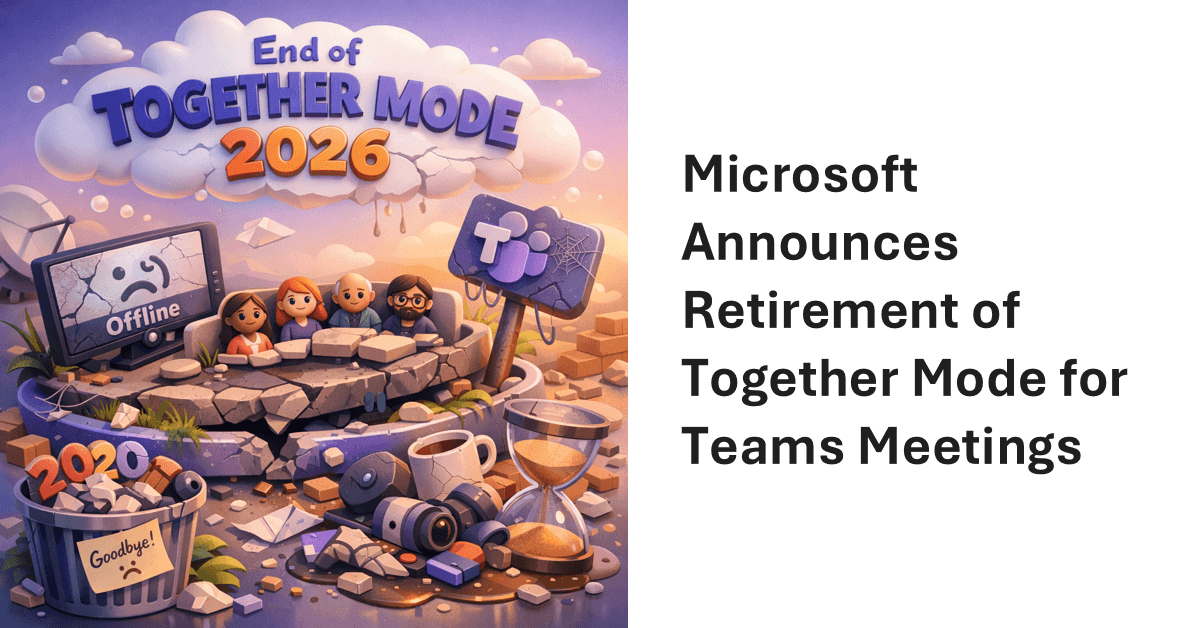
Microsoft is retiring Together mode, the Teams feature that placed meeting attendees into a shared virtual room, and making simpler views the lesson from the pandemic-era push to humanize video calls.
The company said the feature will no longer be available beginning June 30, 2026, with the change rolling out progressively across platforms under Teams’ standard safe-deployment process. Scenes and custom scenes, including seat assignments, will be retired along with it. Microsoft said no admin action is required, but organizations should notify users and update documentation.
Together mode arrived in July 2020, when Teams usage quintupled and total meeting minutes expanded by a factor of 20 in the prior year. It used AI-segmentation technology to place each participant into a shared background, a design meant to make meetings feel more organic, reduce fatigue and create a stronger sense of connection. At the height of remote work, it was one of Microsoft’s clearest efforts to make video conferencing feel less mechanical.

Microsoft is now steering users toward Gallery view, which it says can display up to 49 participants at once. Other options include pinning, spotlighting presenters and using branded background images. The company says the retirement is meant to simplify the meeting experience, reduce complexity behind the scenes and let engineers focus on video quality, stability and performance.

The move signals how the workplace software market has changed since the worst of the pandemic. Features built to make Zoom-era calls feel warmer and more social had a clear purpose when millions of workers were suddenly remote. But as hybrid work settled into a longer-term pattern, the value shifted toward tools that are easier to run, less distracting and more useful in everyday meetings. Together mode was a product of the emergency phase of remote work; its retirement suggests Microsoft is pruning novelty features that never became habits and concentrating on the core mechanics of getting people into a call, keeping it stable and making the meeting itself more productive.
This article was produced by Prism’s automated news system from verified source data, official records, and press releases, then run through automated quality and moderation checks before publishing. The system is built and supervised by the people who set the standards it runs under. Read our full AI policy.
Did this article answer your question?