Microsoft's 40-Year-Old Control Panel Still Survives Despite Decade-Long Removal Effort
Microsoft retracted its own Control Panel deprecation notice within hours in August 2024, exposing a 12-year migration effort with no finish line in sight.
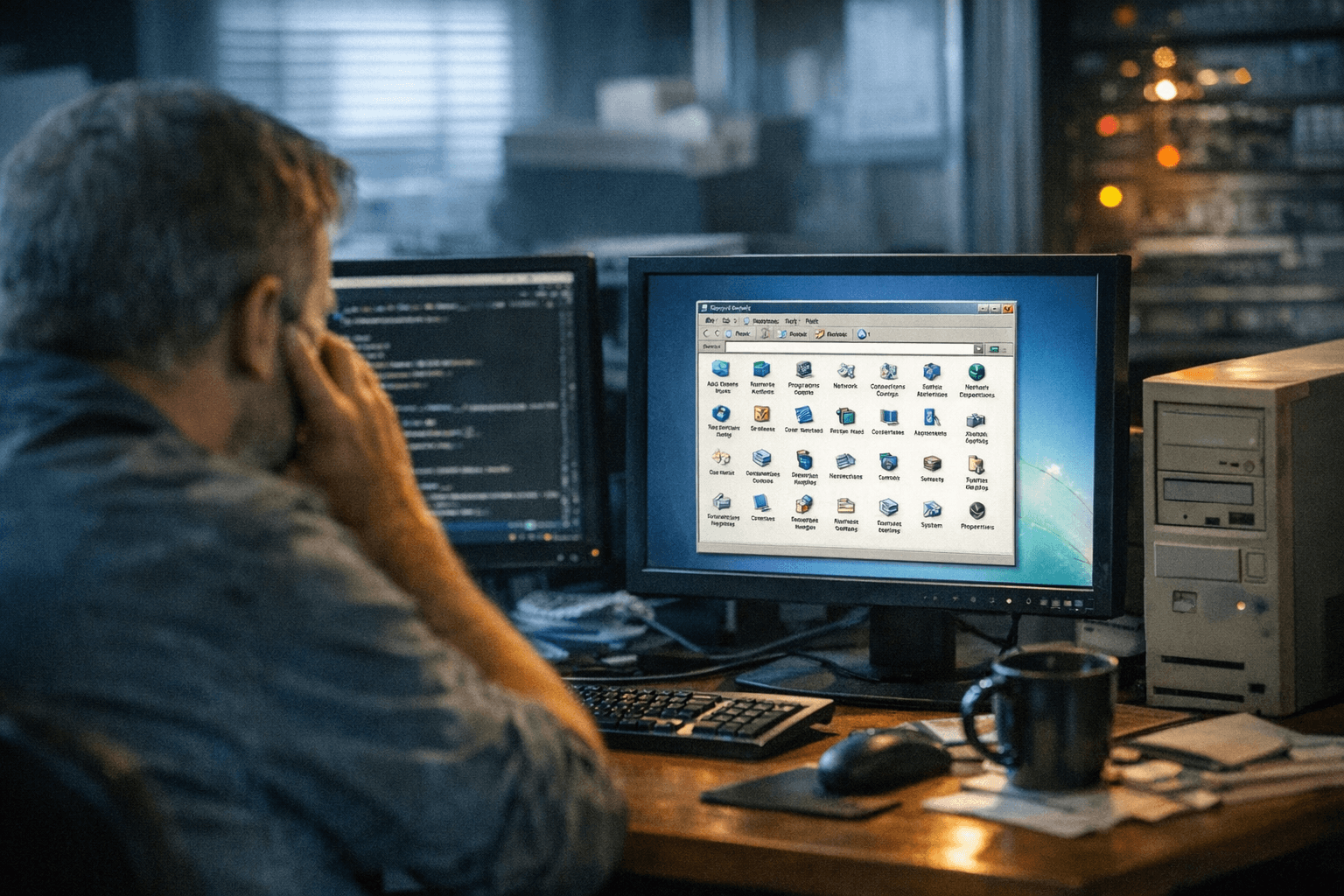
The most dramatic moment in a decade-long saga played out in a matter of hours. On August 23, 2024, a Microsoft support page declared the Control Panel was "in the process of being deprecated in favor of the Settings app"; by 1 am on August 24, that language had been quietly softened to something far less conclusive: "Many of the settings in Control Panel are in the process of being migrated." The rapid walkback, coming after widespread media coverage, encapsulated a problem Microsoft has been unable to solve since 2012.
The Control Panel itself predates the deprecation effort by nearly three decades. It has been a fixture of Windows since Windows 1.0 launched on November 20, 1985, making it roughly 40 years old and one of the longest-surviving components in the operating system's history. Microsoft first moved to replace it when Windows 8 introduced a touch-friendly alternative called PC Settings in 2012, now rebranded simply as the Settings app. More than 12 years later, the migration remains incomplete.
Microsoft acknowledges two core reasons the old interface persists. The first is straightforward: not all settings have been moved to the modern app. The second is significantly harder to resolve. A wide range of third-party software vendors, hardware manufacturers, and enterprise tools still depend on Control Panel "applets," a legacy plug-in architecture that lets external programs embed configuration panels directly into the interface. Printer makers, trackpad manufacturers, and corporate IT systems built around this architecture cannot simply be switched off; they require modern equivalents and a meaningful migration window.
Progress has been incremental. Windows 11's April 2024 update migrated additional Control Panel functions to Settings and improved dark mode consistency across legacy system tools. Microsoft engineer Ash noted in a social media post: "We started with extending dark mode in the Run dialog and various File Explorer surfaces to address customer asks. At the same time, we are building out tooling to scale modernizing other dialogs across Windows 11 that were built on legacy frameworks." Yet as of the Windows 11 24H2 update, released in late 2024, the Control Panel remained fully intact and accessible.
The list of unresolved holdouts is significant for IT administrators. Administrative Tools, including Component Services and ODBC Data Sources, remain in the old interface. Windows Firewall with Advanced Security and the Network Connections window still open through Control Panel. Device Manager is reachable through both interfaces but unchanged in presentation. The Local Group Policy Editor and the Services console retain a visual language largely unchanged from Windows XP, creating UI inconsistencies that complicate support scripts, compliance documentation, and staff training alike.
Microsoft has stressed that no functionality is being removed, only relocated, and says it is supplying advance documentation to enterprise customers and software vendors to prepare for eventual changes. The Settings app does offer genuine improvements over its predecessor, including security validation and permission controls the older architecture lacks, giving the company a technical rationale beyond aesthetics to push the migration forward.
Whether that push ever reaches completion is another question. TechRadar's analysts expect the Control Panel to still be present in the 2030s. At Microsoft's current pace, that forecast is difficult to dispute.
This article was produced by Prism’s automated news system from verified source data, official records, and press releases, then run through automated quality and moderation checks before publishing. The system is built and supervised by the people who set the standards it runs under. Read our full AI policy.
Did this article answer your question?


