Middle East tensions jolt markets as AI stocks and SK Hynix slump
SK Hynix’s Seoul shares fell about 15%, their steepest drop on record, as a 9.6% Brent jump and Middle East fear hit the AI trade. Wall Street’s chip rally lost its footing.

SK Hynix’s Seoul shares fell about 15% on Monday, their steepest drop on record, after the chipmaker’s blockbuster Nasdaq debut turned into a fresh source of profit-taking and market anxiety. The move came as Brent crude jumped about 9.6% to $83.30 after weekend attacks in the Middle East, with the Strait of Hormuz back in focus and the Nasdaq Composite, S&P 500 and Dow all ending lower.
The selloff was a stress test for the AI trade that has powered much of this year’s market leadership. SK Hynix priced its U.S. depositary shares at $149, opened at $170 on the Nasdaq, and finished its first U.S. trading day up more than 12%, raising about $26.5 billion in one of the biggest share sales ever. That kind of success, rather than insulating the stock, left it vulnerable when sentiment flipped and investors rushed to lock in gains.
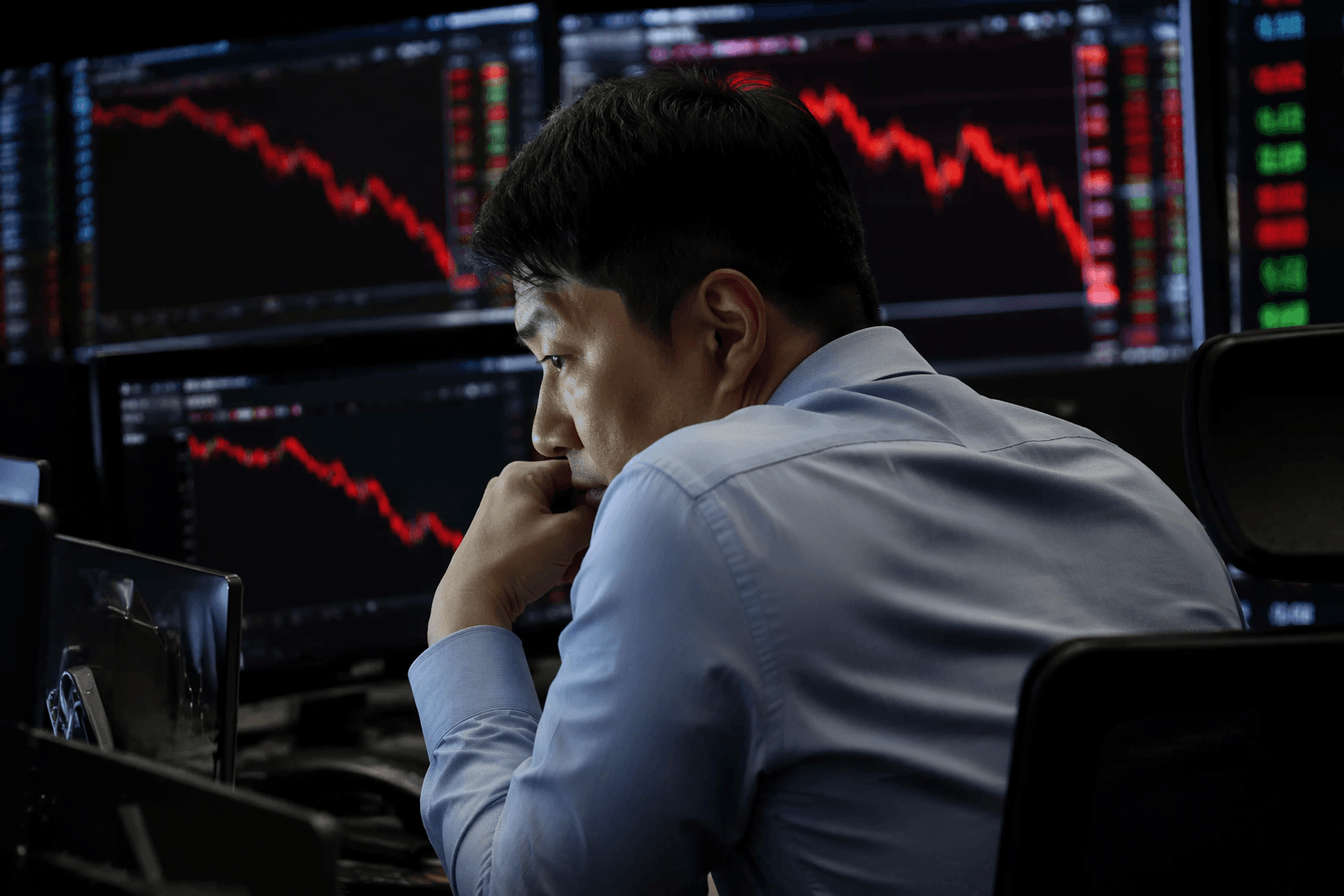
Samsung Electronics also fell, underscoring how quickly weakness in a marquee chip name can spill across the sector and then into broader U.S. indices. AI memory demand has been one of the central pillars of the rally in semiconductors, but a sharp reversal in SK Hynix showed how crowded that trade had become. When the Nasdaq Composite slumped overnight, it fed back into Asian chip names and reinforced concern that valuations in AI-linked stocks may be too dependent on smooth earnings growth and uninterrupted demand.
The geopolitical shock added another layer of pressure. Reuters noted that investors were still leaning into the AI trade on July 10, when U.S. stocks climbed even as oil slipped. By July 13, the mood had changed as weekend escalation in the Middle East hit risk appetite and pushed oil higher, a combination that can tighten financial conditions by stoking inflation fears at the same time growth stocks are most exposed to higher discount rates.
Traders were also facing a packed macro calendar, with U.S. inflation data, bank earnings and Federal Reserve-related testimony due. That mix matters for technology shares because any sign of sticky inflation or a more cautious Fed can compress valuations just as oil prices are rising. The result was a market that looked less like a straightforward pullback and more like a live test of how much strain the AI rally can absorb.
This article was produced by Prism’s automated news system from verified source data, official records, and press releases, then run through automated quality and moderation checks before publishing. The system is built and supervised by the people who set the standards it runs under. Read our full AI policy.
Did this article answer your question?