Milan Cortina Olympics close in Verona Arena's ancient bowl
The Milan Cortina Games ended Sunday inside Verona Arena, celebrating athletes and Italian art while spotlighting public health, cost and community legacy questions.
%3Amax_bytes(150000)%3Astrip_icc()%3Afocal(749x0%3A751x2)%2Fparade-athletes-closing-ceremony-Milano-Cortina-Olympics-022226.-8940450bdadd4bbd928c93201631d8b3.jpg&w=1920&q=75)
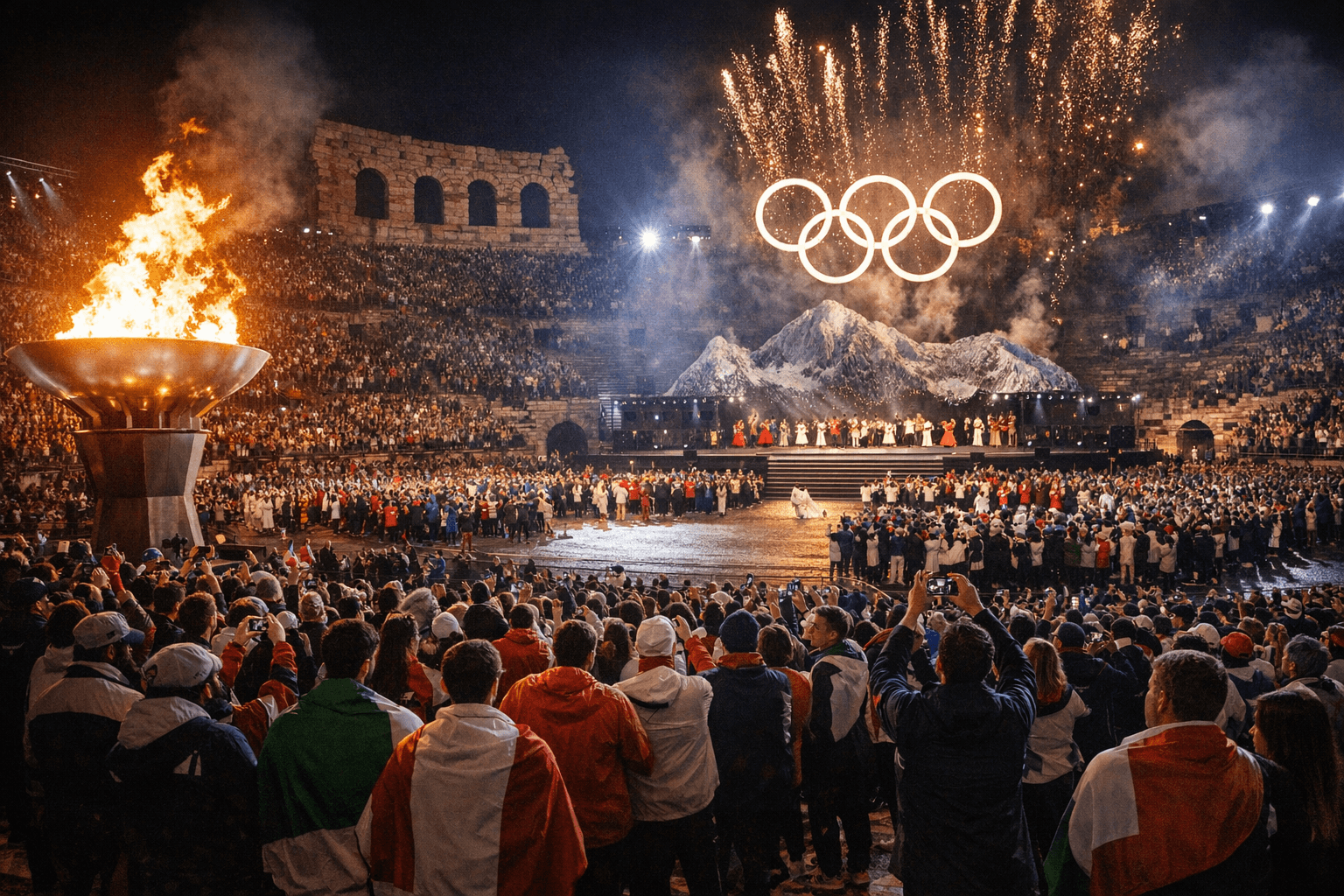
Two weeks of competition ended Sunday when the Milan Cortina Winter Olympics culminated in a closing ceremony staged inside Verona Arena, the first-century Roman amphitheater that forms the city’s historic core. The ceremony blended sport and spectacle, showcasing Italian visual and musical traditions as athletes and officials gathered beneath the arena’s stone arches.
The choice of Verona’s arena underscored the organizers’ goal of linking contemporary athletic achievement with national cultural heritage. Artistic tableaux referenced opera and Renaissance motifs, combining live performance with large-scale projection mapping across the arena’s curved façade. Athletes from across participating nations circulated through the arena in a more relaxed parade than the opening ceremonies, and the Olympic flame was extinguished to signal the formal end of Milan Cortina 2026.
The event is likely to be remembered for its visual juxtaposition: winter sport medals displayed amid a venue built for gladiatorial contests and centuries of opera. For Verona, the ceremony brought intense short-term economic activity tied to visitors, broadcast crews and event staff. But it also renews questions about the long-term return on investment for host communities. City leaders now face decisions about how temporary Olympic infrastructure and tourism revenue convert into sustained improvements in local services, affordable housing and public health capacity.
Public health officials had prepared for large crowds in a confined historic site, noting that mass gatherings present potential transmission risks for respiratory illnesses and place extra demand on emergency services and hospitals. The concentration of international visitors and athletes in Verona for the ceremony and in Milan and Cortina over the fortnight tested transport systems, first responder coordination and health surveillance in a region still balancing routine care access with event-driven surges.
Equity concerns accompanied the festivities. Residents in some neighborhoods experienced heightened congestion, noise and short-term price increases in lodging and services. Advocates questioned whether promised legacy investments, such as improved community clinics, expanded public transit and accessible sports facilities, will materialize in a way that benefits low-income and historically underserved populations across Lombardy and Veneto.
Environmental and preservation considerations also shaped the final act. Conservators worked with event planners to protect the ancient stonework and to limit physical interventions in a UNESCO-adjacent historic area. Organizers emphasized reversible installations and post-event restoration plans as they dismantle staging and technical equipment in the coming days.
As broadcasts of the closing ceremony reach international audiences, the practical consequences for Verona and the wider region will begin to appear in municipal budgets, hospital reports and tourism statistics. The immediate uplift in spending and global attention will be weighed against the costs borne by local services and the extent to which marginal communities share in any long-term benefits. For many residents, the real measure of success will not be the imagery of athletes beneath Roman arches but whether promises made during the Games translate into sustained improvements in health care access, housing affordability and everyday infrastructure.
This article was produced by Prism’s automated news system from verified source data, official records, and press releases, then run through automated quality and moderation checks before publishing. The system is built and supervised by the people who set the standards it runs under. Read our full AI policy.
Did this article answer your question?


