Milano Cortina opening dazzles with multi-site spectacle and twin cauldrons
The Milano Cortina Winter Olympics open with a multi-site "Armonia" ceremony, twin Leonardo-inspired cauldrons and 2,900 athletes across four venues, reshaping the Olympics' geographic scale.
The Milano Cortina 2026 Winter Olympics open in an unprecedented display of scale and choreography, with a three-hour "Armonia" ceremony uniting Milan and the Dolomites in a multi-site extravaganza. The show centers on San Siro Stadium, where 77,000 spectators are on hand for the Parade of Nations, while simultaneous ceremonies in Cortina d'Ampezzo, Livigno and Predazzo allow roughly 2,900 athletes to march near the venues where they will compete.
Organizers staged a symbolic dual lighting, with identical cauldrons inspired by Leonardo da Vinci illuminated at Milan's Arco della Pace and Cortina's Piazza Dibona. Large screens in Cortina and other satellite sites are broadcasting San Siro's proceedings, an effort to knit the ceremonies together across more than 400 kilometers of alpine and urban terrain and to create a single shared moment for an expected global audience of hundreds of millions. NBC is airing the three-hour showcase beginning at 2 p.m. ET.
The format signals a deliberate rethinking of the Winter Games as a dispersed, infrastructure-forward festival. It is the first Winter Olympics officially co-hosted by two cities, a model that spreads competition and celebration across existing venues while minimizing the need for a single, new Olympic hub. The geographic breadth and multiple-site logistics will test transport, broadcast synchronization and local hosting capacity, but they also open new commercial and tourism opportunities for a wide region, from Milan's global fashion and cultural capital to Cortina's storied alpine resorts.
Creative director Marco Balich framed the ceremony's purpose in cultural terms, saying the opening "offers 'a unique platform to convey positive messages, not divisive ones.'" The theme Armonia is intended to underscore that message, blending Italy's artistic heritage with modern staging and role for technology in connecting audiences.
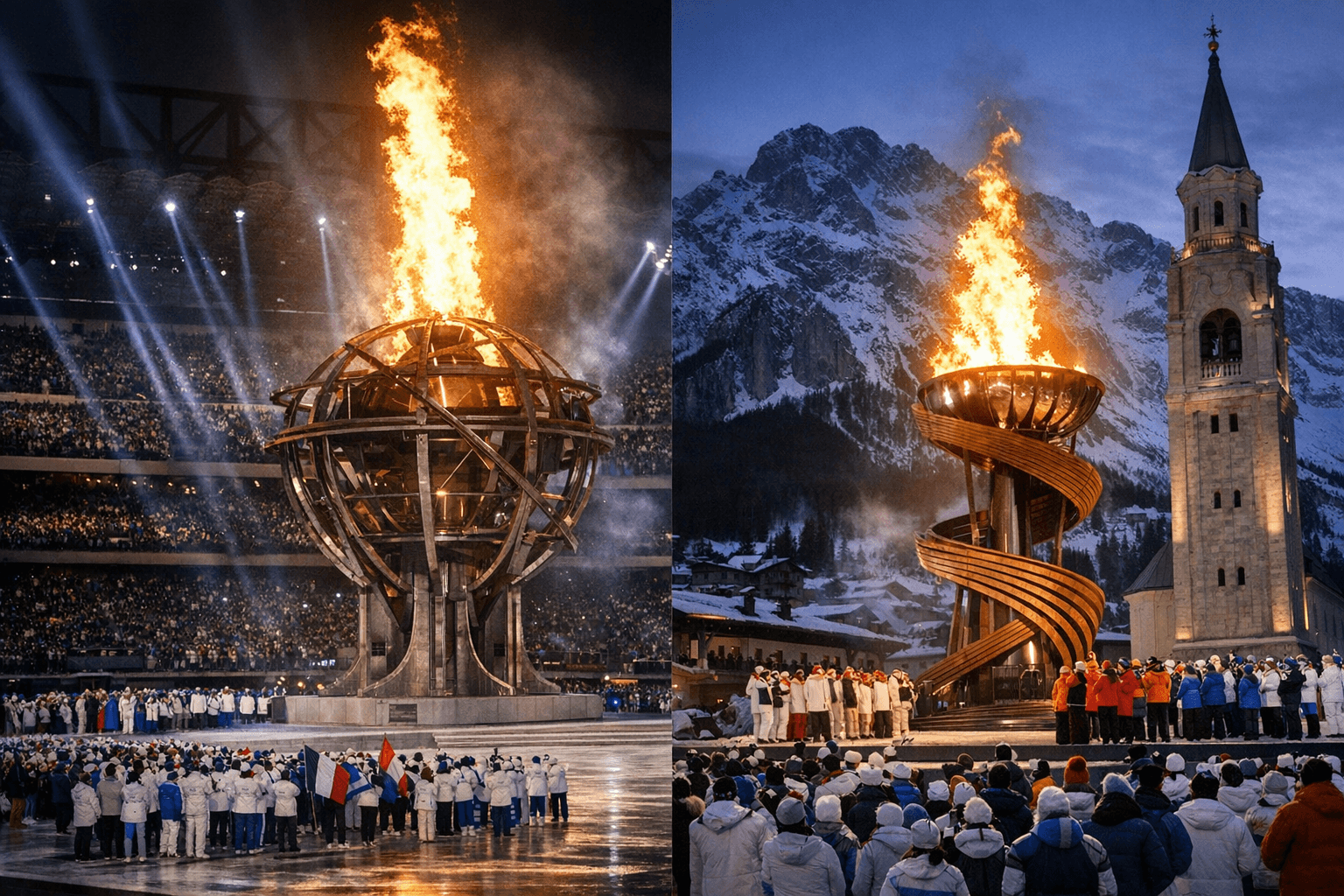
Sporting storylines are already unfolding as competition begins. The host nation's delegation entered with alpine star Federica Brignone and curling champion Amos Mosaner carrying Italy's flag, while the United States was represented by bobsledder Frank Del Duca and speed skater Erin Jackson. Lindsey Vonn, the high-profile American skier, is training in Cortina despite an injured knee and faces a late pre-race test in the women's downhill. Off the ice, a virus outbreak forced the postponement of Canada's women's hockey game against Finland after several Finnish players were struck by vomiting and diarrhoea; the United States opened with a 5-1 win over the Czech Republic.
Beyond the spectacle, the Games introduce eight new events, including ski mountaineering sprints and a mixed-team skeleton event, widening opportunity and television inventory for broadcasters and sponsors. Venue capacities vary widely: San Siro's crowd dwarfs alpine arenas, while the Antholz-Anterselva Biathlon Arena can host roughly 19,000 spectators, the largest capacity among 2026 sites. Cortina's Curling Olympic Stadium is slated to serve as the setting for the Paralympic Winter closing ceremony, further extending the region's calendar of events.
As the ceremonies unfold, Milano Cortina positions itself as a test case for a dispersed Olympic model that leans on heritage, regional collaboration and broadcast spectacle. If the logistical and technical choreography holds, the Games could set a precedent for future hosts balancing cost, legacy and reach while using cultural icons such as Leonardo da Vinci as a backdrop for a distinctly Italian interpretation of global sport.
This article was produced by Prism’s automated news system from verified source data, official records, and press releases, then run through automated quality and moderation checks before publishing. The system is built and supervised by the people who set the standards it runs under. Read our full AI policy.
Did this article answer your question?
.jpg&w=1920&q=75)