Military Laser Downed CBP Drone Near Fort Hancock, Impacting Hidalgo County
U.S. military forces used a directed-energy laser to shoot down a Customs and Border Protection drone near Fort Hancock, Texas, prompting FAA airspace closures reported Feb. 26, 2026.
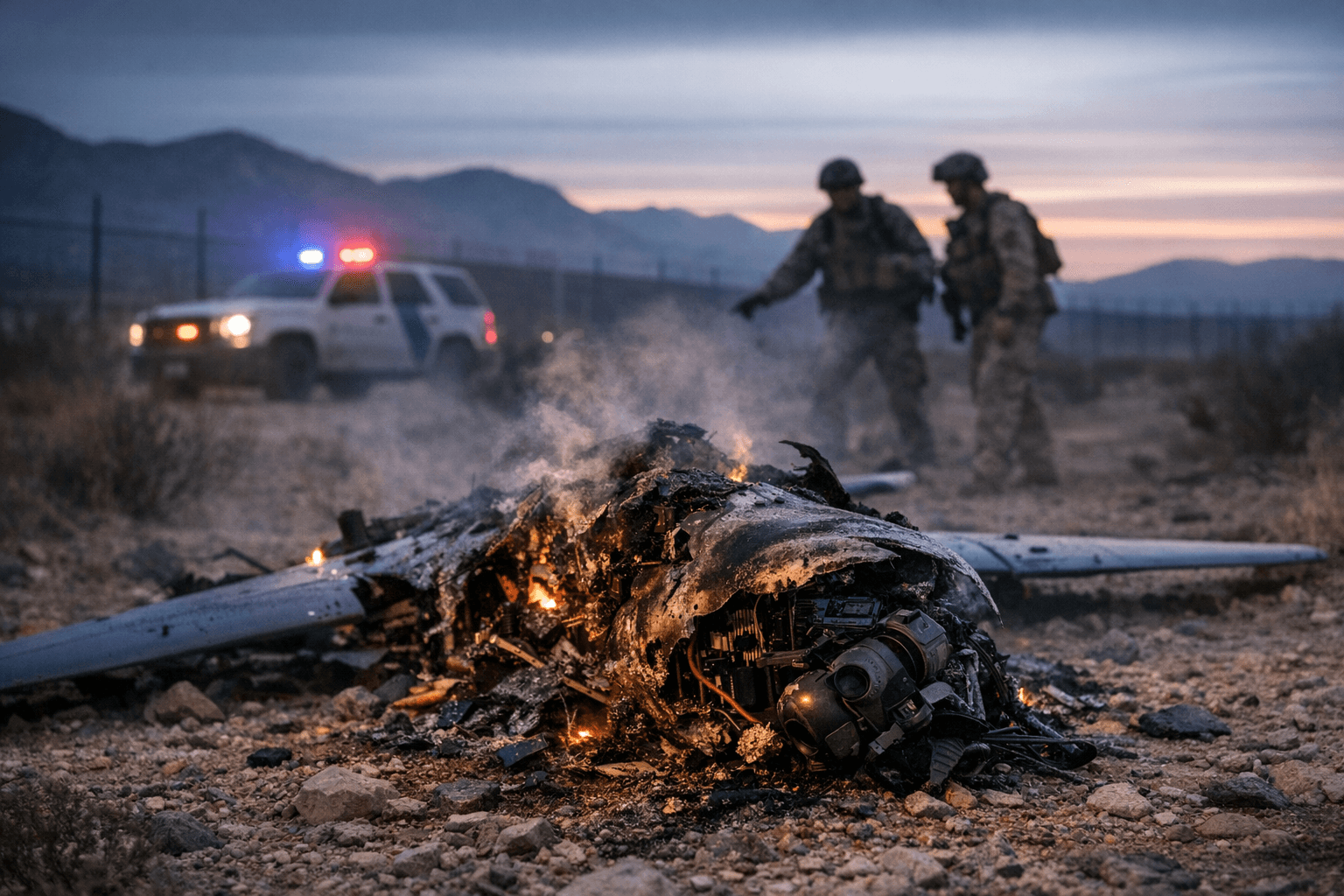
U.S. military personnel employed a directed-energy counter-unmanned aircraft system to shoot down a small unmanned aircraft near Fort Hancock, Texas, an action reported Feb. 26, 2026 that led the Federal Aviation Administration to close or expand airspace around Fort Hancock. Agencies later determined the aircraft belonged to U.S. Customs and Border Protection, making the engagement an apparent friendly-fire incident.
DoD, CBP and the FAA issued a joint statement confirming “an ‘engagement occurred.’” The joint language reproduced in reporting reads in full: “This reported engagement occurred when the Department of War employed counter‑unmanned aircraft system authorities to mitigate a seemingly threatening unmanned aerial system operating within military airspace.” The incident was described in multiple outlets as occurring in military airspace to mitigate a “seemingly threatening” aircraft.
The War Zone identified the laser system used as AeroVironment’s LOCUST and described the drone as “small in size.” Task & Purpose and other reporting note the LOCUST system was previously loaned by the Army to CBP. Two weeks before the Fort Hancock engagement, CBP used a LOCUST system near Fort Bliss and El Paso and initially said it had destroyed a cartel drone; Task & Purpose reported that asset was later determined to be a children’s party balloon. That earlier episode provoked an FAA notice that Task & Purpose characterized as a 10-day NOTAM which was lifted a few hours later, while AP and Military Times described the El Paso shutdown as lasting only a few hours.
FAA actions following the Feb. 26 engagement closed or expanded airspace around Fort Hancock. AP and Military Times reported the Fort Hancock closure was smaller and did not affect commercial flights. The War Zone further reported that expanded airspace restrictions over the Fort Hancock area will last for four months, a claim that has not been confirmed by a public FAA notice in the record provided.
Lawmakers expressed sharp concern about coordination and notification. U.S. Rep. Rick Larsen and two other top Democrats on House Transportation and Infrastructure and Homeland Security committees “said they were stunned when they were officially notified.” Three Democrats on the House Committee on Transportation and Infrastructure were quoted saying, “Our heads are exploding over the news that DoD reportedly shot down a Customs and Border Protection drone using a high risk counter‑unmanned aircraft system.” CNN also carried a longer Democratic statement criticizing the administration for sidestepping a bipartisan, tri-committee bill on C‑UAS training and coordination: “We said MONTHS ago that the White House’s decision to sidestep a bipartisan, tri‑committee bill to appropriately train C‑UAS (counter unmanned aerial system) operators and address the lack of coordination between the Pentagon, DHS and the FAA was a short‑sighted idea. Now, we’re seeing the result of its incompetence.”
Operational and oversight questions remain: exact timing of the Feb. 26 engagement, formal NOTAM texts for Fort Hancock and El Paso, confirmation from DoD or CBP on use of LOCUST, and whether FAA notification procedures were followed. The reporting provided does not mention Hidalgo County directly. Determining any local impact for Hidalgo County — including whether NOTAMs or airspace restrictions extended into county airspace or affected local operations — requires the FAA and DoD NOTAM records and the agencies’ full joint statement and after-action documentation. Congressional inquiries and agency records requests are the next steps to clarify coordination, training and civil aviation safety implications.
Know something we missed? Have a correction or additional information?
Submit a Tip