Missionary doctor recovers from Ebola, returns home with family
A Pennsylvania missionary doctor and his family arrived home after Ebola treatment, while officials said the U.S. risk from the Congo outbreak remains low.

A missionary doctor’s safe return to the United States put a human face on a larger public-health question: how Ebola cases are isolated, monitored and cleared after treatment, and whether an outbreak abroad poses any danger at home. Health officials said the Bundibugyo strain that infected Dr. Peter Stafford is rare, has no licensed vaccine or specific treatment, and has not produced any confirmed U.S. cases.
Dr. Peter Stafford, his wife, Rebekah Stafford, and their four children arrived safely in the United States on Monday, according to Serge, the Pennsylvania-based Christian missions organization. Serge said Stafford had been Ebola-free since May 30, 2026, after being admitted to Berlin’s Charité University Hospital on May 20 with a Bundibugyo Ebola virus infection. He was discharged on June 6, and Serge said other missionaries and family members serving in Congo alongside Stafford were also released from care and monitoring and returned to the U.S.
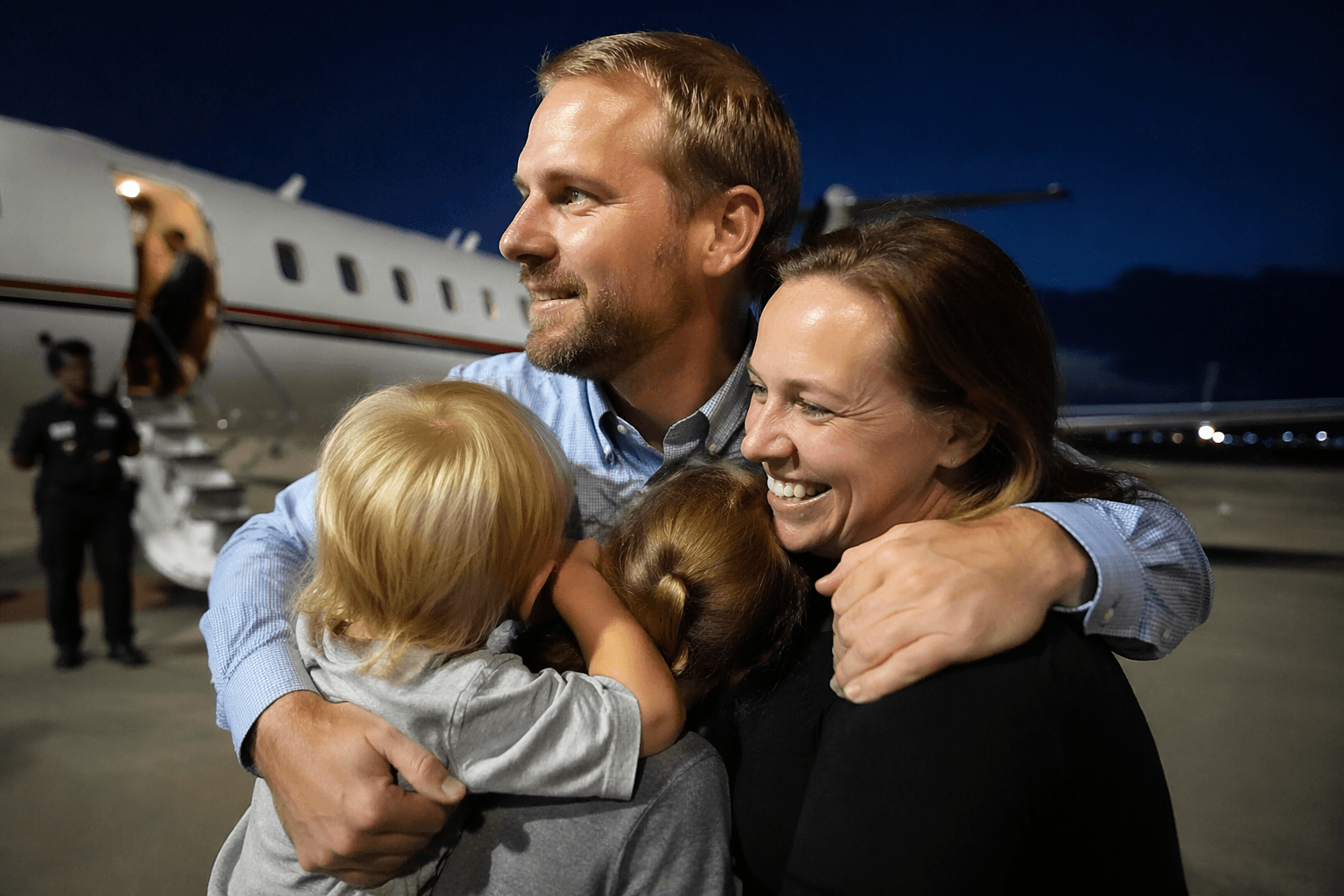
Stafford said he was “filled with gratitude to God” and was “feeling well” after the ordeal, adding thanks for the people who prayed for him and the medical providers who treated him. His recovery follows a tightly managed process that reflects how international Ebola cases are handled: patients are treated in specialized medical settings, then kept under close monitoring until they are cleared to travel and their contacts are released from observation.
The broader outbreak remains centered in the Democratic Republic of the Congo and has spread across the border into Uganda, where health officials have tracked cross-border transmission. The World Health Organization said the outbreak was declared on May 15, 2026, and that initial clusters were identified among health care workers in northeastern DRC. As of June 13 and 14, official reports cited 782 confirmed cases and 178 confirmed deaths in the DRC, plus 19 confirmed cases and two confirmed deaths in Uganda, with at least one probable case in Uganda.
The U.S. Centers for Disease Control and Prevention said the overall risk to the American public and travelers remains low. The agency said Bundibugyo virus has no approved specific treatment and care is supportive, a reminder that prevention, rapid isolation and contact monitoring remain the main defenses when Ebola emerges outside the United States.
This article was produced by Prism’s automated news system from verified source data, official records, and press releases, then run through automated quality and moderation checks before publishing. The system is built and supervised by the people who set the standards it runs under. Read our full AI policy.
Know something we missed? Have a correction or additional information?
Submit a Tip