Moab Adopts Updated Wildfire Preparedness Plan, Enables Federal Fuel-Reduction Funding
Moab adopted an updated community wildfire preparedness plan, making the city and surrounding wildland-urban interface eligible for federal fuel-reduction actions and funding.
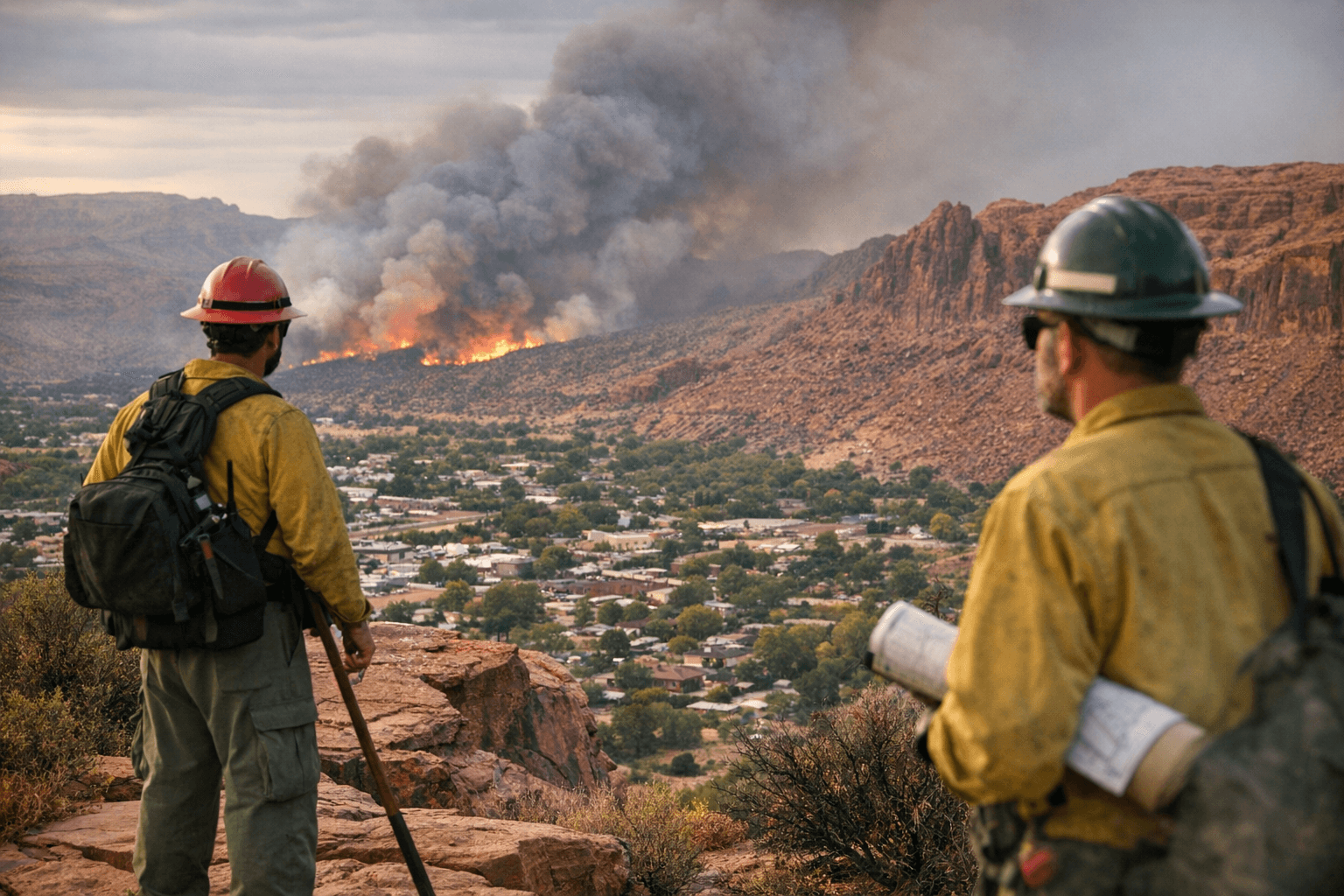
Moab City Council passed Resolution #02-2026 on January 27, 2026, formally adopting an updated Community Wildfire Preparedness Plan (CWPP) for Moab and Grand County wildland-urban interface areas. The resolution turns a collaborative revision into an official policy document to guide mitigation, preparedness, and grant programming across the valley.
The update is the first substantive revision since 2020 and was developed by the City of Moab with the Moab Valley Fire Department, the Utah Division of Forestry, Fire and State Lands (FFSL), Grand County Emergency Management, and the nonprofit Rim to Rim Restoration. The Utah Division of Forestry, Fire and State Lands reviewed and approved the CWPP, and the new plan incorporates changed wildfire conditions, new data, and updated state standards.
Key elements of the CWPP include identification and prioritization of hazardous-fuel reduction areas and recommendations to reduce structural ignitability. The plan also aligns with Healthy Forests Restoration Act (HFRA) requirements, which makes communities in the Moab area eligible for certain federal fuel-reduction actions and funding. That federal alignment opens the door for larger-scale thinning and fuels treatments on prioritized acres, and for matching or grant money tied to HFRA-authorized projects.
For residents, businesses, and recreation operators in and near the wildland-urban interface, the practical value is direct. Prioritized fuel-reduction zones will shape where mechanical thinning, prescribed treatments, or collaborative projects are proposed. Recommendations to reduce structural ignitability will inform building-material choices, defensible-space work, and outreach from Moab Valley Fire Department and Grand County Emergency Management. Grant programming guided by the CWPP should accelerate the pipeline for local mitigation dollars rather than relying solely on emergency-response spending after a wildfire.
The plan’s status as a policy document also formalizes interagency coordination. City of Moab staff, fire officials, state forestry personnel, and Rim to Rim Restoration now have a shared playbook to propose projects, pursue HFRA-linked funding, and prioritize limited resources across inhabited foothills, canyon rims, and transitional zones where fuels meet development.
Next steps will likely include mapping and outreach to property owners in high-priority treatment areas, project proposals for fuel breaks or thinning, and grant applications based on the CWPP priorities. For people who live, work, and play around Moab, the updated plan should mean more strategic mitigation efforts, clearer pathways to federal and state funds, and a stronger focus on reducing community exposure to wildfire hazards. Expect to see implementation planning and public engagement from local agencies in the coming months as crews and funding opportunities line up.
Know something we missed? Have a correction or additional information?
Submit a Tip