Mob storms Congo hospital over Ebola victim's body, tents burned
A burial dispute in Rwampara turned violent as a mob burned Ebola tents and clashed with police, exposing how fear can outrun containment.
Several hundred people surged to the gates of Rwampara Hospital in eastern Congo’s Ituri province and demanded the body of a suspected Ebola victim. When staff refused, the confrontation erupted into violence: two tents used to treat Ebola patients were set on fire, and police fired tear gas and warning shots to break up the crowd.
ALIMA said six patients were being treated in the Ebola tents at the time of the attack. Aid workers fled the site as the morning of May 21 spiraled into chaos, and calm returned only later. The hospital sits in a region already strained by insecurity and a fast-moving outbreak, where every dispute over a body can become a flashpoint.

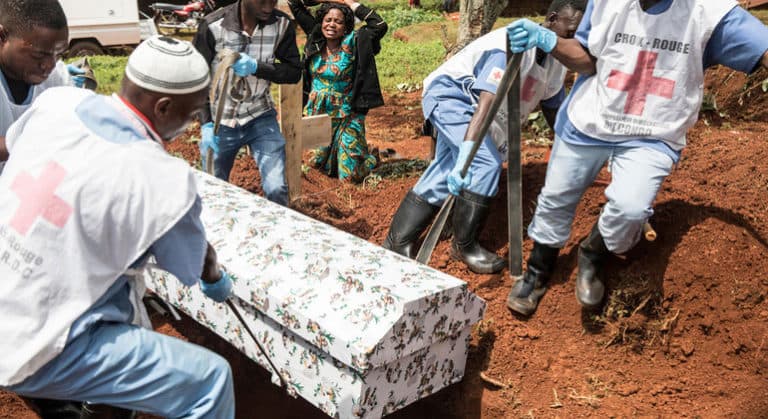
The immediate trigger was deeply personal. Reuters identified the disputed body as that of Eli Munongo Wangu, a local footballer whose family wanted a private burial and disputed that Ebola had killed him. In a region where safe-burial rules are central to stopping transmission, that refusal carried deadly consequences. Ebola victims remain highly infectious after death, and the body must be handled with strict precautions to prevent spread.
The outbreak is driven by the rare Bundibugyo strain of Ebola, which the World Health Organization says has no approved vaccine or specific treatment. The agency said the crisis is unfolding amid a humanitarian emergency, insecurity, and heavy population and trade movement, conditions that make contact tracing and safe burials harder to enforce. WHO has also emphasized that community engagement is essential if health teams are to win trust before rumors and anger harden into violence.
WHO and the Pan American Health Organization said the outbreak was first alerted on May 5 and that Congo officially declared its 17th Ebola outbreak on May 15. On May 17, WHO determined that the outbreak in the Democratic Republic of the Congo and Uganda constituted a public health emergency of international concern. By May 16, WHO reported eight laboratory-confirmed cases, 246 suspected cases and 80 suspected deaths in Ituri alone. By May 18, PAHO and WHO reported 33 confirmed cases and four confirmed deaths across Ituri and North Kivu, with 516 suspected cases and 131 suspected deaths in seven health zones.
The chain of transmission has already crossed borders. Uganda reported two imported confirmed cases in Kampala, including one death. WHO and AP reported that the first known suspected case developed symptoms on April 24, died in Bunia, and the body was later taken to Mongbwalu for funeral rites, where mourners reportedly touched the corpse.
Congo authorities have banned funeral wakes and gatherings of more than 50 people in the affected province. The measures reflect the scale of the threat: eastern Congo’s 2018 to 2020 Ebola epidemic became the country’s deadliest outbreak and the world’s second-largest on record, killing more than 2,200 people.
This article was produced by Prism’s automated news system from verified source data, official records, and press releases, then run through automated quality and moderation checks before publishing. The system is built and supervised by the people who set the standards it runs under. Read our full AI policy.
Did this article answer your question?