Modified CRISPR boosts chromosome-level approach to Down syndrome treatment
A modified CRISPR method made XIST insertion about 30 times more efficient, but the work stopped at human stem cells and remains far from patients.
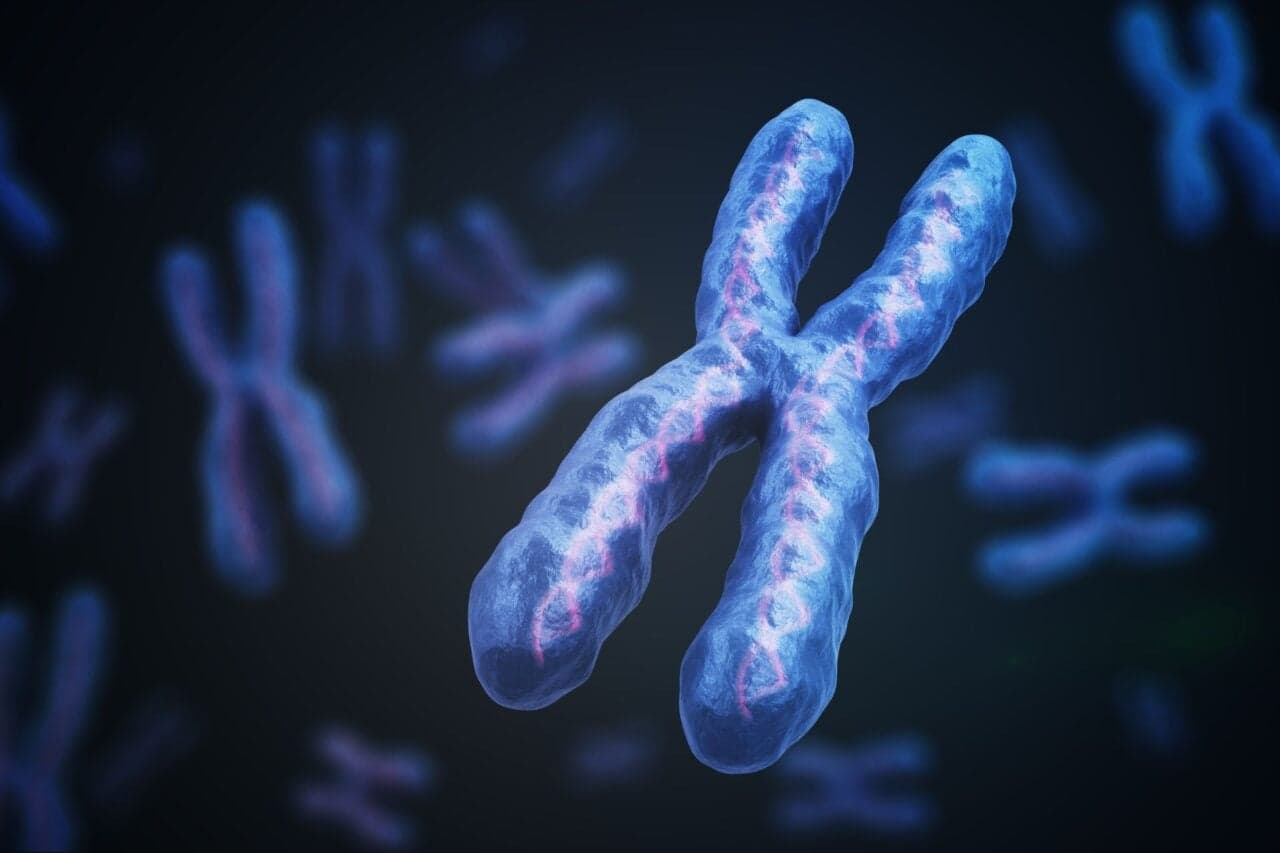
Researchers have taken an early step toward treating Down syndrome at the chromosome level by improving the delivery of a gene that can switch off an entire extra chromosome 21. The laboratory method, led by Volney Sheen at Beth Israel Deaconess Medical Center in Boston, boosted insertion of the 14-kb XIST gene by about 30-fold over conventional approaches, with reported integration efficiency of 20% to 40%. That is a technical gain, not a treatment: the experiments were done in human stem cells, and the goal of real-world therapy remains distant.
The idea builds on a basic fact of biology. Down syndrome is caused by an extra copy of chromosome 21, which means people with the condition have 47 chromosomes instead of the usual 46, according to the Centers for Disease Control and Prevention. In 1959, Jérôme Lejeune, Marthe Gautier and Raymond Turpin tied the condition to trisomy 21, and the chromosome has since been linked to disruptions in hundreds of genes. XIST is the long noncoding RNA that naturally silences one X chromosome in female mammals, and earlier work had already shown that XIST-based trisomy silencing could normalize some Down syndrome cell phenotypes in vitro.
The new study was designed to solve a stubborn bottleneck: getting the silencing mechanism into the right chromosome. RNA sequencing showed that gene-transcription imbalance across the extra chromosome 21 was partially corrected after XIST integration, suggesting that the chromosome-level strategy can alter the cellular program rather than trying to edit individual genes one by one. Ryotaro Hashizume of Mie University Hospital in Japan called the approach highly promising and said the efficiency gain is “generally quite significant,” but he also stressed that the finding remained proof-of-concept at the cellular level.
That caution matters because the medical stakes are high. The extra chromosome 21 is associated with increased Alzheimer’s disease risk in people with Down syndrome, and the National Institute on Aging says many, but not all, people with Down syndrome develop Alzheimer’s disease as they age, in part because chromosome 21 carries the amyloid precursor protein gene, or APP. Any attempt to turn this CRISPR-XIST strategy into treatment would still need extensive safety testing, more preclinical work and eventual human trials. For now, the result marks an advance in chromosomal engineering, not a therapy, and it shows how far the field still must go before a lab success can become medicine.
This article was produced by Prism’s automated news system from verified source data, official records, and press releases, then run through automated quality and moderation checks before publishing. The system is built and supervised by the people who set the standards it runs under. Read our full AI policy.
Did this article answer your question?