Molten sulfur car ignites after CSX freight derailment, shelter in place ordered
A CSX freight train derailed early today in rural Todd County, Kentucky, sending dozens of cars off the tracks and igniting a railcar carrying molten sulfur that produced toxic smoke. Local authorities ordered residents to shelter in place as emergency responders and regulators prepare to assess health, environmental, and infrastructure damage.
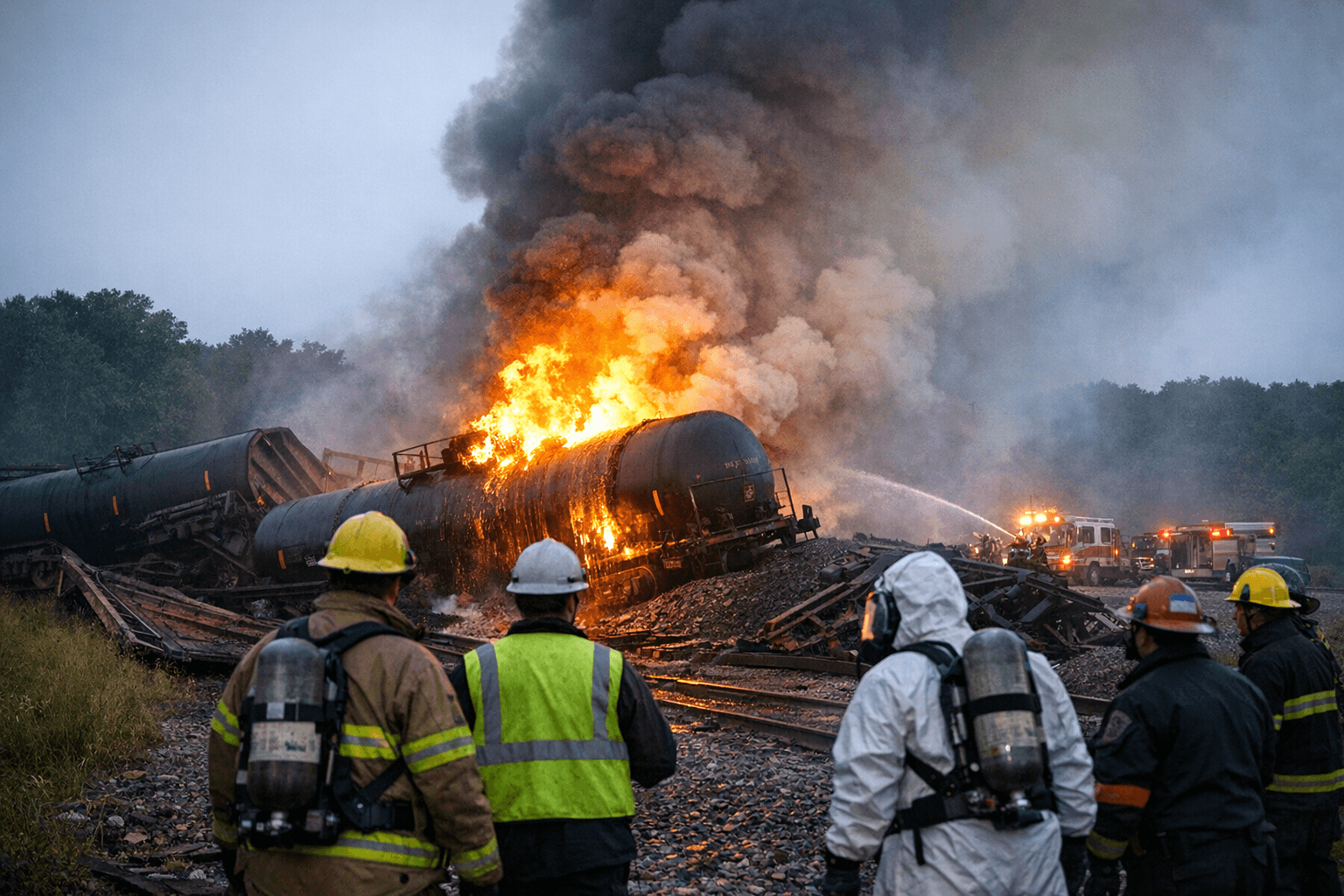
A CSX freight train derailed early on December 30 in Todd County near the Trenton area close to the Tennessee state line, leaving dozens of freight cars off the tracks and touching off a fire in a railcar that contained molten sulfur. The burning material generated a plume of toxic smoke that prompted local emergency officials to order nearby residents to shelter in place while first responders secured the scene.
The derailment occurred in a sparsely populated agricultural region where rail lines carry bulk chemicals and industrial commodities through communities that have limited local emergency capacity. Molten sulfur burns to produce sulfur dioxide and other irritant gases that can pose acute respiratory hazards, particularly for young children, the elderly, and people with chronic lung conditions. Authorities advised residents to remain indoors with windows and doors closed and to avoid the smoke plume until air monitoring is completed.
The incident underscores the risks of transporting hazardous materials by rail through rural areas and raises immediate policy and governance questions about inspection regimes, emergency preparedness, and community notification. Rail operations in the United States are governed by federal agencies that set safety standards for track maintenance and hazardous materials handling, but local elected officials and residents often judge outcomes by how quickly operators and regulators respond when accidents occur.
Emergency management in Todd County confronted a complex scene, combining fire suppression needs with containment of hazardous emissions and the logistical task of managing traffic and access near a state line. Local emergency responders are likely to coordinate with state environmental and public health authorities to deploy air quality monitoring and to assess potential contamination of land and waterways. The scale of the response will depend on the extent of the fire, the number of cars derailed, and the composition of their cargoes.
Beyond the immediate public health response, the derailment will test institutional accountability. Elected officials at the county and state level will face constituent demands for clear information about why the derailment happened and what protections are in place to prevent future incidents. Those demands often shape policy debates over rail safety funding, routing of hazardous shipments, and requirements for community notification and emergency drills.
For residents, the episode highlights civic priorities that can influence local politics and advocacy. Community groups and local government may press for independent air monitoring results and prompt public release of incident reports. They may also push state and federal representatives to seek stronger enforcement of inspection standards or to pursue infrastructure investments that reduce derailment risk.
In the coming days, investigators will examine the wreckage, document cargo manifests, and evaluate the railroad's compliance with maintenance and operational rules. Air quality readings and after action reports will determine the duration of shelter in place orders and whether longer term evacuations or remediation will be necessary. The incident is likely to prompt a wider conversation about the balance between industrial freight mobility and the safety of communities that lie along America's freight corridors.
This article was produced by Prism’s automated news system from verified source data, official records, and press releases, then run through automated quality and moderation checks before publishing. The system is built and supervised by the people who set the standards it runs under. Read our full AI policy.
Did this article answer your question?