Monterey car week contrasts Pebble Beach prestige with junker satire
Pebble Beach crowns the polished summit of car culture; nearby, Concours d’Lemons turns rust and absurdity into its own kind of authenticity.
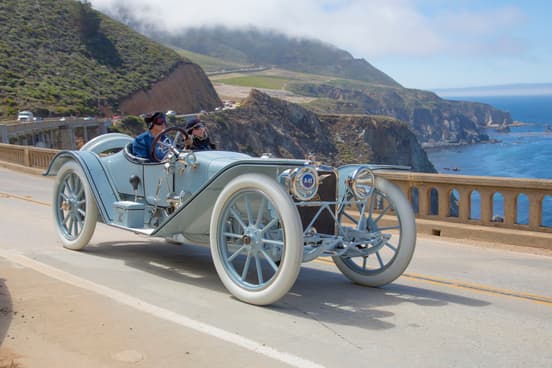
Two versions of authenticity meet in Monterey
Monterey Car Week is not just a showcase of expensive machinery. It is a collision between two ideas of what cars are supposed to mean in America: immaculate preservation on one side, and affectionate irreverence on the other. At Pebble Beach, the goal is to present the automobile at its most exalted. A few miles away in Seaside, the point is to celebrate the wrecks, the oddballs, and the glorious mistakes that the rest of the hobby often leaves behind.
Pebble Beach and the authority of perfection
The Pebble Beach Concours d'Elegance is the gravitational center of that polished world. Founded in 1950, it began as a last-minute social gathering tied to the Pebble Beach Road Race and was modeled on early concours events that emerged in Paris and Europe in the 1920s and 1930s. Pebble Beach now describes it as the world’s premier celebration of the automobile and the top-ranking collector car competition in the world, language that reflects how fully the event has become an institution rather than just a show.
Its setting matters as much as its reputation. The concours is staged on the 18th fairway of Pebble Beach Golf Links during Pebble Beach Automotive Week, where the visual discipline of the event matches the discipline of the cars themselves. The 2026 edition is scheduled for Sunday, August 16, 2026, and it will mark the 75th Pebble Beach Concours d'Elegance, a milestone that underscores how long the event has shaped the prestige economy of the classic-car world.
The scale is part of the message. The 2025 Pebble Beach Concours featured 229 cars from 22 countries and drew 20,000 spectators, an international turnout that reinforces its status as a global reference point. Even its early years showed how quickly the event became a tastemaker, with Best of Show going to a new car in each of the first five years. That detail says as much about the concours as any slogan: Pebble Beach has always been as much about setting standards as preserving them.
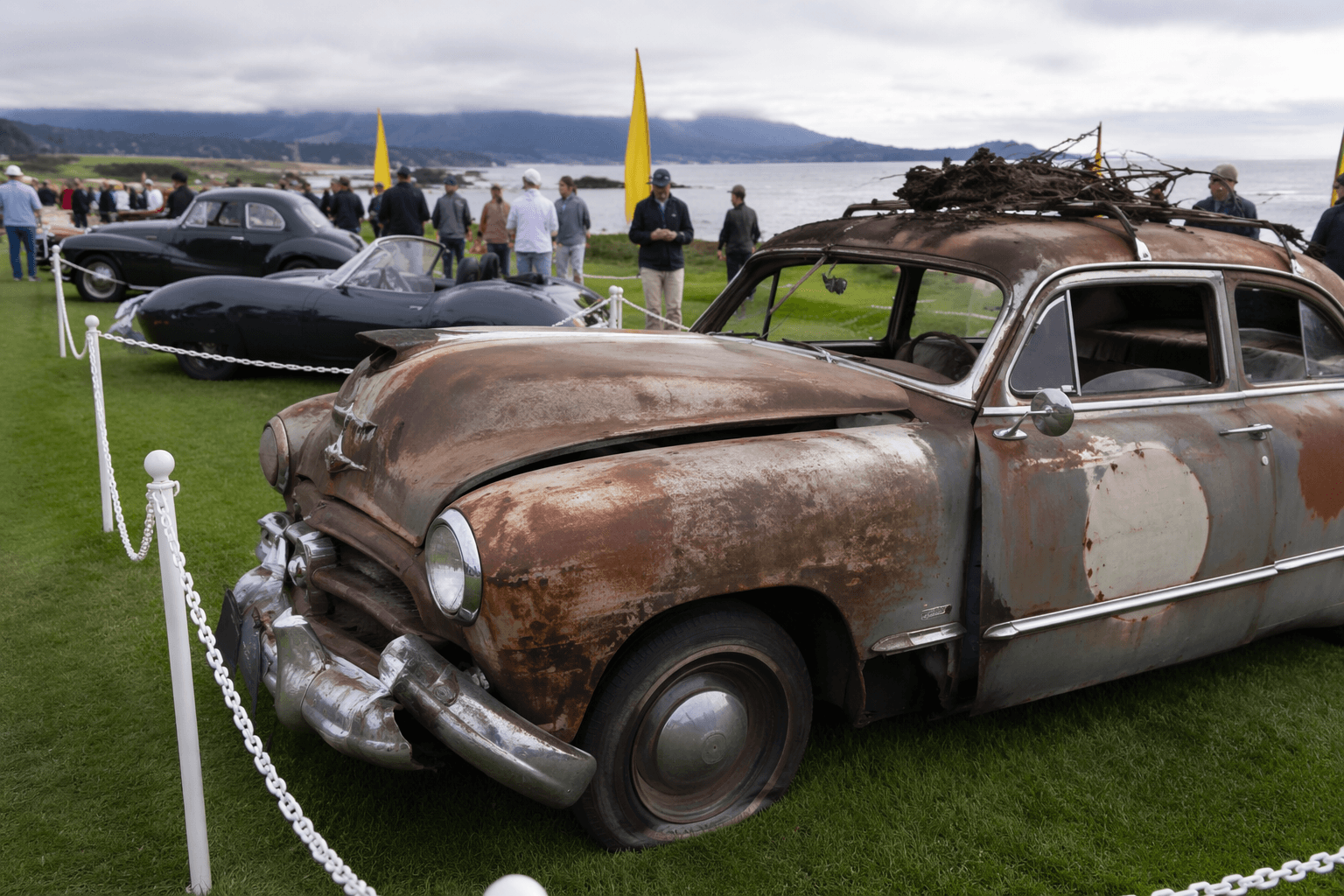
The counterpoint in Seaside
Just a short drive away, the California Concours d’Lemons offers the opposite kind of authority. Run by the 24 Hours of Lemons organizers, the event has been held for 16 years as of 2025 and operates as a playful satire of concours culture. Instead of round-the-clock polishing and provenance, the attraction is intentionally awful, rusty, oddball, and low-value cars, the kind of machinery that would never survive Pebble Beach judging but still carries its own strange charisma.
The 2025 California Concours d’Lemons took place on Aug. 16, 2025, on the Seaside City Hall lawn in Seaside, California. Organizers and coverage describe it as free for spectators, which helps explain its open, democratic feel compared with the rarified atmosphere of Pebble Beach. Where Pebble Beach elevates automotive rarity and restoration, Concours d’Lemons treats automotive failure as a source of humor, identity, and shared recognition.
That satire is not random mockery. It is built around a knowing affection for the cars people actually lived with, repaired badly, drove hard, and forgot to value until much later. The event’s tone makes room for rust, improvisation, and bad judgment as legitimate parts of car culture, not simply defects to be erased.
What the contrast says about car culture now
Taken together, these two events reveal how broad Monterey Car Week has become. Pebble Beach represents the apex of collector-car seriousness: rare cars, exacting presentation, international attention, and a venue that turns a golf course fairway into a stage for automotive prestige. Concours d’Lemons answers with a deliberate embrace of the beat-up, the underappreciated, and the absurd, arguing that authenticity can live in a faded paint job just as easily as in a flawless restoration.
That tension matters because it reflects the car world’s split values. One side prizes stewardship, originality, and the labor required to keep expensive objects historically intact. The other side values character, humor, and the social truth that many beloved cars were never priceless, only useful. Monterey gives both camps a place to stand, and that is part of why the week draws such a wide audience.
The 2024 California Concours d’Lemons made that point vividly by featuring over 100 cars and awarding the highly coveted “Worst of Show” to Chris Overzet’s 1975 Lincoln race car. The choice is funny, but it is also revealing. The award turns the usual hierarchy upside down, proving that value in car culture is not limited to rarity or price. Sometimes it comes from the story a car tells by being absurdly out of place.
Why both prestige and junk matter
Pebble Beach and Concours d’Lemons do not cancel each other out. They expand the definition of what automotive culture can hold. Pebble Beach preserves the upper architecture of the hobby, where restoration standards, provenance, and historical significance are taken seriously. Concours d’Lemons reminds the public that affection for cars is not reserved for perfection, and that a rusty, battered, or ludicrous machine can still deserve attention because it reflects how people actually used automobiles.
That broader frame is what gives Monterey Car Week its cultural range. It can host the most prestigious car show in the world and, just down the road, a parody that celebrates the opposite aesthetic without losing the underlying respect for the automobile. In that contrast lies the week’s real power: not the triumph of one taste over another, but the public proof that American car culture is large enough to contain both the museum piece and the junker, both the spotless restoration and the rolling punch line.
Know something we missed? Have a correction or additional information?
Submit a Tip

