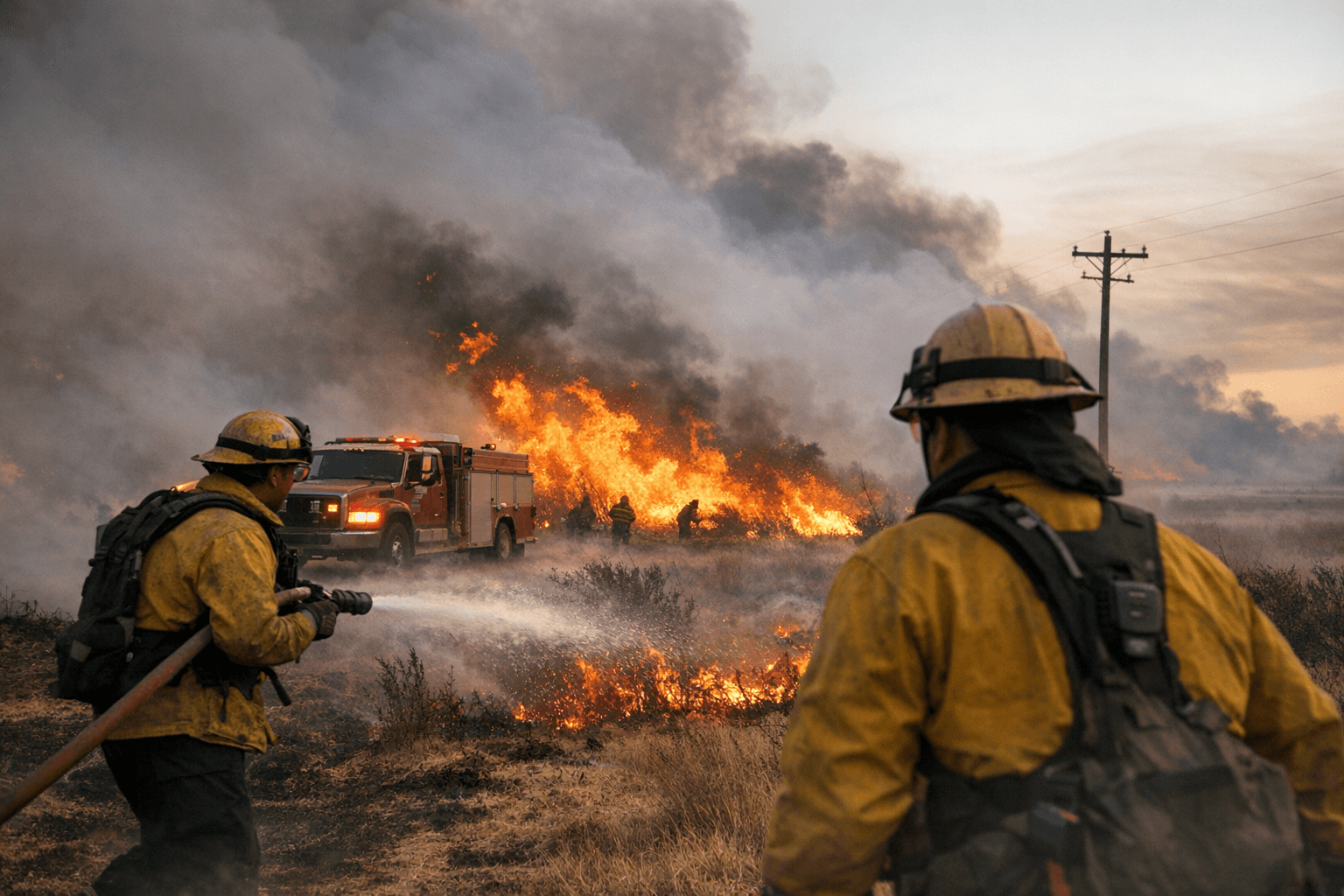
Month-long dry pattern raises wildfire risk in Texas County; officials urge preparedness
Two Panhandle blazes near Amarillo each burned about 9,000 acres with containment at 25% or less as a month-long dry, windy pattern through March raises grassfire risk across the region.
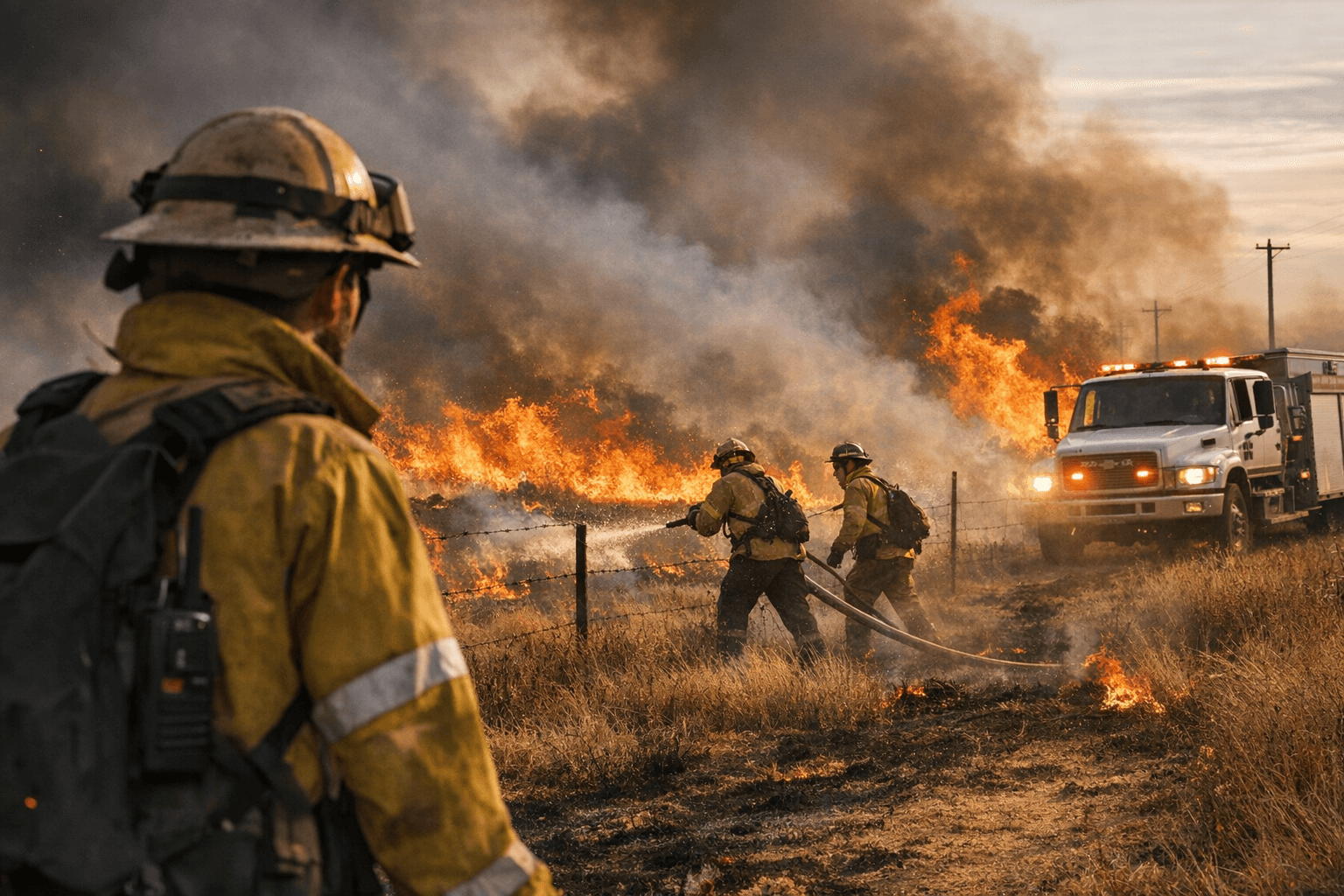
A persistent dry, windy pattern through March 2026 is elevating wildfire danger for the Panhandles and nearby corridors, with on-the-ground impacts already visible: two active wildfires west and southeast of Amarillo — in Oldham County and Armstrong County — each were reported at about 9,000 acres with containment at 25% or less, Texas reporting shows. Regional analysts and incident officials warn repeated gusty wind events and low humidity could let grassfires spread rapidly across rangeland.
Texas A&M Forest Service public information officer Laura Stevens described fuel conditions that are worsening the threat, noting, “We saw freeze-cured grasses all throughout the state right now.” Stevens added that the curing happened earlier than expected: “We’re also seeing that we had freeze-cured grasses sooner than anticipated (at the) end of last year to beginning of this year. So that means that the grasses aren’t growing, there’s no moisture.” Stevens also reported operational work on the incidents, saying crews worked overnight on both the Lavender and then the 8 Ball fires to build containment lines.
The broader regional outlook underlines why local vigilance is needed. The National Interagency Fire Center’s March 2026 outlook projects “significant wildland fire potential is projected to run above normal across portions of eastern Colorado and much of Kansas,” and a Colorado-Kansas weather alert warned of “multiple wind events capable of driving flames across open rangeland in minutes.” Forecasters cited repeated days of low humidity - with afternoon relative humidity frequently between 15% and 25% on sunny, breezy days - and warmer-than-average temperatures combined with limited precipitation as the drivers of above-normal risk for corridors from the Denver metro south to Pueblo and east along I-70 toward Limon, Goodland and Hays.
The dry pattern is not limited to the Plains. Florida officials reported wide drought and fast-moving fires: U.S. Drought Monitor data show extreme drought covering nearly 38,000 square miles — about 67% of Florida’s land area — and as of Feb. 24, 2026 the Florida Forest Service identified 18 counties with a high level of fire danger. The Big Cypress National Preserve wildfire provided a stark example of rapid spread when it “expanded from 1,000 acres to more than 25,000 acres in a single night.” Northeast Florida reporting noted the Keetch-Byram Drought Index in St. Johns County “currently sits at 443,” and officials say that drought has contributed to hundreds of fires statewide in 2026.
Local preparedness measures and interagency coordination are already in motion. The Texas Standard article urges residents to monitor official channels and be ready to evacuate, including practical steps: “Make sure you’re following all of their official communication channels, sign up for local alerts, and then stay aware of the weather,” she said. “If you are told to evacuate, make sure that you know where you’re going. Have two evacuation routes preloaded into your GPS if you don’t know where you are going.” Texas A&M Forest Service crews are actively building containment lines on the Lavender and 8 Ball incidents, and St. Johns County Emergency Management, Fire Rescue and public safety partners in Florida are coordinating with state and federal agencies to position response resources.
With the NIFC outlook and repeated wind events expected through March, officials cautioned that risk hinges on interacting conditions — temperature, soil moisture, humidity, wind speed and available fuels — and that local alerts and evacuation plans remain the immediate, actionable steps for communities in and around the Panhandles.
Know something we missed? Have a correction or additional information?
Submit a Tip