More than 30 suppliers refuse rare-earth orders, threatening Boeing and chipmakers
Dozens of U.S. rare-earth component suppliers are turning away orders, forcing production delays at aerospace and semiconductor firms weeks before the Trump-Xi summit.
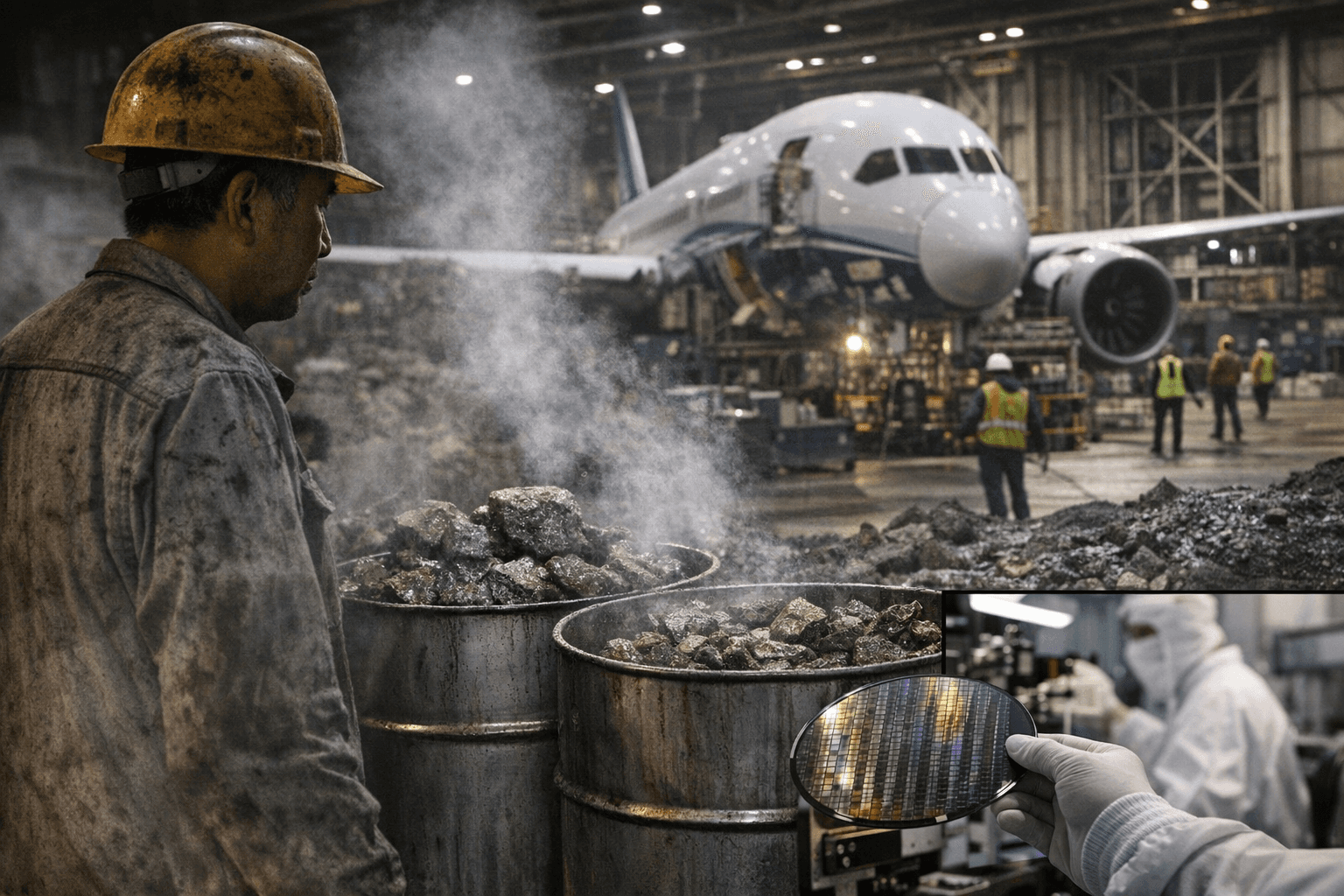
More than 30 U.S.-based suppliers have begun refusing new orders for rare-earth components, industry insiders say, creating immediate production pressure for aerospace primes and major chipmakers that rely on magnets, polishing powders and specialty alloys. The refusals are occurring as President Trump prepares to meet Xi Jinping in Beijing this week, exposing near-term risks for defense and commercial supply chains.
Suppliers report prioritizing existing contracts and diverting scarce feedstock to the highest-paying customers, a shift that has left smaller tier-two manufacturers and some commercial programs unable to secure essential parts. The affected components include neodymium-iron-boron magnets used in aircraft actuators and electric motors, and cerium-based polishing compounds critical to semiconductor wafer fabrication. Suppliers say the shortages are not a temporary shipping delay but a structural crunch in processed rare-earth materials.
The impact is already operational. Aerospace manufacturers face slowed assembly lines for components that are difficult to substitute, increasing the risk of delivery slips and potential cost overruns. Semiconductor manufacturers warn that delays in polishing slurries and specialty alloys could ripple through capacity expansions scheduled for this year, complicating wafer yields and capital spending plans. For some subcontractors the result is immediate revenue loss and contract churn; insiders estimate the current order refusals affect high-value contracts that are measured in the tens of millions of dollars across the sector.
The crisis highlights persistent vulnerabilities in the rare-earth chain. Mining, separation and high-purity processing remain concentrated outside the United States, and industry officials say ramping domestic capacity requires time-consuming permits, reactors and specialized downstream facilities. The concentrated nature of processing means disruptions in supply or spikes in global demand translate quickly into acute shortages for equipment makers.
Policy and institutional options are now in play. Administration officials at the Department of Commerce and the Department of Defense face pressure to deploy emergency tools, including tapping strategic mineral reserves or invoking procurement priorities to steer scarce supplies toward defense-critical programs. Lawmakers from both parties have been briefed on contingency measures in recent weeks, and congressional staff are examining incentives for domestic refining and recycling capacity that would blunt future shocks. Private-sector responses under consideration include longer-term supply contracts, investment in recycling of magnet and chipmaking waste, and shifting designs to reduce dependence on the tightest constrained elements where technically feasible.
Market responses are also evident. Buyers report paying premiums and accepting longer lead times to secure material, while some suppliers are reallocating existing inventories to customers with national-security exemptions or long-term agreements. That reallocation raises questions about fairness and the capacity of regulators to adjudicate competing claims in an environment where downstream industries are tightly interdependent.
The timing of the squeeze adds geopolitical stakes. With senior leaders meeting in Beijing this week, U.S. industry officials and lawmakers are watching whether diplomatic engagement will address market access and the stability of critical-material flows or whether supply will be used as leverage. In the near term the shortages force companies and officials to prioritize immediate production needs, weigh emergency policy tools and accelerate plans for diversification and domestic processing capacity to reduce strategic exposure.
This article was produced by Prism’s automated news system from verified source data, official records, and press releases, then run through automated quality and moderation checks before publishing. The system is built and supervised by the people who set the standards it runs under. Read our full AI policy.
Did this article answer your question?


