More than 80 children missing after militant school attacks in Nigeria
More than 80 children were missing after attacks on schools in Borno and Oyo states, reviving fears that Nigeria still cannot protect classrooms.

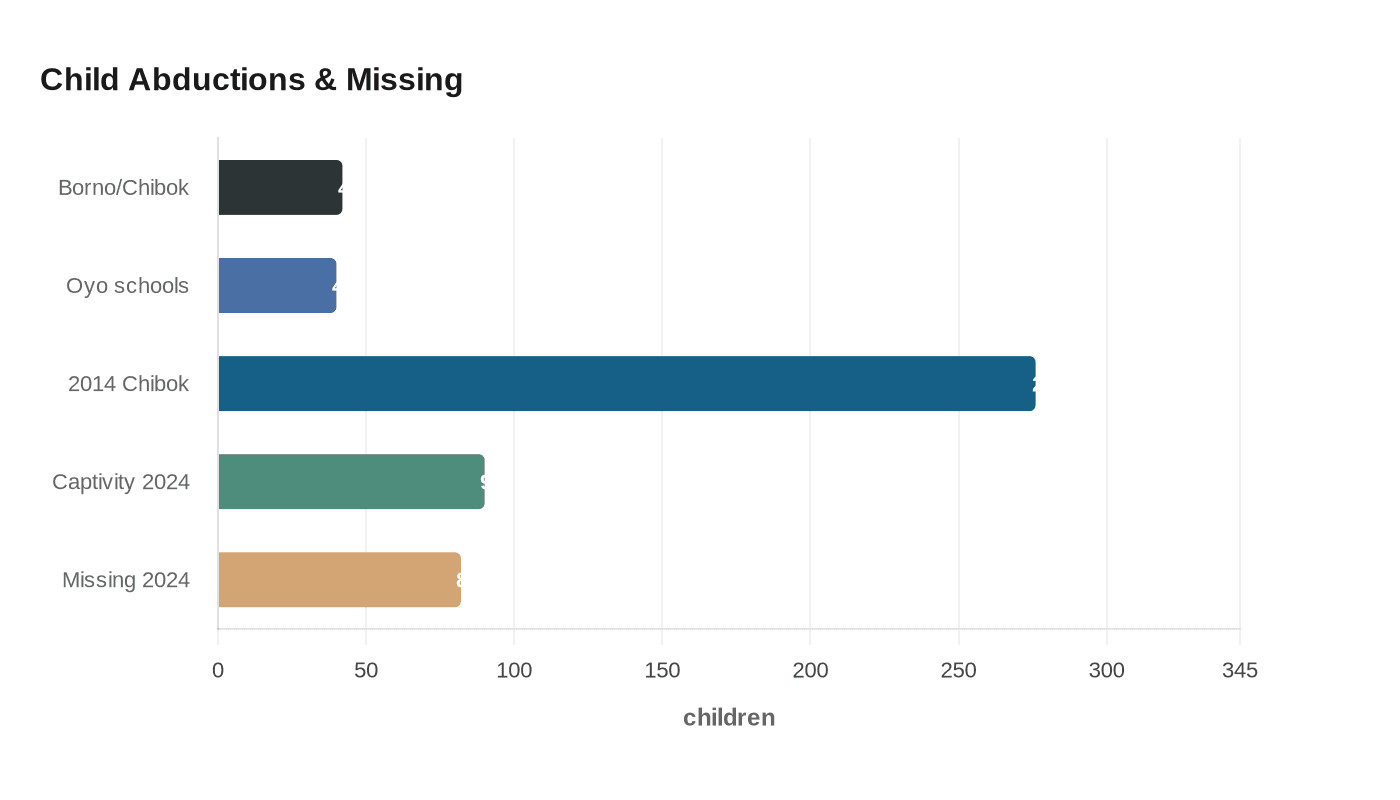
More than 80 children were missing after militant attacks on schools in Nigeria, a new reminder that the country’s long-running failure to secure classrooms has not been broken. The assaults spread across two regions, with 42 children abducted in the Askira Uba and Chibok area of Borno state and at least 40 taken from two secondary schools in Oyo state, leaving families in the north and southwest waiting for news.
In Borno, the attack hit the village of Mussa near Sambisa Forest, an area long associated with Boko Haram and its splinter faction, the Islamic State West Africa Province. The pattern matters as much as the number: school abductions have been used for years to terrorize communities, extract money and force schools to shut their doors. Nigeria’s security forces are already battling jihadi fighters and other armed groups, yet schools remain exposed in places where children should be safest.
The latest kidnappings also showed how widely the threat has spread. The Borno abduction and the attacks in Oyo, hours apart on Friday, pointed to a security problem that is no longer confined to one corner of the country. In practical terms, that means more pressure on local authorities to track the missing, more fear among parents, and more schools deciding whether opening their gates is worth the risk.
The crisis is inseparable from the memory of Chibok. UNICEF says kidnapping of learners during school attacks spiked in north-west and north-central Nigeria after the first known school attack in 2014, when 276 schoolgirls were abducted in Borno state. UNICEF said 90 girls remained in captivity in April 2024, while Amnesty International said 82 Chibok girls were still missing at the same point. Amnesty has also said more than 1,700 children have been abducted by gunmen since 2014 and that 17 mass school abductions were recorded in six years.
What has changed since then appears limited. UNICEF says only 37 percent of schools across 10 states have early warning systems to detect threats. It has also said 19 documented attacks on schools in 2022 and 2023 led to the closure of 113 schools in Borno, Adamawa and Yobe states. In northeastern Nigeria alone, 2 million children are out of school, while nationwide 10.2 million primary-school-age children and 8.1 million junior secondary-age children are not enrolled. Without stronger protection and faster rescue capacity, each new attack deepens the chance that more families will keep children at home and out of class.
This article was produced by Prism’s automated news system from verified source data, official records, and press releases, then run through automated quality and moderation checks before publishing. The system is built and supervised by the people who set the standards it runs under. Read our full AI policy.
Did this article answer your question?


