Mortgage Rates Reach Four Week High, Applications Slide Five Percent
Mortgage rates are rising for the third straight week, pushing total application volume down 5.2 percent and cooling demand among buyers and refinancers. The move matters because higher borrowing costs shave household purchasing power and could further slow an already fragile housing market.
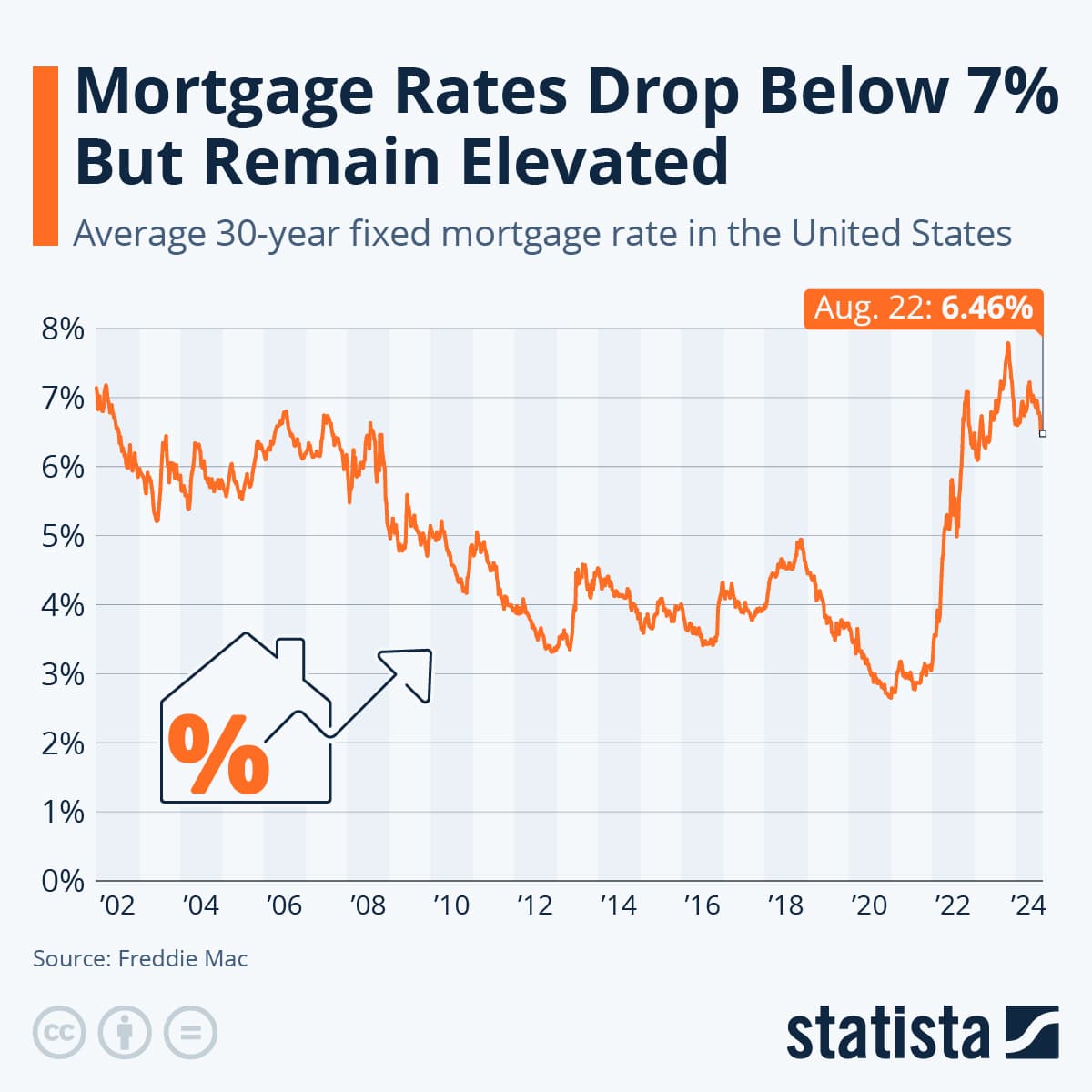
Mortgage rates are rising for a third consecutive week, and total mortgage applications fell 5.2 percent from the prior week, the Mortgage Bankers Association reported, signaling softer demand from both prospective buyers and homeowners considering refinancing. The average contract interest rate for 30 year fixed rate mortgages with conforming balances increased to 6.37 percent from 6.34 percent, with points unchanged at 0.62 including the origination fee for a loan with a 20 percent down payment. That level is the highest seen in four weeks.
Refinance activity, which typically moves most sharply with short term rates, declined 7 percent for the week. Despite the weekly drop, refinance applications remain about 125 percent higher than the same week a year ago, a comparison distorted by an unusually low base last year when rates were roughly half a percentage point higher. The contrast underscores how year over year percentage changes can mislead when volumes start from very different baselines.
The recent rise in mortgage rates reflects movement in longer term interest rates that mortgage pricing follows closely. Investors and lenders are parsing economic data and policy signals, and the modest climb in Treasury yields over recent sessions is filtering into the mortgage market. Even small changes in the 30 year rate have immediate effects on affordability, constraining buyers at the margin. For example, a borrower taking a $400,000 mortgage at 6.37 percent would face a principal and interest payment of roughly $2,495 per month, about $96 more than the same loan at a 6.00 percent rate. That increase reduces what households can afford or pushes buyers toward smaller or less expensive homes.
The pullback in demand comes at a delicate moment for the housing market. Purchase applications have softened as higher financing costs and still elevated home prices squeeze budgets, slowing the pace of transactions after a period of tight market conditions. For sellers, the combination of fewer buyers and rising rates can lengthen time on market and weigh on price growth. For lenders, reduced refi activity erodes fee income that surged earlier in the year as borrowers reacted to lower rates compared with the prior 2024 high.
Policy makers and market participants will watch whether the recent uptick in rates persists. Sustained increases could cool home sales further and feed into broader measures of household spending, while a reversal would offer relief to buyers and reopen refinancing windows for more households. In the near term, weekly swings in applications provide a timely barometer of how consumers respond to changing borrowing costs, with the latest MBA data pointing to diminishing momentum as rates climb back to the mid six percent range.
This article was produced by Prism’s automated news system from verified source data, official records, and press releases, then run through automated quality and moderation checks before publishing. The system is built and supervised by the people who set the standards it runs under. Read our full AI policy.
Did this article answer your question?