Moscow Claims Capture of Pokrovsk and Vovchansk, Kyiv Disputes
Russian officials on December 1 said their forces had taken Pokrovsk and Vovchansk, advancing what Moscow portrayed as gains along multiple sectors, while Ukrainian authorities denied the towns had fallen. The conflicting accounts come as intensified diplomacy and U.S. backed negotiations seek to shape the next phase of the war, making verification of control and the humanitarian consequences urgent for international stakeholders.

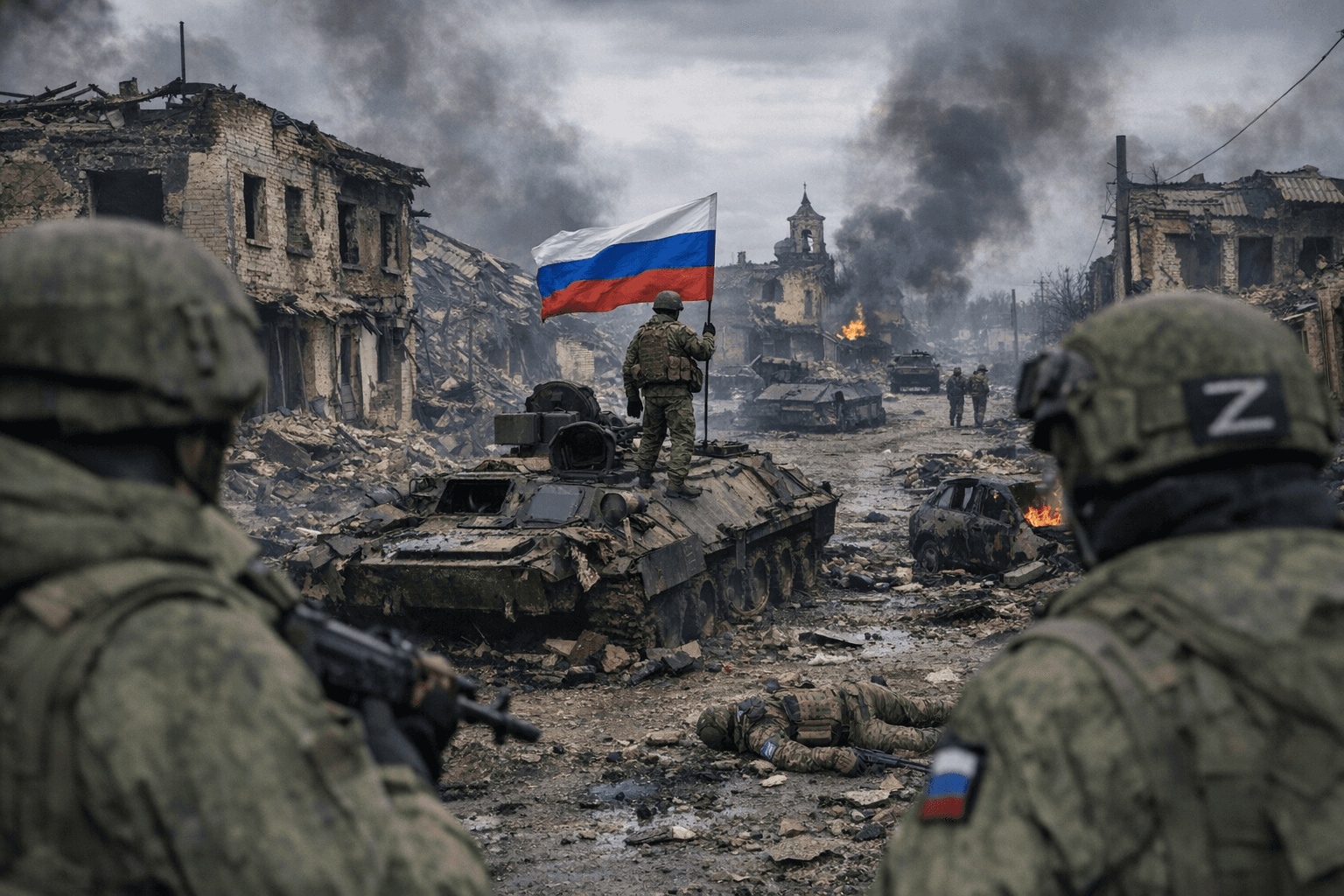
On December 1 Russian military commanders told President Vladimir Putin that Russian forces had captured the frontline towns of Pokrovsk and Vovchansk, and state and military channels released footage and statements asserting advances in several sectors. Those releases depicted street fighting and post combat clean up operations in areas Moscow said it now controlled. Ukrainian officials did not acknowledge that either town had fallen and reported continued heavy fighting in the same sectors, leaving a stark disparity between the two sides that independent observers had not resolved.
The towns sit in separate theatres of the war and carry different strategic and symbolic weight. Pokrovsk is in Donetsk region and has been a focal point of fighting for months, while Vovchansk sits in Kharkiv region close to the Russian border. Control of either locality would shape local front lines and influence the flow of people and matériel. Yet as of reporting, independent verification of complete control on the ground remained limited, with open source imagery and third party monitors unable to conclusively confirm the Russian claims.
The announcement coincided with intensified diplomatic activity. U.S. backed negotiations and visits by Ukrainian officials to European capitals were underway, as Kyiv sought weapons, political support, and guarantees for civilian protection. Moscow timed its briefing to President Putin to project momentum as Western capitals deliberated further aid and as diplomatic channels explored ways to deescalate or freeze particular lines of confrontation. The simultaneous surge in battlefield claims and diplomacy underscores how military events are being used to shape international bargaining positions.
For Kyiv the immediate risk is operational, humanitarian, and political. Ukrainian commanders publicly stressed ongoing combat in the areas in question, signaling that any loss would not come without further fighting and likely civilian toll. For Russia, the claims serve both domestic and international purposes. They bolster Kremlin narratives of progress and may be intended to strengthen negotiating leverage abroad. The contested accounts also present legal and humanitarian challenges under international law, particularly if civilians are displaced or denied access to aid as control shifts or is contested.
Western capitals face a delicate calculation. Verifying battlefield claims affects decisions on military resupply, sanctions, and diplomatic recognition of territorial control. The fog of war that characterizes modern conflict, amplified by curated state media footage and restricted access for independent organizations, complicates those decisions and heightens the risk of miscalculation.
As independent monitors work to corroborate control on the ground, the immediate human consequence will be measured in civilian movement, casualty reports, and access for humanitarian agencies. Until verifiable evidence emerges, the competing narratives from Moscow and Kyiv will remain a central element of the conflict, shaping international responses and the next rounds of both diplomacy and fighting.
This article was produced by Prism’s automated news system from verified source data, official records, and press releases, then run through automated quality and moderation checks before publishing. The system is built and supervised by the people who set the standards it runs under. Read our full AI policy.
Did this article answer your question?


