Moulton clears ballot hurdle, Markey wins Massachusetts Democratic endorsement
Moulton survived the ballot threshold, but Markey left Worcester with the party’s endorsement and a clear edge in the Democratic base. The split exposed a rift between activist power and generational change.

Seth Moulton cleared the ballot hurdle for his Senate challenge, but Ed Markey emerged from the Massachusetts Democratic Party convention with the sharper prize: the party endorsement and a strong show of delegate support that underscored how much of the state’s activist base still prefers the incumbent.
At the DCU Center in Worcester, more than 4,000 delegates gathered Friday and Saturday and handed Markey nearly 73% of the vote, with Moulton getting nearly 27%. Under party rules, a statewide candidate needs at least 15% delegate support to make the primary ballot, which means Moulton will continue his bid against the 79-year-old senator in one of the country’s most closely watched Democratic contests.
The result captured the central fault line in the race. Moulton, 47, launched his campaign in October 2025 around a generational argument, saying Democrats need more than incremental change and arguing that the party should be led by people who grew up with the internet and will live with the effects of artificial intelligence. Markey, preparing for the possibility of a third six-year term that would begin when he is 80, cast himself as the stronger progressive hand and told delegates, “When I see a problem, I write the bill.”
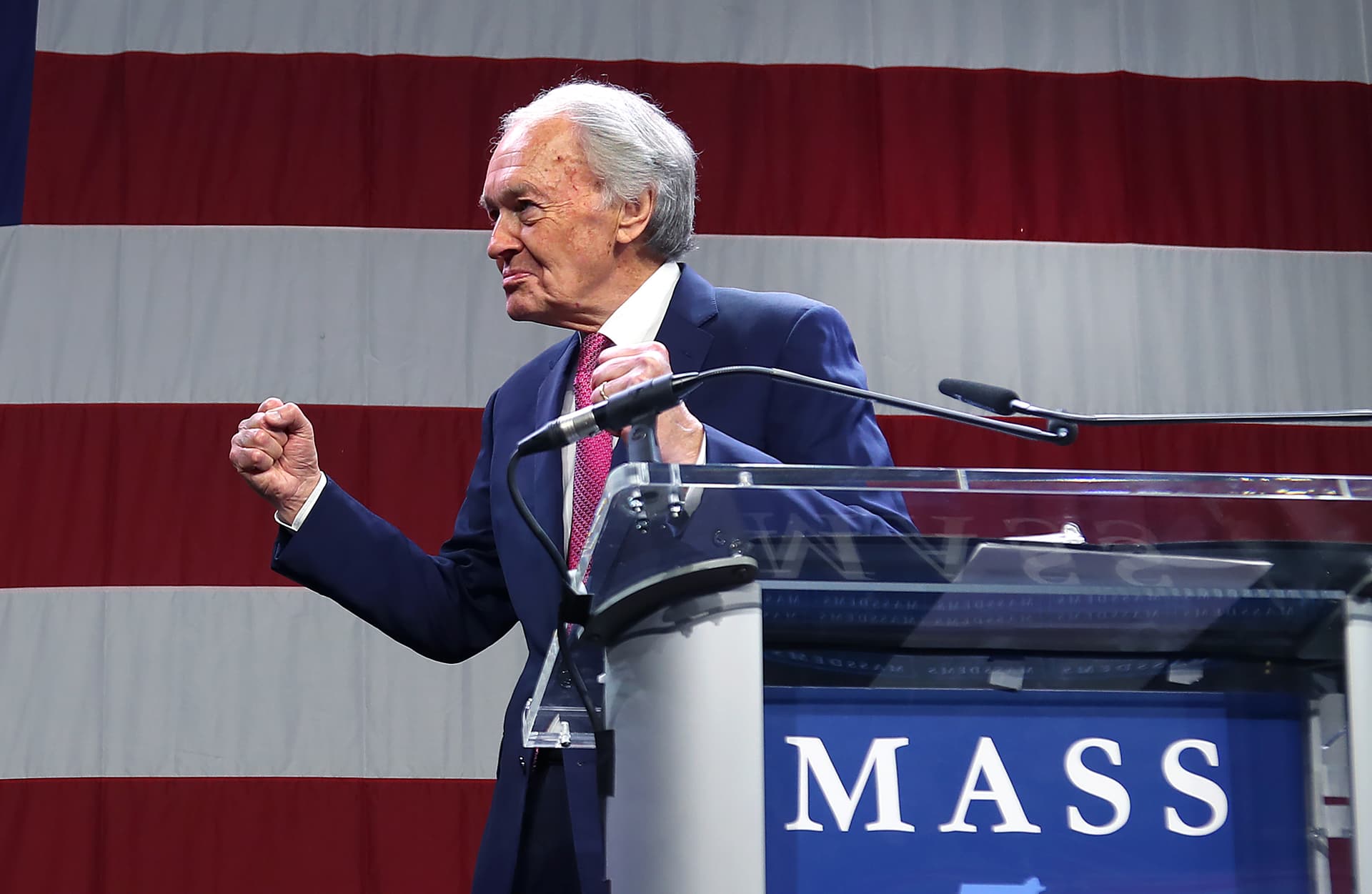
The convention also showed how sharply the two men are splitting over electability, ideology and the role of activists in blue-state politics. Markey used his speech to attack Moulton over past comments about transgender children and over his acceptance of corporate PAC money, a line of attack aimed squarely at delegates who have increasingly demanded cultural and financial purity from Democratic candidates. Moulton’s path to the ballot suggests that moderate Democrats can still survive in Massachusetts, but the endorsement vote showed how difficult it remains for them to win over a party base shaped by movement politics and primary voters who reward ideological consistency.
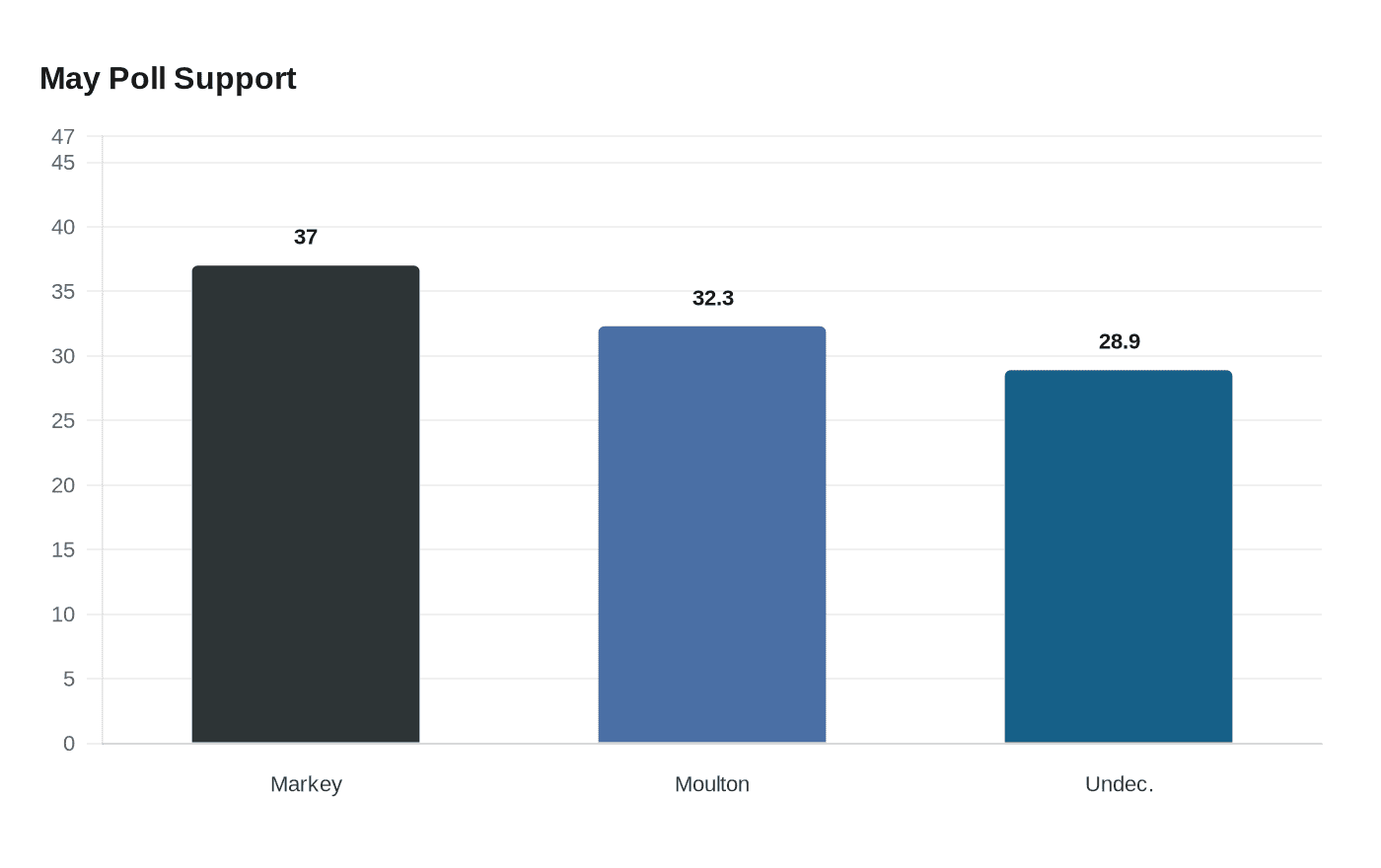
The race now turns to an Aug. 20 debate hosted by WBUR, WCVB and The Boston Globe, ahead of the Sept. 1 primary. An Emerson College Polling survey released in early May found Markey ahead of Moulton, 37% to 32.3%, with 28.9% undecided, and Markey also held higher favorability among both Massachusetts voters overall and Democratic primary voters. The convention left Moulton on the ballot, but it also left Markey with the advantage that matters most in a party nominating fight: the endorsement of the delegates who shape its ideological center.
This article was produced by Prism’s automated news system from verified source data, official records, and press releases, then run through automated quality and moderation checks before publishing. The system is built and supervised by the people who set the standards it runs under. Read our full AI policy.
Know something we missed? Have a correction or additional information?
Submit a Tip