Mountain Home Plantation marker highlights Bamberg County history
A historical marker near Govan marks Mountain Home Plantation's 1859 brick house and local ties to Clemson history, underscoring heritage and preservation needs for Bamberg residents.

A two-story brick house built in 1859 at Mountain Home Plantation near Govan now bears a historical marker that ties a local property to the county's antebellum agricultural landscape and to a figure in regional education. Erected in 2006 by the Historical Society of Bamberg County and the Frank J. and Lucy C. Hartzog Foundation, Inc., Marker Number 5-12 sits along Ehrhardt Road (State Hwy 5-22) near the Govan and Olar crossroads (approx. 33°13.126′N, 81°12.619′W).
The marker records that Samuel J. Hartzog built the house in 1859 at a documented cost of $2,993.08. A pencil inscription on the mantel notes the family moved into the house on May 14, 1859 and lists the original construction cost. Early descriptions point to Greek Revival detailing, including a full-width two-story portico with turned posts. The house was later remodeled in the 1940s in the Classical Revival style, when a second-story balcony and columns were added.
Mountain Home's history reflects the county's wider agricultural past. Cotton grown and processed on the plantation was historically hauled by wagon to the railroad at Graham's Turn Out, the site now known as Denmark. Deed records show the property changed hands multiple times in the 19th and 20th centuries, with transfers recorded in 1848, 1859 and later years. Those transactions and the house's evolution provide material for genealogical research and local histories that connect Bamberg families to the land and to regional institutions.
One of the plantation's most notable links to the wider region is familial: Henry Simms Hartzog, born at Mountain Home in 1866, later served as the third president of Clemson College from 1897 to 1902. That connection gives the site an additional layer of significance for local school history and for readers tracing educational and civic ties across the Lowcountry.
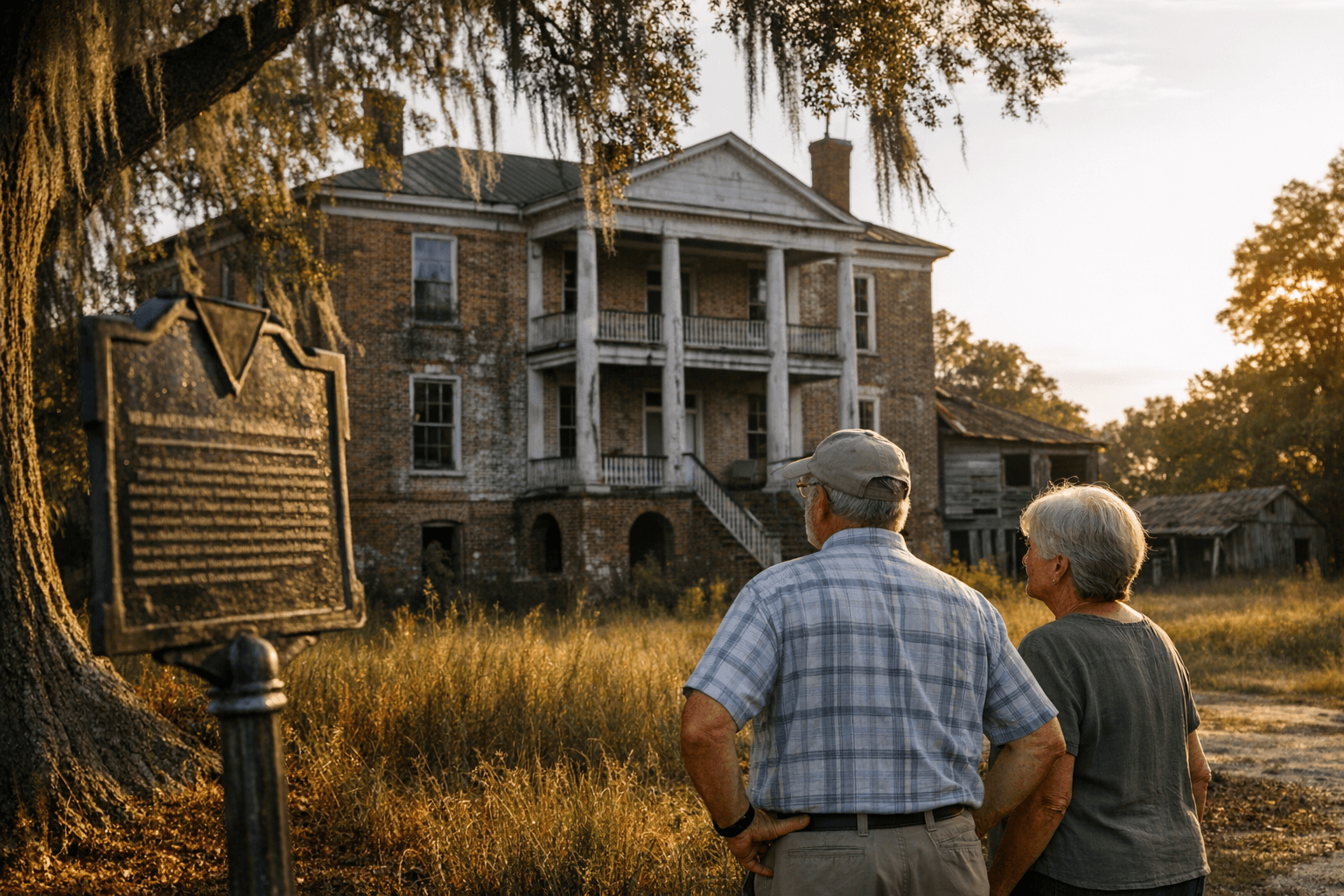
For Bamberg County residents, the marker and house are tangible reminders of complicated histories. As with many antebellum sites in South Carolina, Mountain Home sits within a past shaped by plantation agriculture and the realities of slavery, a legacy that continues to affect social and economic patterns today. Preservation, interpretation and heritage tourism around sites like Mountain Home present opportunities and responsibilities: to support local economies, to broaden access to historical resources, and to ensure narratives include all who lived and labored here.
The marker along Ehrhardt Road signals both preservation progress and unfinished work. For readers, Mountain Home offers a local stop that connects family research, school curriculum and heritage tourism, while calling on the community to keep historical interpretation accurate, inclusive and accessible as Bamberg County plans for preservation and educational use in the years ahead.
Sources:
Know something we missed? Have a correction or additional information?
Submit a Tip
