Mountbatten trials foam pickleballs to curb neighbour noise
Players and residents tested foam pickleballs at Mountbatten Community Club to cut noise. Quieter play could ease neighbour complaints and keep community courts accessible.
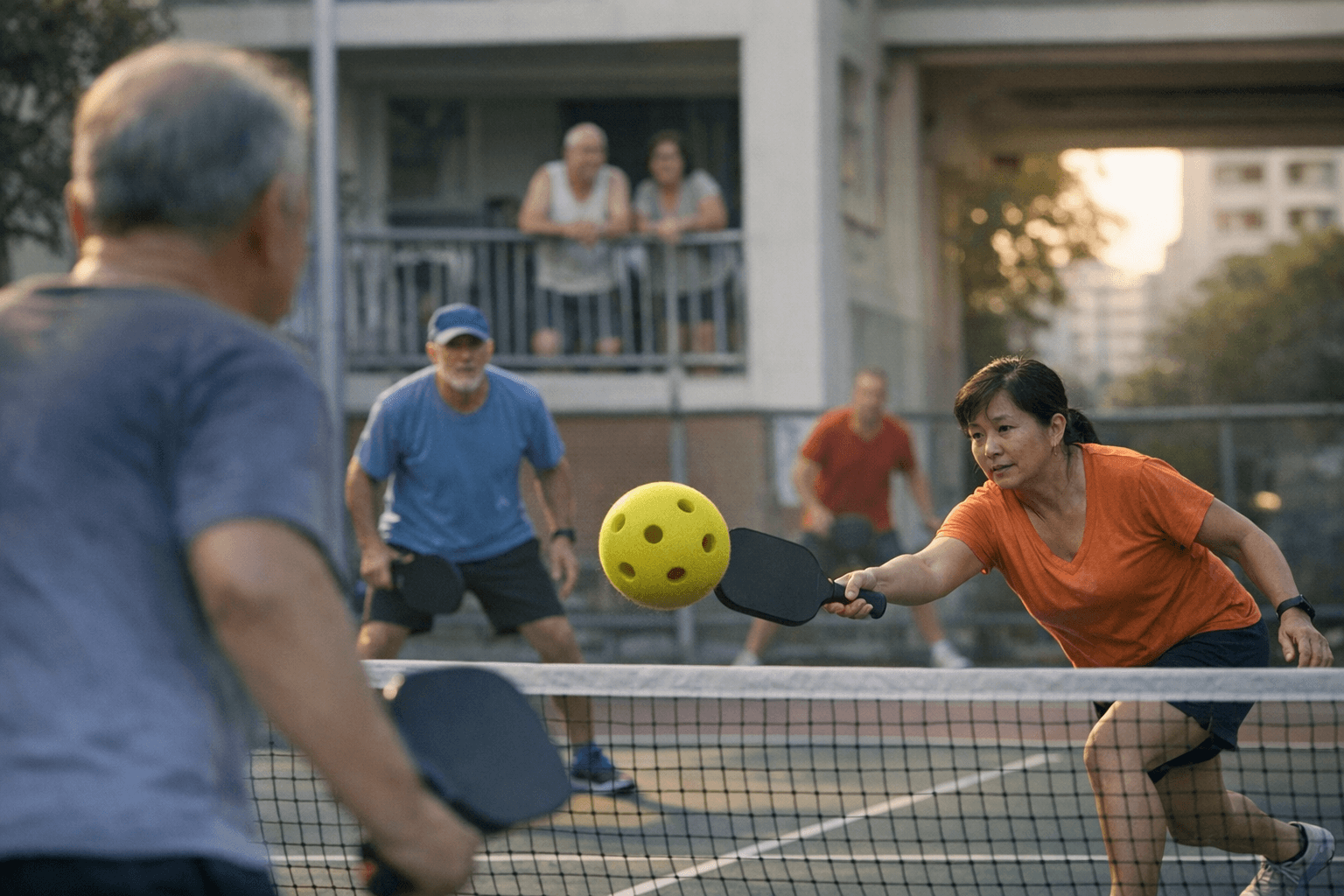
About 120 residents and players packed Mountbatten Community Club for a hands-on tryout of high-density foam pickleballs, a quieter alternative aimed at reducing noise complaints in the Marine Parade neighbourhood. Organisers staged the event on January 11, 2026 to show how foam balls perform on local courts and to gauge community appetite for a lower-noise option.
Measurements presented at the session showed foam balls reduce impact sound to roughly 60 decibels, about the level of a normal conversation, compared with the sharper 70 to 80 dB pop produced by standard plastic competition balls. For neighbourhoods where court noise has led to tensions or altered opening hours, that difference is noticeable to players and neighbours alike.
Mountbatten MP Gho Sze Kee attended the session and said that foam balls "could be a practical compromise to reduce neighbour complaints while allowing play to continue." His presence highlighted the event's community-focused aim: to keep courts active without creating new conflicts with surrounding households.
The trial reinforced a familiar trade-off: foam balls are best suited to recreational play. They have a different bounce and pace from standard competition balls, so players looking to practice tournament-style volleys, serves, or dinks should expect altered timing and shot feel. Organisers stressed that the goal is not to replace competition equipment but to offer a quieter option for social sessions, coaching clinics, and family-friendly hours.
Local residents who attended the tryout generally welcomed the softer sound, and organisers say they will capitalise on that support by staging a silent pickleball tournament in the months ahead to promote quieter play and demonstrate how community events can coexist with nearby housing. The experiment follows other parts of Singapore where noise concerns have already prompted changes to court hours and management practices.
For clubs and councils considering similar measures, the Mountbatten pilot offers practical evidence: swapping to high-density foam balls can substantially cut perceived noise without shutting courts, and running local trials helps tune expectations around playability and scheduling. Community sessions and quiet-hour leagues can be useful testing grounds before any permanent policy or equipment shift.
The takeaway? If you want to keep weekday evening socials and junior programmes running without sparking neighbour complaints, swap to foam for a few sessions and see how it affects rhythm and community relations. Our two cents? Treat foam balls as a toolkit item—not a replacement for every session—and run short trials to let players adjust their dinks and drives before committing to broader changes.
Know something we missed? Have a correction or additional information?
Submit a Tip