Mourinho set for Real Madrid return, why the move matters
Real Madrid are preparing to bring Mourinho back, and the move will test whether his hard-edged method can still steady a club built on pressure.
Why the return matters
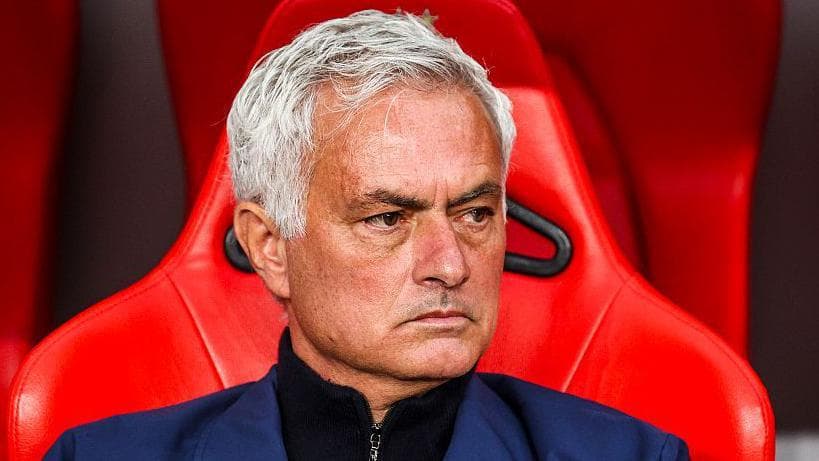
Real Madrid are preparing to bring Jose Mourinho back, and this is less about nostalgia than about control. The club is testing whether one of football’s most polarizing managers can again impose order on a squad with huge talent, heavy expectations and a history of internal turbulence.
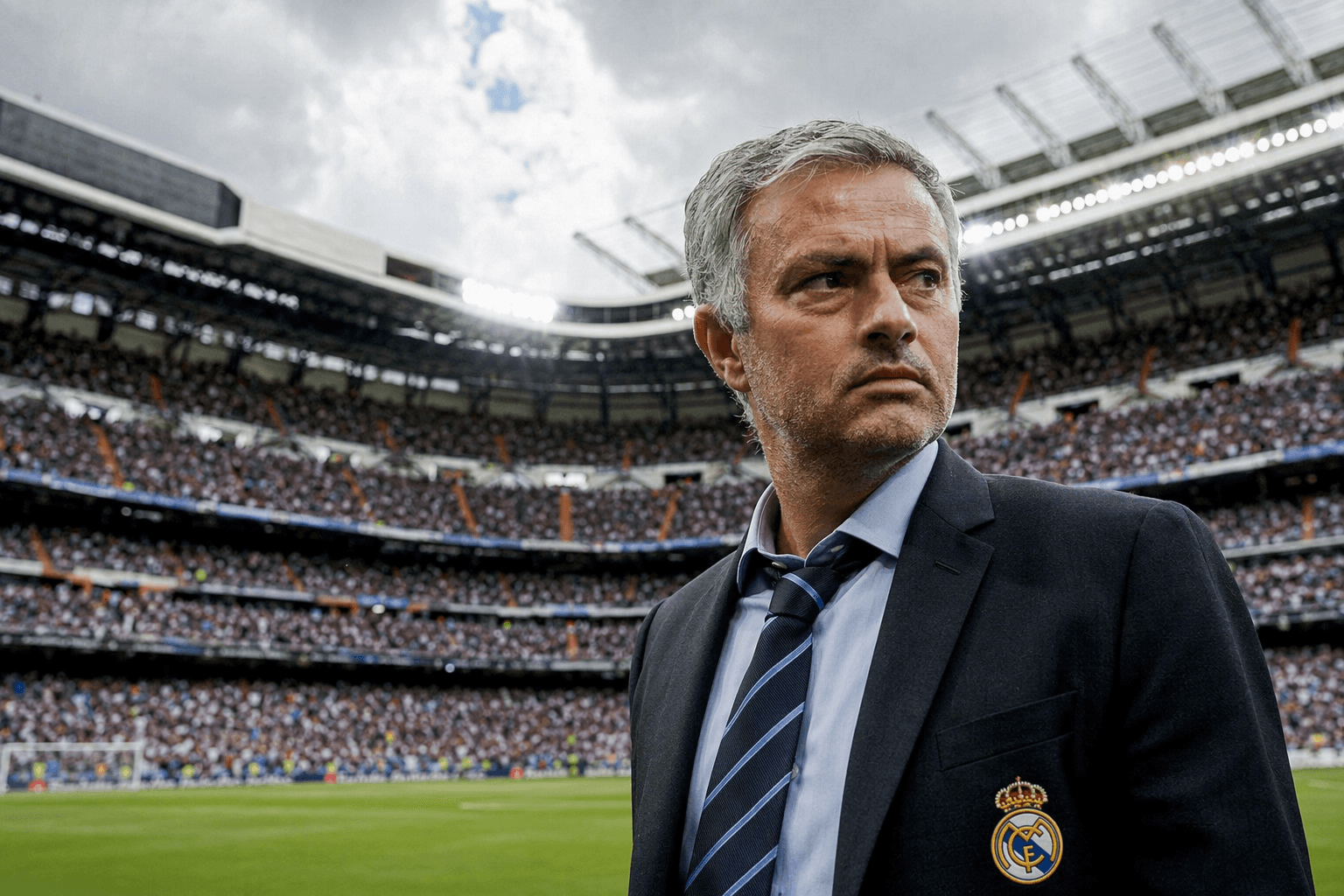
Spanish football expert Guillem Balague’s reading of the move is blunt: Mourinho is being asked to act as an iron-fisted answer to instability. That is the real storyline here, because his first spell at Madrid showed both sides of the same coin, trophies and tension, authority and friction, control and conflict.
The first appointment set the tone
Mourinho’s first arrival in Madrid was framed as a rescue mission. Real unveiled him on 31 May 2010 on a four-year deal after he replaced Manuel Pellegrini, becoming the club’s 11th coach in seven years. The message from the club was clear: he was being brought in to restore Real Madrid to the top of Spanish and European football.
The backdrop matters because it explains why the appointment felt so urgent. Real had not gone beyond the Champions League first knockout round for six seasons, and they had not won a domestic trophy since 2008. Mourinho knew exactly what he was walking into, describing Real as a unique club whose history, recent frustration and demand to win made the challenge irresistible. He also made his core belief plain: he had not changed as a coach, and his players had to understand that the club came first.
Immediate success, then a harder edge
The first phase worked fast. Mourinho won his first title with Real on 20 April 2011, when Cristiano Ronaldo scored in the Copa del Rey final. That trophy mattered because it was the first proof that the new regime could turn noise and expectation into a concrete result.
The broader record was strong as well. UEFA later described Mourinho’s three-year tenure as one that brought a record-breaking Liga campaign and three Champions League semi-finals. In 2011-12, Real became the first club to break the 100-point barrier in La Liga and finished with 121 league goals, a brutal attacking return that captured the power of the team at its peak. That season remains central to any assessment of Mourinho at Madrid because it showed how far the project could go when the machine was working.
Why the first spell ended badly
The ending was less tidy than the beginnings suggested. Mourinho left Real Madrid by mutual agreement on 20 May 2013 after the Copa del Rey final defeat to Atlético Madrid. By that point, Real were already out of the Champions League and had surrendered the league title to Barcelona.
That final season is important because it shows the limits of the model. Mourinho had taken Real to three straight Champions League semi-finals, and UEFA’s summary of his spell makes clear that the team had delivered at a very high level. But at Madrid, elite performance is judged against the biggest trophies first, and the relationship had begun to fracture before the exit. Success was real, but so was the sense of strain.
What has changed since then
A second return would not take place in the same environment. The first Mourinho appointment came after years of managerial churn and trophy frustration under Florentino Pérez’s presidency. This time, the club would be asking him to step into a far more complex dressing room, one where star players have greater visibility, stronger personal brands and more leverage inside the wider football economy.
That shift matters because Mourinho’s first Madrid team benefited from a clear hierarchy. He arrived as the outsider with a mandate to fix things. In a modern elite club, however, authority is more complicated. A manager still needs control, but he also needs buy-in from a dressing room that is more media-savvy, more globally scrutinized and less likely to accept a purely top-down approach without resistance.
The tactical question is bigger now
The tactical landscape has also moved on. Mourinho’s first Real side was built on speed, directness and a ruthless edge in transition, and it could overwhelm opponents when the structure held. That formula still has value, but modern elite football asks for more flexibility, more press resistance and more adaptability across different match states.
That is why the move is so intriguing. Real are not just asking whether Mourinho can win matches. They are asking whether a coach known for certainty, discipline and confrontation can still shape a title-level team in a game that has become more demanding, more data-aware and more tactically varied. His old formula can still work in bursts, but at a club like Real Madrid, it now has to survive much higher expectations across a longer season.
What this appointment would really say
If Real Madrid complete the move, the symbolism will be clear. The club will be saying that talent alone is not enough, and that the bigger problem is alignment, discipline and leadership. In that sense, Mourinho’s return would be a direct answer to instability, not a sentimental reunion.
His first spell delivered the Copa del Rey, a 100-point La Liga title and three Champions League semi-finals. It also ended in conflict and fatigue. A second act would therefore be a sharp test of whether the same manager who once brought order to Madrid can do it again, this time in a club environment that is even more demanding and far less forgiving.
This article was produced by Prism’s automated news system from verified source data, official records, and press releases, then run through automated quality and moderation checks before publishing. The system is built and supervised by the people who set the standards it runs under. Read our full AI policy.
Did this article answer your question?