MultiGP Issues Part 1 Drone Racing Training Guide Emphasizing Pre-Flight Checks
MultiGP’s Part 1 training primer stresses strict pre-flight checklist discipline and practical drill work, a push that could cut DNFs and lift lap consistency across its chapters.
MultiGP’s Drone Racing Training: Part 1 serves as a practical primer used by many chapter organizers and pilots, putting pre-flight checklist discipline at the center of race-day preparation. That emphasis matters because consistent lap completion, not raw speed, determines heat progression and championship prospects in FPV racing.
MultiGP positions itself as the premier drone racing league which hosts frequent competitive gatherings and casual events within its network of hundreds MultiGP Chapters and thousands of pilots world-wide. Programming such as the Championship, Regional Series, Universal Time Trial Tracks and Chapter Tiers are designed to allow the drone racing community to compete in an easily accessible yet structured format with the goal of progressing the sport. MultiGP is the Academy of Model Aeronautics Special Interest Group for First Person View (FPV) Racing.
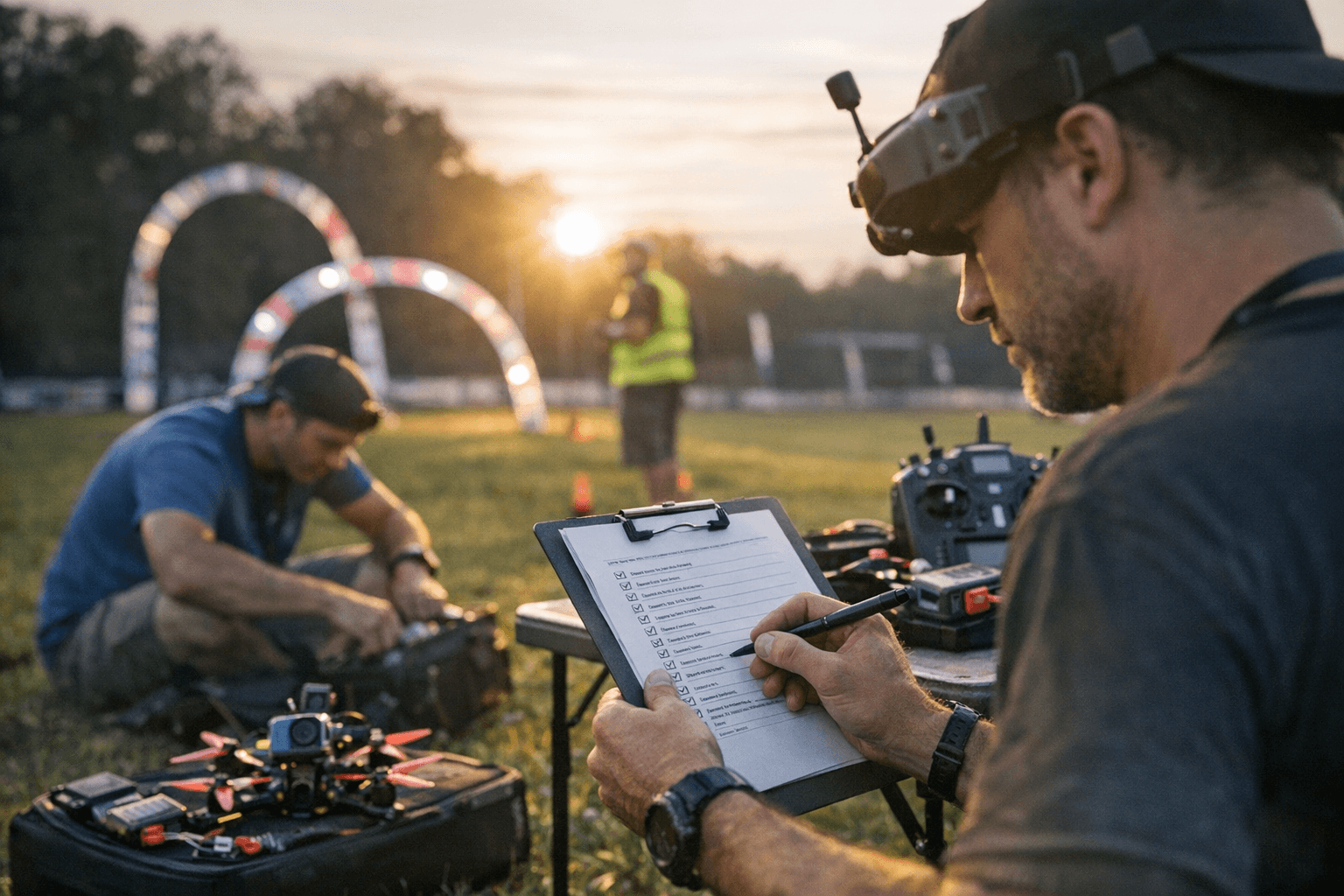
The training primer frames equipment checks and practice discipline as performance levers. A verbatim pre-flight checklist fragment in the guide reads: "inspect frame, props, motors, batteries, transmitter, goggles and charger every race da", the sentence appears truncated in the released text and requires clarification. MultiGP’s training philosophy reinforces that gear choices matter but are secondary to prepared pilots: "There are many components that go into being a champion. Motors, ESCs, frames, flight controllers, and batteries are not the only choices that you face. How you train is also an important step on your road to the Winner’s Circle. Your skills as a pilot are the foundation to your success on the MultiGP Circuit. Races are won before the starting buzzer; races are won by finding that calm center in the middle of chaos. Training, drills, and practice - both on and off the course - are what prepare you for the race. Just like any professional sports participant, a drone racers’ skill must be honed before they ever rotor up."
Top pilot practice tips are featured to translate that philosophy into track work. Chris "Hasak" Haskins offers a pilot-level drill set rooted in lap completion: "Consistency is king in drone racing. Completing laps is the only way to perform well, and not put yourself in a position where you must get a first place for the next three heats, trust me I know. If you find a portion of a track that you often get 'wonky', take a couple batteries and slow it down. Do it smooth as possible then crank it up a little bit the next heat. You will feel like you are moving slower but your lap time will be a pleasant surprise. If you have good training partners and starting to get fried at the end of a practice session from all-out battle, ask the whole group to take a pack or two at 60% speed and then get back at the hard-core practice. It feels like a bit of a 'reset' and typically more of your group will finish with even faster lap [...]" The Haskins passage is truncated at the end in the source material and should be sourced in full for publication.
Beyond competition training, MultiGP is cultivating a talent pipeline through the MultiGP STEM Alliance and its Drones in School program. The alliance "provides learning opportunities for ALL students from 6th grade through post-secondary" and tasks student teams to "design, build, and race their very own FPV racing drones to compete in each level of the MultiGP STEM Alliance program pathway." The educational program explicitly targets technology, engineering, mathematics and science competencies and lists official partners including Drone Zone New Jersey, Ready Made RC, Florida Power & Light Company, University of North Dakota, Warren UAS, Trumbull County ESC, EmaxUSA, Kansas State University, DroneBlocks, Aardvark and HDZero.
For pilots and chapter organizers the immediate takeaway is operational: prioritize checklist discipline, practice consistency drills such as controlled 60% speed packs, and treat training as preparation as much as gear tuning. For the sport and industry, MultiGP’s dual focus on reliability and youth education signals a maturation of FPV racing toward safer, more sustainable competition and a clearer pipeline into UAS workforce roles. Follow-up should secure the full Part 1 text and the remainder of truncated guidance to convert the primer into a complete checklist and drill set for chapters and schools.
Know something we missed? Have a correction or additional information?
Submit a Tip