Multiple Beehive Thefts, Including Nearly 200 Hives, Threaten Fresno Almond Pollination
Nearly 200 beehives were stolen from a ranch south of Selma as almond pollination ramps up, adding to a string of thefts that have taken hundreds, and cost beekeepers millions.
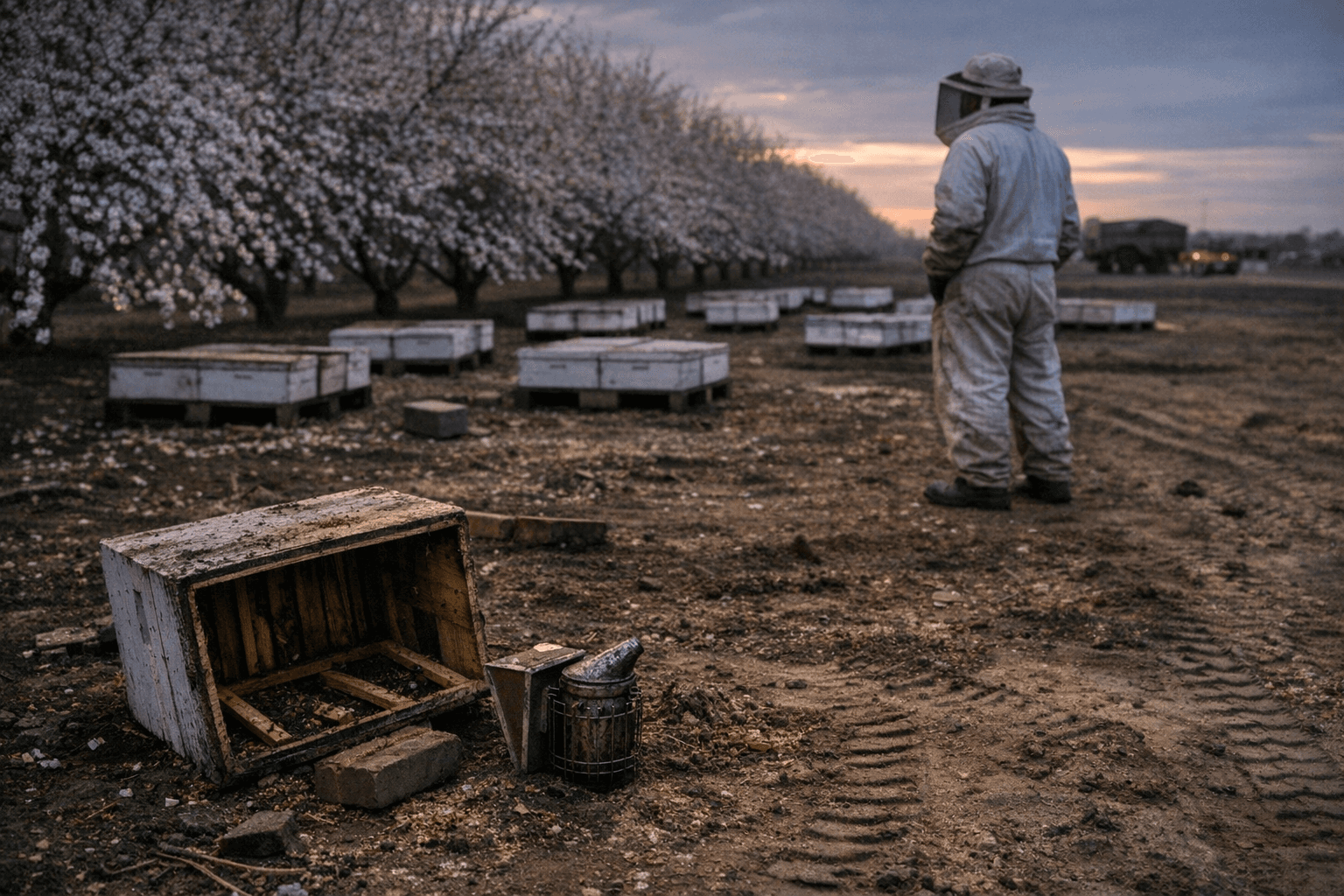
A ranch just south of Selma reported nearly 200 beehives taken as beekeepers set out colonies for almond pollination, Ed Harmon said, intensifying pressure on Fresno County growers and commercial beekeepers. Peter Kotseruba, a San Joaquin Valley farmer and beekeeper working with Harmon, said the loss is both immediate and future-facing: "That's a lot of money lost, and it's a lot of money lost in the future."
The thefts come during the January-to-March window when rented colonies are concentrated across orchards. Fresno County law enforcement notes the seasonal pattern: "This type of crime consistently happens in Fresno County around January and February as beehives are set out for the almond bloom," said Tony Botti of the Fresno County Sheriff's Office, adding that "it is usually someone else in the industry behind it since they are familiar with handling bees. They will strike at night when the bees [are] dormant or in the rain when they are not active." The Sheriff's Office is searching for a separate cache of 96 stolen hives branded "MEB" that were taken from a field west of Mendota and valued at nearly $34,000; those colonies disappeared between 5:30 p.m. on Jan. 28 and 4 p.m. on Jan. 29, and a cash reward is being offered for information.
Industry reporting and law-enforcement investigations list multiple incidents across Fresno and neighboring counties. Almond Board-related figures show two separate thefts of 120 hives each in the Central Valley and the theft of two Hummerbee forklifts and a trailer in Fresno County. Project Apism reports additional thefts in Madera and Fresno Counties, and cited a statewide tally of 1,992 hive thefts at the time of its posting. Longer-run industry estimates place nearly 10,000 hives stolen over an identified time frame with an estimated value of $3.5 million and total beekeeper losses of $5.6 million; 2023 recorded approximately 2,300 stolen hives, the highest single-year total reported to date.
Investigators and beekeepers have begun using technology and task-force coordination to push back. Deputy Rowdy J. Freeman, who serves as a commercial beekeeper and as president of the California Rural Crime Prevention Task Force, reported an investigative break after placing airtags in colonies and discovering a bee hive "chop shop" where equipment and bees from several operations were found, though "the thief is still on the loose!" The task force is supported by the California State Beekeepers Association, the California Department of Food and Agriculture, the State Apiary Board, the California Farm Bureau, local county Agriculture Departments, local Sheriff's Offices, and the Almond Board of California.
Local economic stakes are concrete. Harmon emphasized beekeepers' upfront costs, saying, "It's terrible because the beekeepers are out 200 bucks a hive," and describing pollination as the link between bees and nut production: "The bees transfer from one tree to the other. Every one of those nuts is because a bee visited the flower." Fresno County Farm Bureau CEO Ryan Jacobsen called a hive theft "devastating" to a beekeeper, a reality that can ripple into orchard yields and pollination availability across Fresno County.
With out-of-state beekeepers among the victims, the 96-hive theft involved colonies owned by South Dakota beekeepers, growers and apiaries are watching for recovered equipment and leads. The Fresno County Sheriff's Office continues its search for the MEB-branded boxes, investigators pursue the chop-shop lead identified by Freeman, and industry groups point beekeepers toward defensive resources such as the California State Beekeepers Association flyer and Project Apism guidance as the almond bloom proceeds.
Know something we missed? Have a correction or additional information?
Submit a Tip

