Mysterious booms rattle South Carolina and New England, meteor and sonic boom suspected
A sonic boom shook South Carolina, then a fireball rattled New England two days later, triggering reports of shaking from Rhode Island to New Hampshire.

Loud booms echoed across two regions and three states in a span of days, with hundreds of South Carolina residents and then New England listeners reacting to sudden blasts that felt, to some, like earthquakes. In South Carolina, reports poured in just before 5:30 p.m. on Thursday, May 28, from Irmo, Sumter and Florence. People described shaking and, in some cases, said they thought the jolt was seismic. The U.S. Geological Survey later classified the event as a sonic boom, assigned it a magnitude of 0.0 and said the source appeared to be about three miles north-northwest of St. Andrews.
Two days later, another boom rolled across New England, where people in New Hampshire, Massachusetts and Rhode Island heard a loud noise around 2:05 p.m. on Saturday, May 30. NASA told ABC News that a meteor, or fireball, was detected around 2:06 p.m. and was traveling at about 75,000 mph before fragmenting roughly 40 miles above northeast Massachusetts and southeast New Hampshire. NASA estimated the burst released energy equivalent to about 300 tons of TNT, a scale that helps explain why a high-altitude object could still rattle people on the ground.
The New England event also produced its own trail of verification. NOAA’s GOES-19 Geostationary Lightning Mapper captured an unusual signal near the Massachusetts coast at the time, and Massachusetts officials said they received reports of an audible boom and ground tremors. Even so, they said there were no known emergency, police or fire calls tied to a public safety threat.
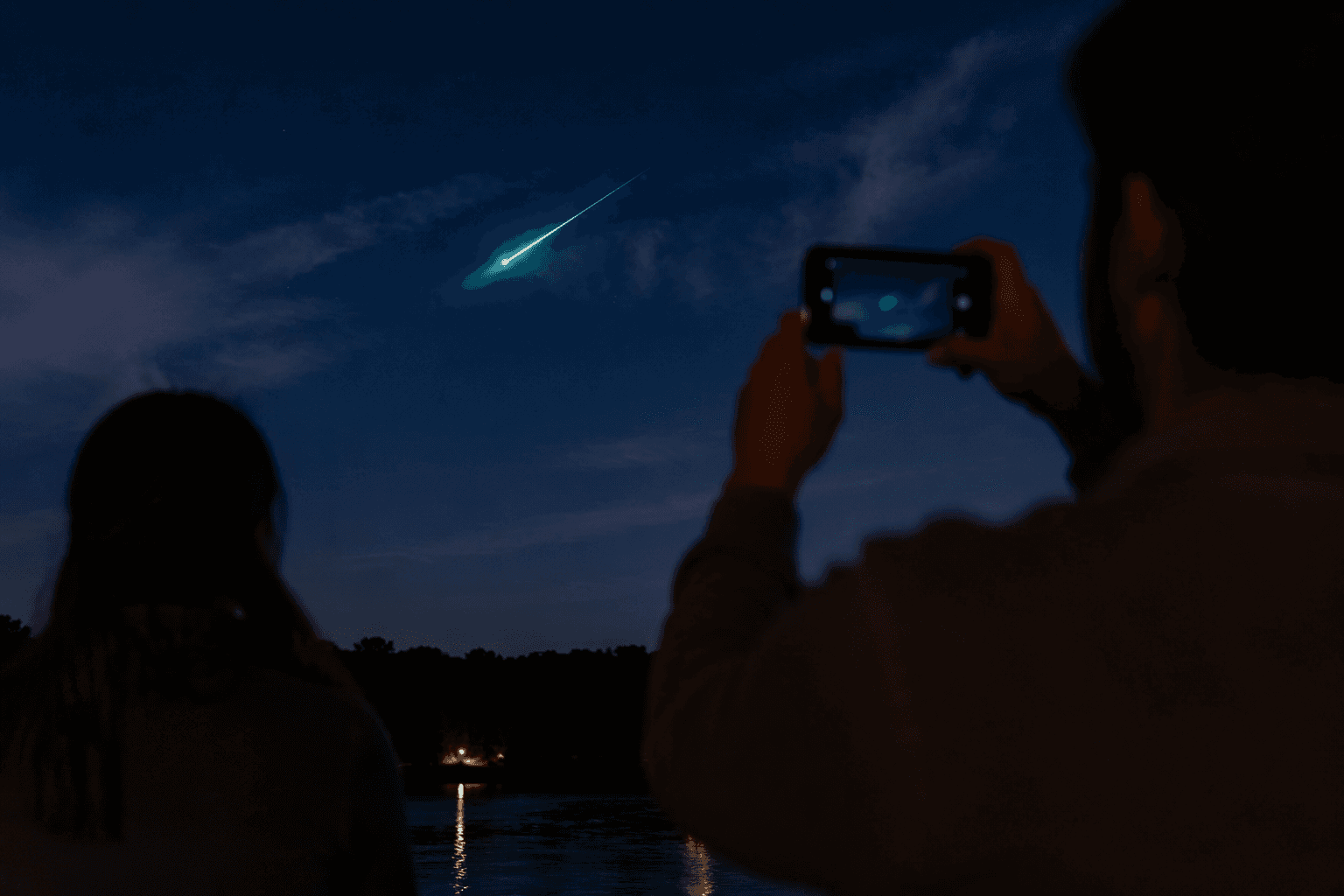
That distinction matters because loud atmospheric booms are easy to misread in the moment. The U.S. Geological Survey says sonic-boom events often show up as atmospheric incidents with a linear path and broad witness reports, which can help separate them from earthquakes. NOAA and the National Weather Service have used GLM satellite data before to identify bolides and calm public concern, including a meteor explosion over southwestern Pennsylvania on January 1, 2022 after numerous 911 calls.
Taken together, the South Carolina and New England episodes show how quickly a single boom can cross community lines and outpace local explanation. When a blast is heard in multiple states, the first test is not speculation but verification, and the agencies that can do that fastest shape whether the public hears a mystery or a measured answer.
This article was produced by Prism’s automated news system from verified source data, official records, and press releases, then run through automated quality and moderation checks before publishing. The system is built and supervised by the people who set the standards it runs under. Read our full AI policy.
Know something we missed? Have a correction or additional information?
Submit a Tip