Nadav Lapid’s Yes! ignites debate over Israel, censorship and boycotts
A film that skewers Israel’s elites is also being boycotted by parts of the pro-Palestinian left, exposing a split between anti-censorship and solidarity politics.
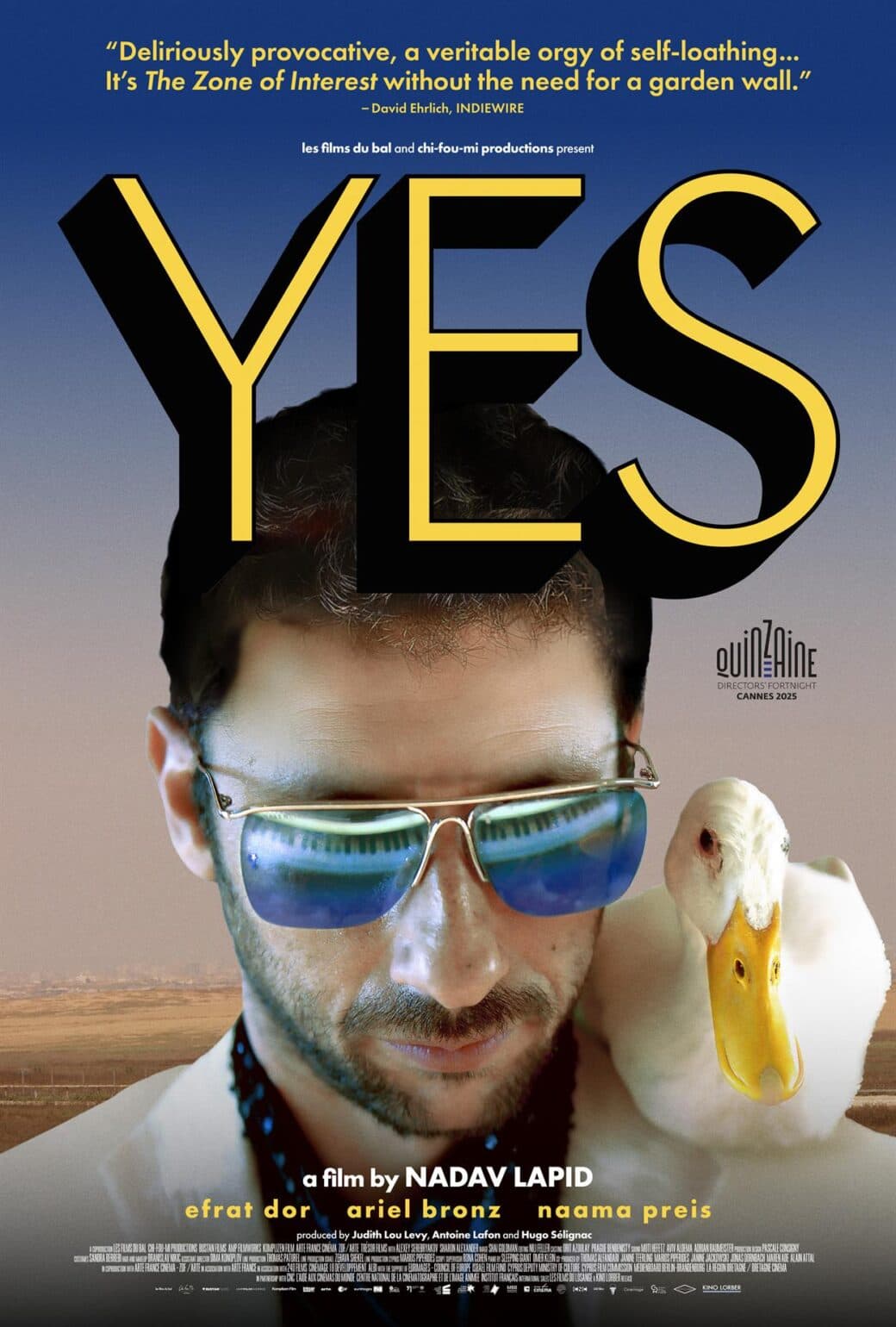
Nadav Lapid’s Yes! lands like a provocation from inside the argument itself. The 2025 satire is set after the October 7 Hamas attacks on Israel, follows a jazz musician and his wife as they sell themselves to the country’s elite, and culminates in a commission to write a new national anthem. That is precisely why it has become a test case for a deeper conflict: whether a movement built around solidarity can still defend art that attacks the very system it opposes.
A satire aimed squarely at the national mood
Yes! is not a neutral film about political tension. It is a 150-minute France-Israel-Cyprus-Germany co-production that uses dark satire to examine a society in moral free fall, with its central couple repeatedly saying yes to power, compromise and self-abasement. The premise is deliberately abrasive, and distributors have described the film as a “blistering indictment of modern Israel” and a “blistering attack on Israeli nationalism.”
Lapid also pushes the film into direct confrontation with real imagery. Yes! resurrects a 2023 Kan broadcast in which children sang the words “We will eliminate them all,” a phrase that became widely condemned and was later deleted amid outrage. In the film, that material functions less as provocation for its own sake than as a way of forcing viewers to sit with the language and emotional temperature of the post-October 7 moment.
Why Lapid matters in this fight
Lapid is not a newcomer to political controversy, nor to acclaim. He has long been one of Israel’s most prominent cinematic critics of his government, and he has lived in self-imposed exile in France since 2021. His previous films Synonyms, which won the Golden Bear in Berlin in 2019, and Ahed’s Knee, which won the Jury Prize at Cannes in 2021, established him as a director willing to make discomfort the point.
That background matters because Yes! is being read not as an outsider’s attack on Israel, but as an insider’s furious reckoning with it. The film’s critical force is what makes the boycott debate so combustible: it is difficult to argue that the work is propaganda for the state when its creator has spent years making some of the harshest anti-government cinema in Israeli culture.
The boycott that boomeranged
The paradox at the center of the controversy is that Yes! has also been targeted by some pro-Palestinian activists. Lapid withdrew from the FID Marseille festival after around 10 filmmakers reportedly pulled their films in protest at his participation, a move that opened a broader argument about whether cultural boycott should reach artists who are among the strongest critics of Israeli power.
That pushback produced its own counterreaction. More than 350 film industry figures, including Natalie Portman, Justine Triet, Jacques Audiard, Cristian Mungiu, Ira Sachs and Kleber Mendonça Filho, signed an open letter defending Lapid and calling the boycott an “intellectual failure.” Their argument was not simply that Lapid deserved protection as an individual artist. It was that censoring or excluding artists who challenge their own governments weakens the political and moral case for open cultural debate.
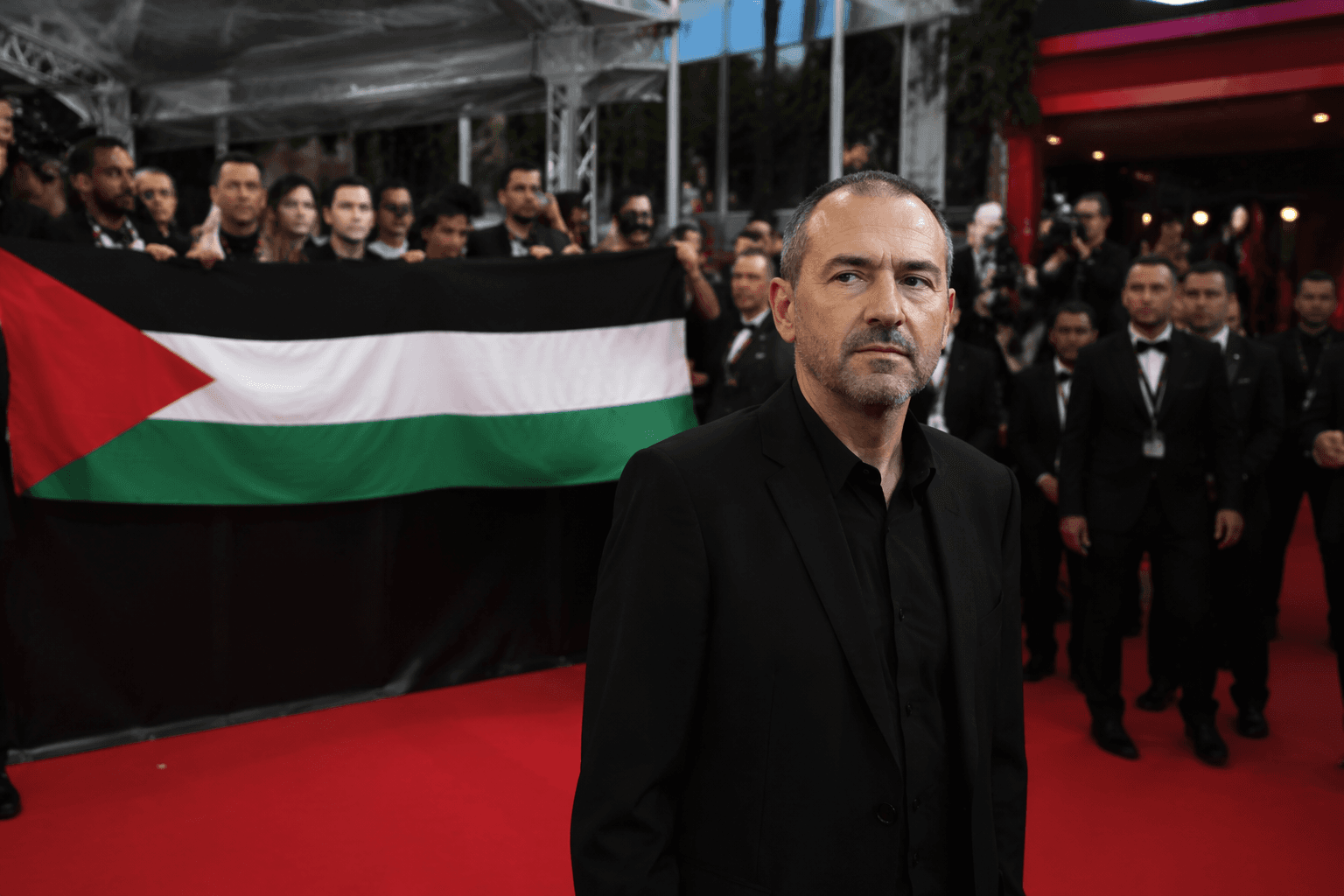
The letter also drew a sharper line: continued engagement, not exclusion, is the more effective political lever. In other words, the defense of Lapid became a defense of a principle that art can remain politically valuable precisely because it does not conform neatly to movement discipline.
A broader boycott campaign is redrawing the lines
The dispute around Yes! is only one front in a much larger cultural campaign. In September 2025, Film Workers for Palestine said 1,200 filmmakers and film workers had signed a pledge not to work with Israeli film institutions they consider complicit in genocide and apartheid. The group explicitly cited the 1987 Filmmakers United Against Apartheid boycott of apartheid South Africa as an inspiration, placing the campaign inside a familiar tradition of cultural pressure.
That analogy is central to how the boycott is being justified. Supporters see institutional noncooperation as a way to isolate a state and its cultural infrastructure when they believe formal politics have failed. Critics counter that the method can flatten distinctions between state-aligned institutions and dissenting artists, and that it risks treating the most visible Israeli critics as though they were part of the machinery they oppose.
The Israeli Film and TV Producers Association rejected the campaign on exactly those grounds. It said the boycott was “misguided” and counterproductive, arguing that Israeli artists have long been among the primary voices carrying Palestinian narratives and that cutting off collaboration harms the fragile work of dialogue rather than advancing it.
Why the film’s message lands so sharply now
Yes! reaches beyond argument about Israel and Palestine into a broader question about postwar culture: what happens when a film is judged not just by what it says, but by whether it fits the movement strategy of the moment? Lapid’s story of submission, artistic compromise and a country sinking into moral collapse is unsettling in part because it offers no comfortable moral refuge. The characters do not resist power; they absorb it.
Kino Lorber, the U.S. distributor, has framed the film as a provocative post-October 7 satire about submission, compromise and collapse, and it opened in limited U.S. theatrical release on March 27, 2026. That release came after Cannes’ Directors’ Fortnight added it to its 2025 lineup on April 24, 2025, giving the film an international platform even before the boycott fight hardened around it.
The result is a rare and revealing cultural collision. A film that condemns Israeli nationalism is being challenged by activists who believe the moral urgency of boycott should override artistic exception. The backlash against that tactic, meanwhile, shows that parts of the left still see anti-censorship as a principle worth defending even under the pressure of war, trauma and political fury. In that narrowing space, Yes! has become more than a film: it is a stress test for the boundaries of solidarity itself.
This article was produced by Prism’s automated news system from verified source data, official records, and press releases, then run through automated quality and moderation checks before publishing. The system is built and supervised by the people who set the standards it runs under. Read our full AI policy.
Did this article answer your question?