NASA Artemis II Crew Makes History on First Crewed Lunar Flyby Mission
Four astronauts flew within 4,067 miles of the Moon on April 6, marking humanity's first crewed lunar approach in 54 years and setting a new human distance record from Earth.
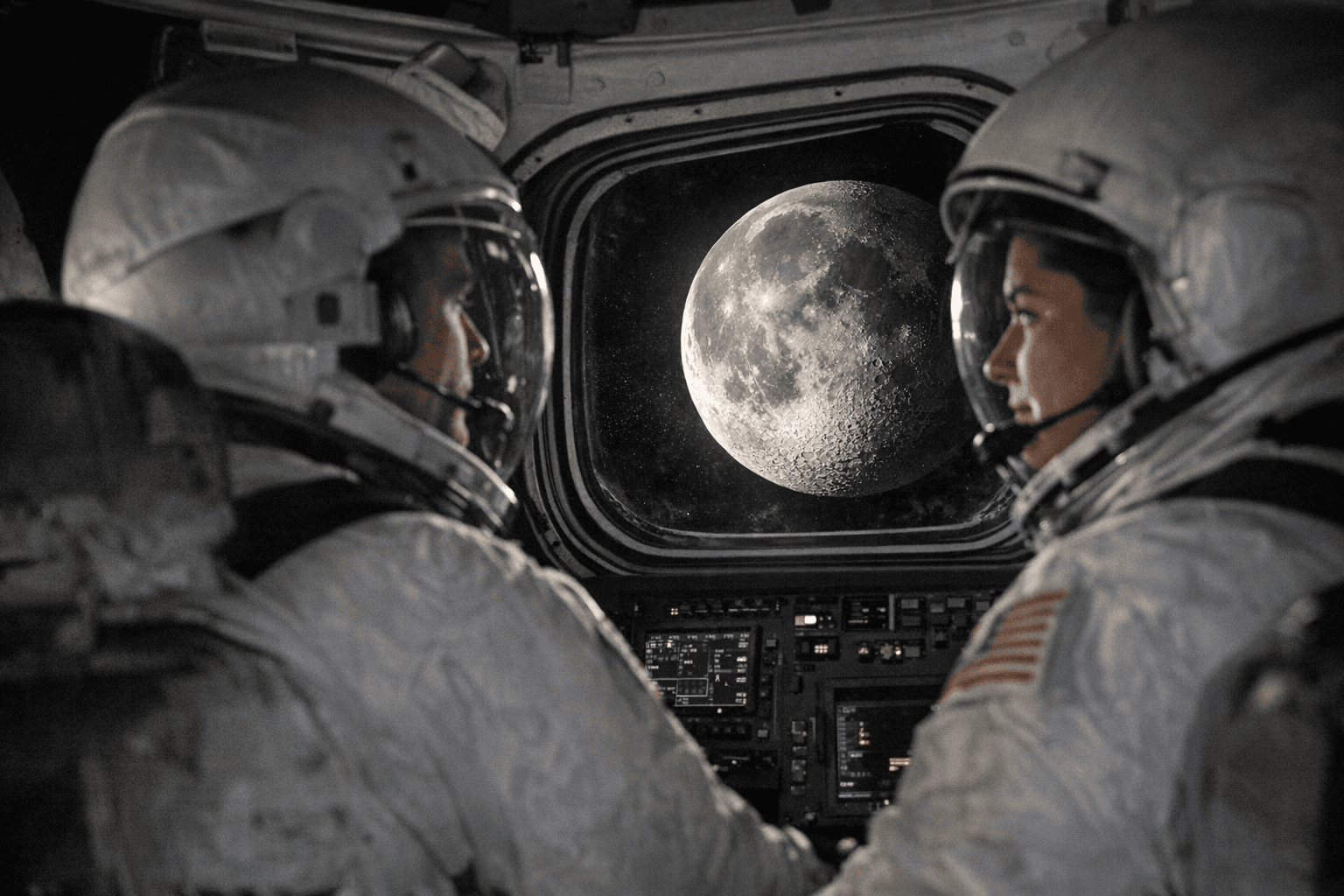
Four astronauts aboard the Orion spacecraft they named Integrity swung within 4,067 miles of the lunar surface on April 6, becoming the first humans to approach the Moon in more than half a century and shattering a distance record that had stood since Apollo 13's emergency return in 1970.
NASA's Artemis II mission lifted off from Launch Pad 39B at Kennedy Space Center on April 1 at 6:35 p.m. EDT, carrying Commander Reid Wiseman, Pilot Victor Glover, Mission Specialist Christina Koch, and Canadian Space Agency Mission Specialist Jeremy Hansen on a 685,000-mile, 10-day journey around the Moon. It was the first crewed flight of the Space Launch System rocket and the first time humans had traveled beyond low Earth orbit since Apollo 17 commander Gene Cernan left the lunar surface in December 1972.
The seven-hour flyby on Flight Day 6 placed the crew 252,756 miles from Earth, surpassing the previous record of 248,655 miles set by the Apollo 13 crew during their harrowing April 1970 return. The Artemis II crew also became the first humans to observe certain regions of the Moon's far side with their own eyes, photographing and documenting the surface as they passed overhead.
The mission concentrated more historic firsts into a single crew than any spaceflight in generations. Glover became the first person of color to travel beyond low Earth orbit; Koch the first woman; Hansen the first non-U.S. citizen; and Wiseman the oldest person to venture that far from Earth.
Shortly before Integrity passed behind the Moon and lost radio contact with Earth, Glover spoke to the ground: "As we prepare to go out of radio communication, we're still going to feel your love from Earth. And to all of you down there on Earth, and around Earth, we love you from the moon."
Artemis II is the second flight in NASA's Artemis program, formally named on May 16, 2019, by then-Administrator Jim Bridenstine. The program takes its name from Apollo's twin sister in Greek mythology. Its predecessor, the uncrewed Artemis I, launched November 16, 2022, and splashed down December 11, 2022, after the Orion spacecraft traveled thousands of miles beyond the Moon over roughly three weeks.
The ambitions extend well beyond a flyby. Current NASA Administrator Jared Isaacman has said the agency plans to spend $20 billion constructing a permanent lunar base, with focus on the Moon's south pole, and use that foothold as a proving ground for eventual crewed missions to Mars. The Artemis Accords, a framework for international space cooperation, were established in 2020 with the United States and seven other founding signatory nations.
Getting here required outlasting decades of failed attempts. The Constellation Program, an earlier Moon return effort, was canceled in 2010 after a 2009 review found it hopelessly over budget and behind schedule. President George W. Bush's 2004 Vision for Space Exploration had set a return target of 2020. NASA's current budget stands at less than half of one percent of the federal budget, a stark contrast to the Apollo era when the agency commanded roughly five percent.
With Integrity now in its final days of the mission, the four-person crew has already rewritten the record books. Whether the broader Artemis program delivers on its lunar base and Mars ambitions will depend on sustained political will and funding that previous Moon programs never managed to hold.
Know something we missed? Have a correction or additional information?
Submit a Tip