NASA Astronaut Victor Glover Pilots Orion in Key Moon Mission Test
Victor Glover manually flew Orion around a discarded rocket stage in space, a pivotal test for future moon landings as Artemis II heads toward a lunar flyby.
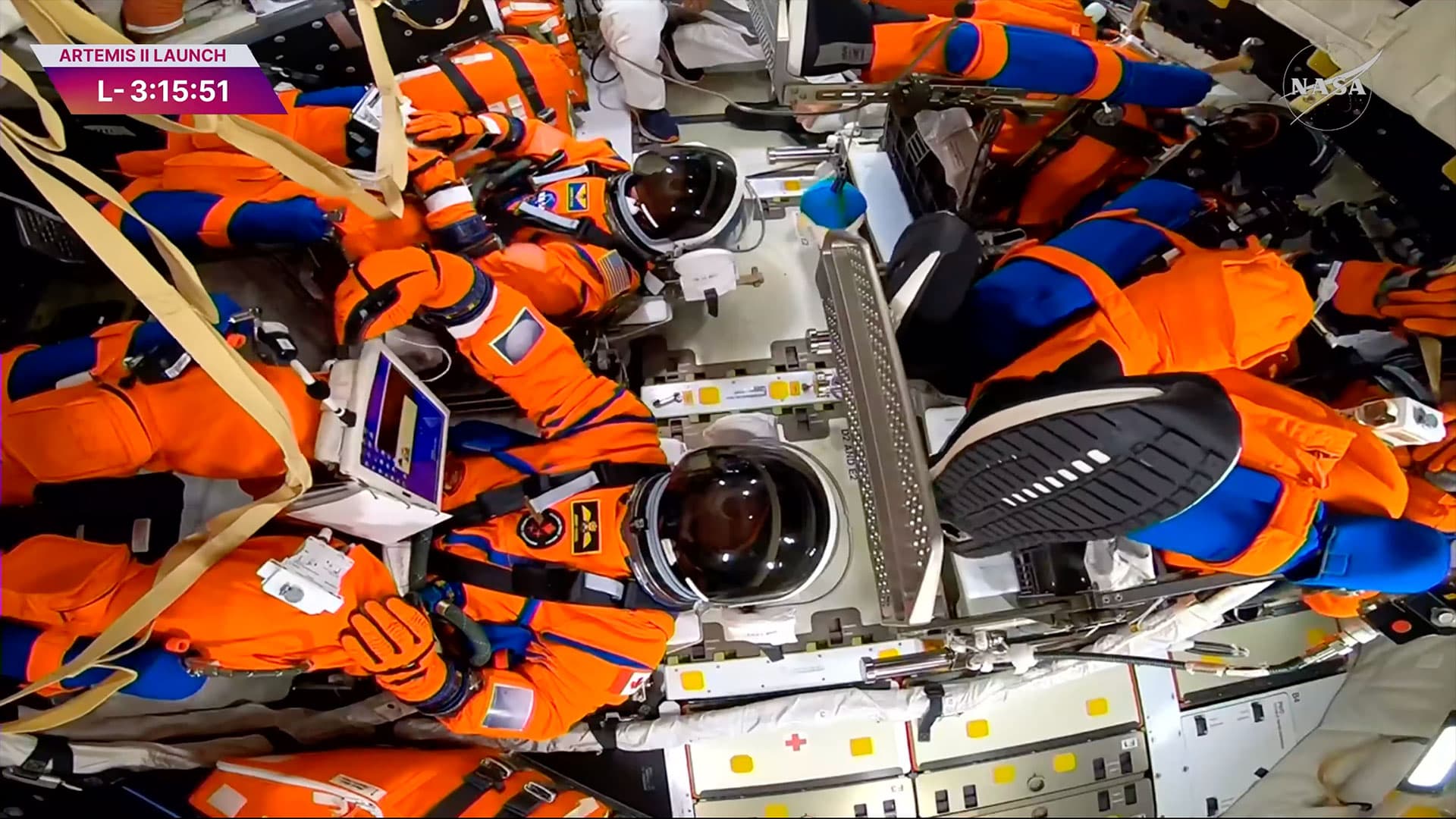
About three and a half hours into the Artemis II mission, pilot Victor Glover took control of the Orion capsule after it separated from the Space Launch System rocket's Interim Cryogenic Propulsion Stage, or ICPS. Glover then manually piloted Orion around the ICPS, carrying out a series of maneuvers designed to test the spacecraft's propulsion systems and its ability to operate in close proximity to another object in space.
The tests, known as proximity operations or "prox ops," are a key part of this test flight and will evaluate Orion's ability to fly near and interface with future Artemis program hardware, such as the lunar lander that will eventually carry astronauts to the surface. Controlling the spacecraft will be critical for future missions, which will need to dock with a lunar lander in orbit. While that process is likely to be automated, NASA wants to know how it handles should astronauts have to take manual control.
Glover launched alongside NASA astronauts Commander Reid Wiseman and Mission Specialist Christina Koch, as well as Canadian Space Agency astronaut Jeremy Hansen, from Kennedy Space Center in Florida, aboard an Orion capsule attached to an SLS rocket. The four launched at 6:35 p.m. EDT on Wednesday, April 1, 2026, on an approximately 10-day mission around the Moon and back to Earth.
As Glover took stock of the scene outside the spacecraft's windows during the live NASA broadcast, he exclaimed: "I see it. Look at that, woohoo! I see the ICPS and the moon in the field of view." The moment captured the dual purpose of the maneuver: a technical checkpoint with an awe-inspiring backdrop.
Ahead of the launch, Glover had framed the proximity operations test in precise engineering terms: "We are essentially going to make sure that the vehicle flies the way that we think it does, that we designed it to do."
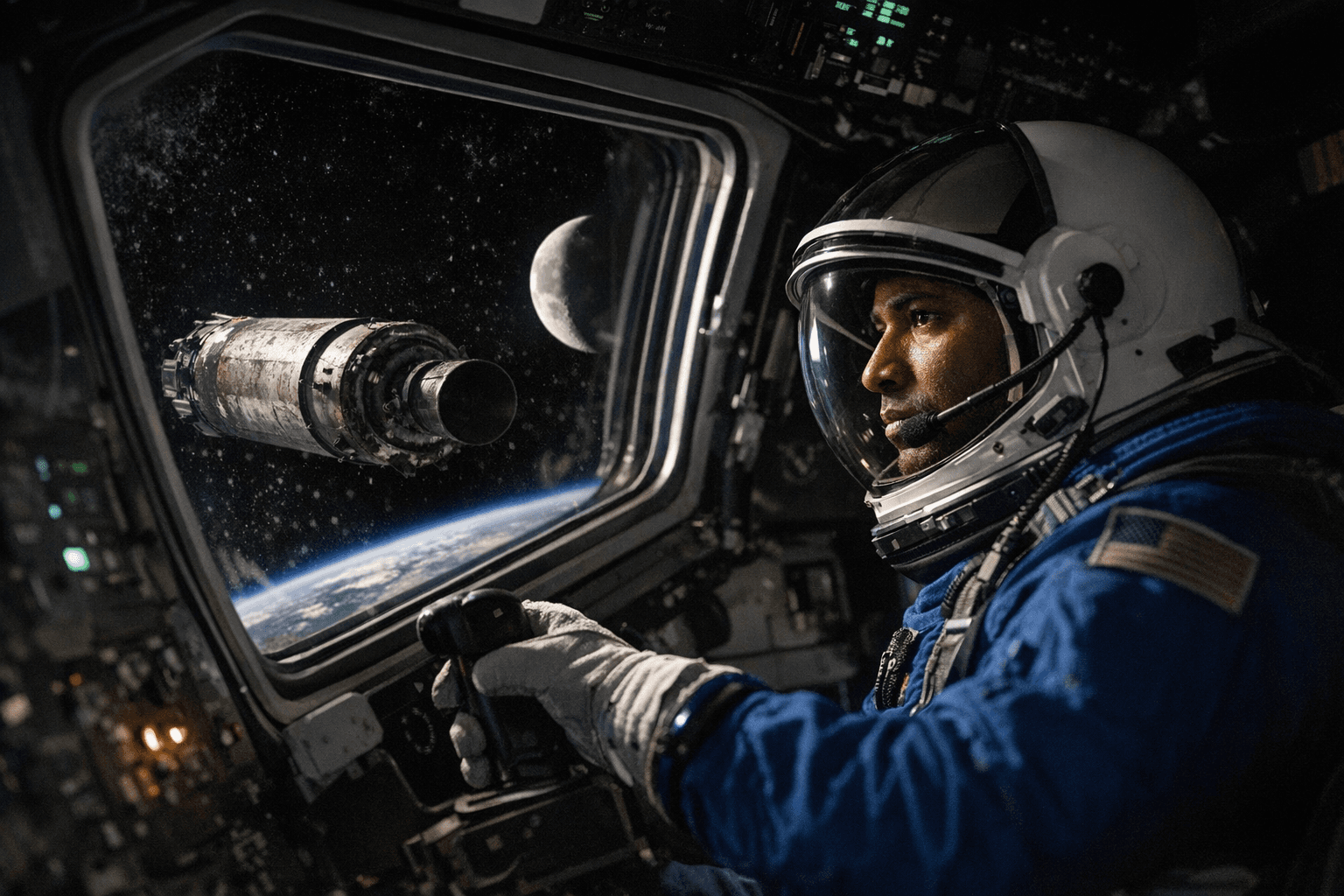
The nearly 10-day journey will not only test the spacecraft's life-support systems and maneuverability, but also conduct critical science ahead of future deep space missions to the lunar surface. The mission follows a free return trajectory, which keeps the spacecraft in Earth's gravitational influence past the moon before falling back to the planet for splashdown. The path uses less fuel and carries less risk than entering a full lunar orbit.
Glover is making history as the first Black astronaut to travel to and orbit the Moon, blasting off aboard NASA's massive 32-story Space Launch System. The fly-around marks the first human trip toward the Moon in 53 years.
The mission will serve as a critical test flight of the Orion spacecraft, and the proximity operations Glover executed on day two will directly shape the protocols that determine how astronauts interact with hardware on future Artemis missions targeting a lunar landing.
This article was produced by Prism’s automated news system from verified source data, official records, and press releases, then run through automated quality and moderation checks before publishing. The system is built and supervised by the people who set the standards it runs under. Read our full AI policy.
Did this article answer your question?

