NASA plans Artemis III for 2027, names crew for lunar mission
NASA named a four-person Artemis III crew and pushed the mission to 2027, turning the flight into a hard test of docking, training and lunar readiness.

NASA has put a four-person crew on Artemis III and recast the mission as more than a personnel announcement. Planned for 2027, the flight is now being treated as a demanding rehearsal for the systems, procedures and partnerships NASA will need before astronauts can return to the Moon’s surface.
The prime crew includes NASA astronaut and commander Randy Bresnik, European Space Agency pilot Luca Parmitano, and NASA mission specialists Frank Rubio and Andre Douglas. NASA also named Bob Hines as the backup crew member. The mix pairs a commander, an ESA pilot and two mission specialists for a mission NASA describes as one of the most complex human spaceflight efforts in recent history.
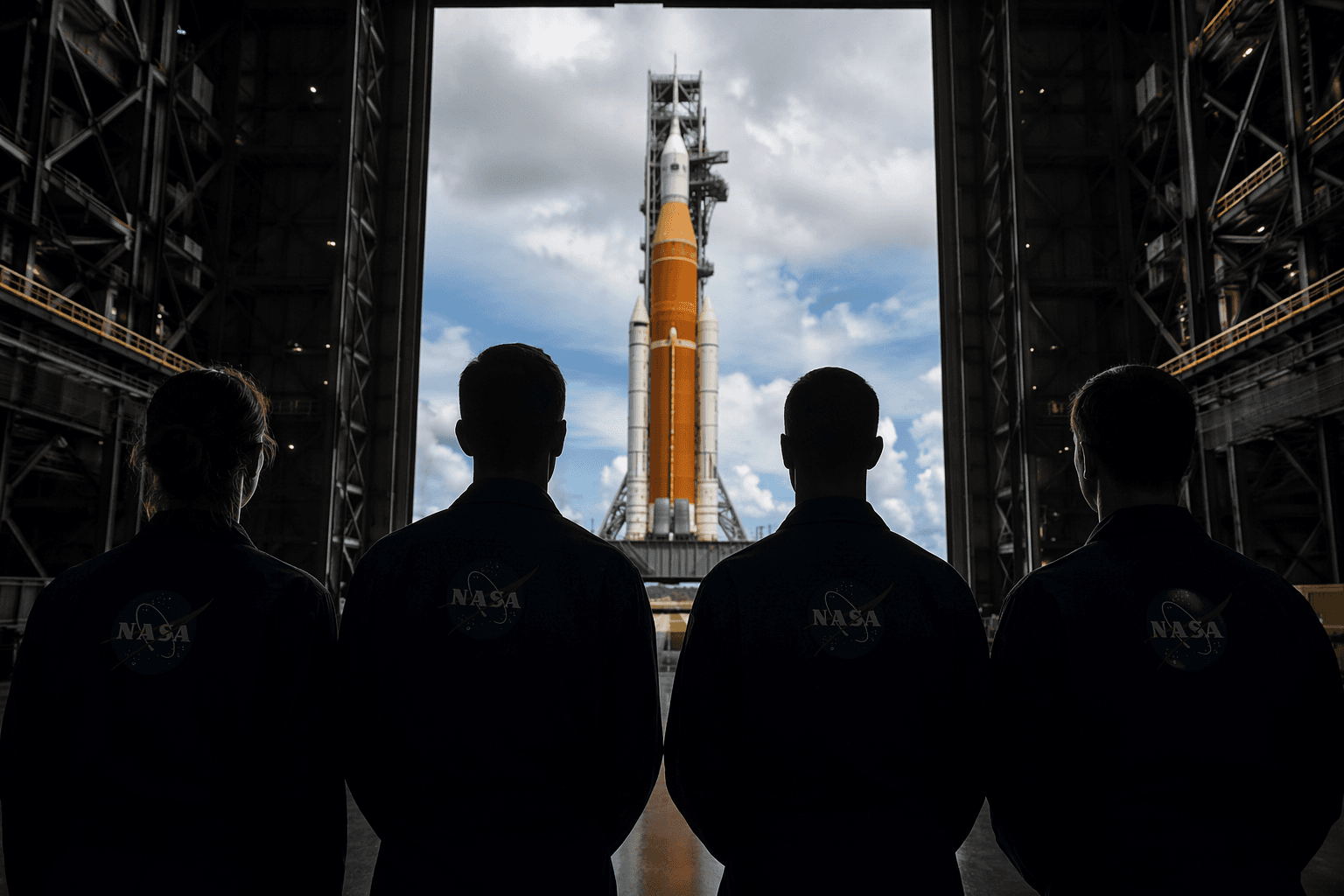
That complexity is built into the design. Artemis III will launch from Kennedy Space Center in Florida aboard the Orion spacecraft on the Space Launch System rocket, then carry out Earth-orbit operations meant to reduce risk before Artemis IV. NASA says the mission will demonstrate rendezvous and docking with test versions of commercial human landing systems being developed by Blue Origin and SpaceX, making the flight a key systems check for the broader lunar campaign.
The agency is not treating Artemis III as a standalone trip. NASA says the mission will involve a multi-launch campaign and integrated testing of hardware, software, propulsion, communications and interfaces between Orion, ground teams and the lander systems. Crew training will begin immediately on Orion systems and on the lander test versions, underscoring that the hard part is not only reaching space but proving that every part of the chain can work together under operational pressure.
NASA officials say Artemis III is a stepping stone toward Artemis IV, which is currently the first planned crewed mission to the lunar South Pole in 2028. The revised architecture is meant to lower risk before astronauts return to the Moon’s surface, after more than 50 years without a lunar landing. That is why the mission’s label matters: Artemis III is being framed as the next real test of whether the program can move from symbolism to execution.
NASA also said Artemis III will use a spacer instead of the interim cryogenic propulsion stage to represent upper-stage dimensions, with fabrication work underway at Marshall Space Flight Center in Huntsville, Alabama. The announcement follows the successful Artemis II crewed test flight in April 2026, which NASA says is helping pave the way for the next phase of lunar operations.
This article was produced by Prism’s automated news system from verified source data, official records, and press releases, then run through automated quality and moderation checks before publishing. The system is built and supervised by the people who set the standards it runs under. Read our full AI policy.
Know something we missed? Have a correction or additional information?
Submit a Tip