NASA picks two lunar rovers for Artemis moon base missions
NASA chose Astrolab and Lunar Outpost to supply crewed moon rovers, betting on a service model that could reshape Artemis logistics and costs.

NASA has moved another critical part of Artemis into commercial hands, selecting Venturi Astrolab and Lunar Outpost to build crewed lunar rovers that the agency will buy as a service rather than own outright. The two vehicles are meant to give astronauts real mobility on the moon, carrying two people at a time, traveling more than 9 mph and covering more than 124 miles over their operating lives.
The decision builds on NASA’s earlier Lunar Terrain Vehicle Services competition in April 2024, when the agency chose Intuitive Machines, Lunar Outpost and Venturi Astrolab to advance lunar rover capabilities under a contract with a combined maximum potential value of up to $4.6 billion. NASA said then that it intended to begin using the vehicle for crewed operations during Artemis V, signaling that surface mobility would be treated as mission-critical infrastructure rather than a government-owned asset.
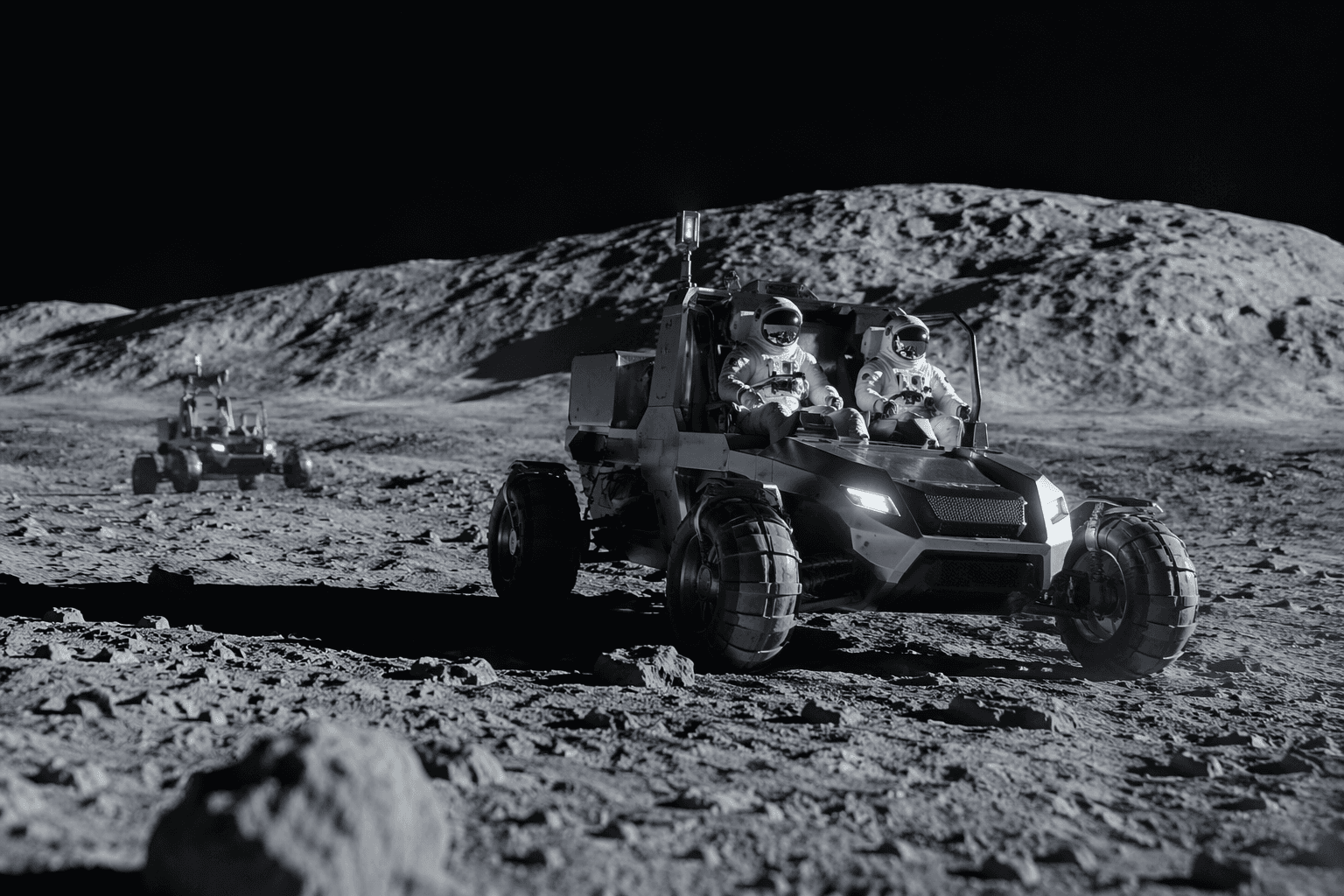
Under the new task orders announced May 26, Astrolab’s rover is the Crewed Lunar Vehicle, or CLV-1, adapted from the company’s FLEX architecture, while Lunar Outpost’s competing rover is Pegasus, derived from its Eagle terrain vehicle. NASA valued Astrolab’s award at about $219 million and said the rovers funded by these awards were expected to reach the Moon by 2028. Astrolab said CLV-1 would be designed primarily to transport astronauts and supplies, while also handling some remote operations.
The Moon Base program is designed in phases near the lunar South Pole, a region NASA has described as strategically and scientifically important because it can support sustained human presence, scientific research and commercial activity. The first Moon Base mission is targeted for no earlier than fall 2026, when a Blue Origin lander flight is planned to touch down at Shackleton Connecting Ridge. A later-2026 Astrobotic mission will carry Astrolab’s FLIP rover to mature mobility systems ahead of future lunar terrain vehicle operations.

The strategy shows how NASA is trying to lower risk and widen capability at the same time. By backing multiple commercial rover designs, the agency is pushing suppliers to compete on endurance, speed, transport capacity and operational flexibility, all of which will matter if the Artemis program is to support a permanent foothold at the lunar South Pole. The economics are changing with the hardware: NASA is no longer just buying machines, it is building a services market for the moon.
This article was produced by Prism’s automated news system from verified source data, official records, and press releases, then run through automated quality and moderation checks before publishing. The system is built and supervised by the people who set the standards it runs under. Read our full AI policy.
Did this article answer your question?