NASA spinoffs power memory foam, phone cameras and everyday products
A Moon flyby is also a consumer-tech story: NASA spinoffs helped create memory foam, phone cameras and products already on store shelves.
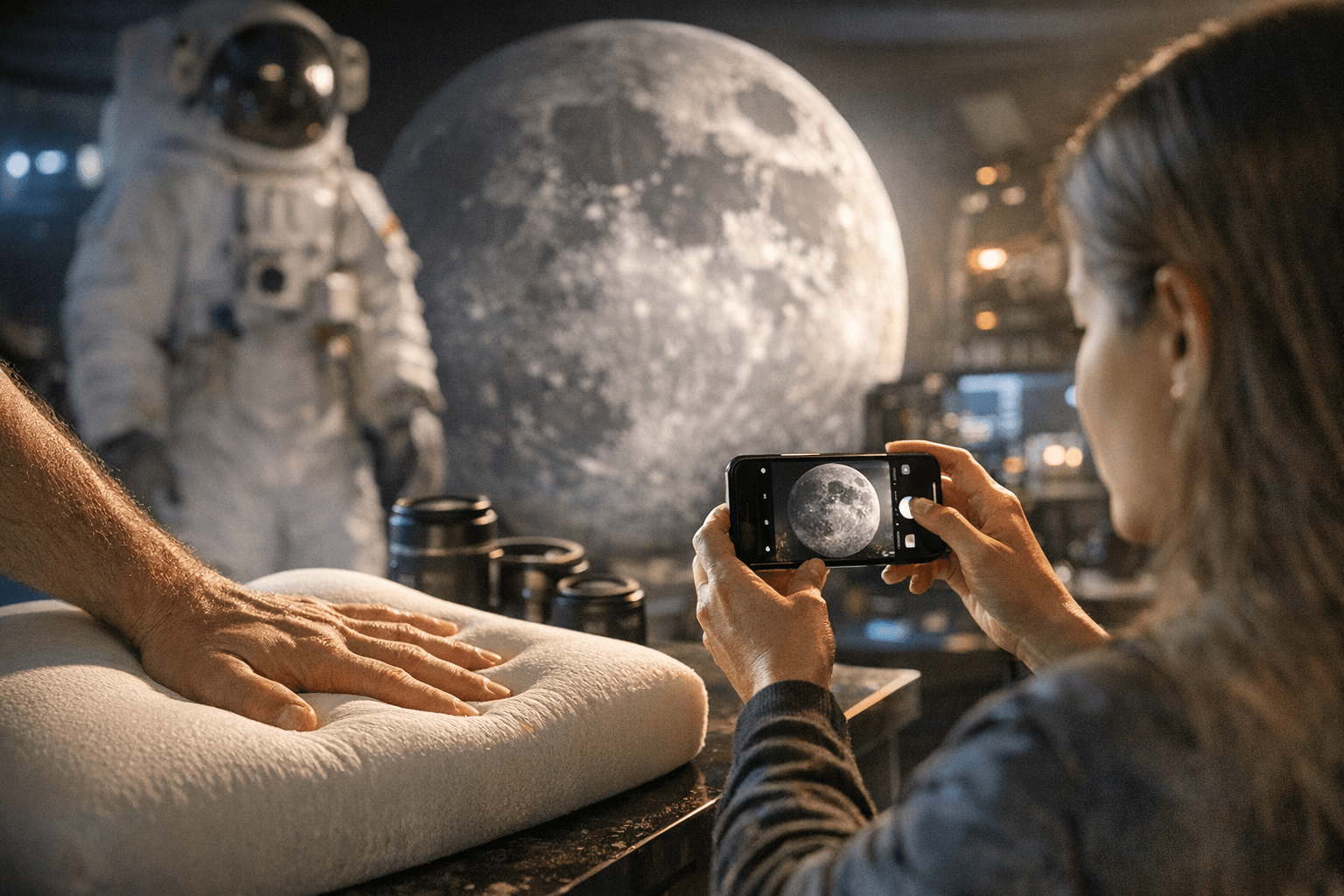
Why Artemis II belongs in a household-budget story
Artemis II is not just a headline about the Moon. NASA says the crew lifted off from Kennedy Space Center in Florida on April 1, reached the lunar sphere of influence on April 5, and flew around the far side of the Moon on April 6 as part of a 10-day lunar flyby. The mission is meant to test Orion’s deep-space systems, and NASA says the four astronauts, Reid Wiseman, Victor Glover, Christina Koch and Jeremy Hansen, reached 248,655 miles from Earth on April 6, surpassing Apollo 13’s distance record. NASA also says the crew will travel about 4,600 miles beyond the far side of the Moon.
That matters beyond the launch pad because NASA’s own technology-transfer program is built around turning space problem-solving into ordinary products. NASA says Spinoff has profiled more than 2,000 spinoffs since 1976, and the agency traces the publication back to reports once prepared for congressional budget hearings. Today, NASA describes those spinoffs as commercial products and services that show up in daily life, from mattresses to phone cameras.
Memory foam: from test pilots to bedrooms, shoes and helmets
One of the clearest examples is memory foam, which NASA says was invented by NASA-funded researchers looking for ways to keep test pilots cushioned during flights. The material did not stay in the cockpit. NASA says it now shows up in beds, couches, chairs, shoes, movie theater seats and football helmets, a spread that turns a flight-safety fix into a mainstream comfort and protection product.
That is the kind of spinoff that carries public-health value in a very practical way. Better cushioning can support sleep, reduce pressure points and improve comfort in seating and protective gear, which is one reason this technology resonates far outside aerospace circles. The benefit is also social, not just technical: a material first developed for test pilots became a widely available consumer product that people encounter in homes, schools, sports and entertainment venues.
The camera chip inside your pocket
The other NASA technology most people use without realizing it is the CMOS image sensor. NASA says the invention became the agency’s single most ubiquitous spinoff technology, helping power digital imagery and enabling cell phone cameras, high-definition video and social media. In other words, one of the most familiar tools in modern life, the smartphone camera, is rooted in work done for spaceflight and scientific imaging.
That reach has a public-value dimension too. Camera chips are not only about selfies and family videos; they shape telehealth visits, remote learning, small-business marketing, community documentation and disaster response. When NASA says the technology helped create the digital imaging ecosystem people use every day, it is describing a federal investment that migrated into communication, commerce and civic life.
The quieter products that still hit home
NASA’s consumer-spinoff stories are broader than memory foam and cameras. Its 2024 roundup highlighted temperature-regulating bedding, sunscreen, UV-blocking sunglasses and other products tied to NASA technology, and NASA’s own materials also point to food-safety procedures that helped shape modern food-production standards. These are less flashy than a spacecraft, but they reach directly into sleep, sun exposure and what ends up on the table.
The food-safety example is especially important from a public-health standpoint. NASA says the safety procedures and regulations used for much of the world’s food production are based on a system the agency created to keep Apollo astronauts safe. That means a space mission problem, how to prevent foodborne illness in a sealed capsule, became a civilian standard with far wider reach.
What taxpayers are actually buying
Seen together, these spinoffs make a straightforward case for federal space spending: the return is not confined to rockets, and it is not limited to one industry. NASA says businesses can use its technology portfolio through licensing agreements, and the agency’s Technology Transfer program exists to move federally owned inventions into commercial use and, ultimately, into the hands of the public.
That is where the social-equity lens matters. A well-funded space program can look distant from everyday struggle, but the products it seeds are often the kinds of things that shape daily dignity: a better night’s sleep, safer food, sharper images, more comfortable shoes and more protective helmets. NASA’s spinoff record shows that public investment in exploration can also lower the barrier to better consumer tools, spreading benefits far beyond the people who will ever fly on Orion.
Artemis II is still, first and foremost, a test flight aimed at future Moon landings and later missions to Mars. But NASA’s spinoff history shows that the taxpayer dividend is already here, visible in bedrooms, pockets, kitchens and schoolbags, where space-age engineering has quietly become ordinary life.
This article was produced by Prism’s automated news system from verified source data, official records, and press releases, then run through automated quality and moderation checks before publishing. The system is built and supervised by the people who set the standards it runs under. Read our full AI policy.
Did this article answer your question?

