NASA Will Replace Orion Valves Before Next Artemis Moon Mission
NASA will redesign helium valves on the SLS upper stage before Artemis III after the same component failed on both the 2022 and 2026 crewed missions.
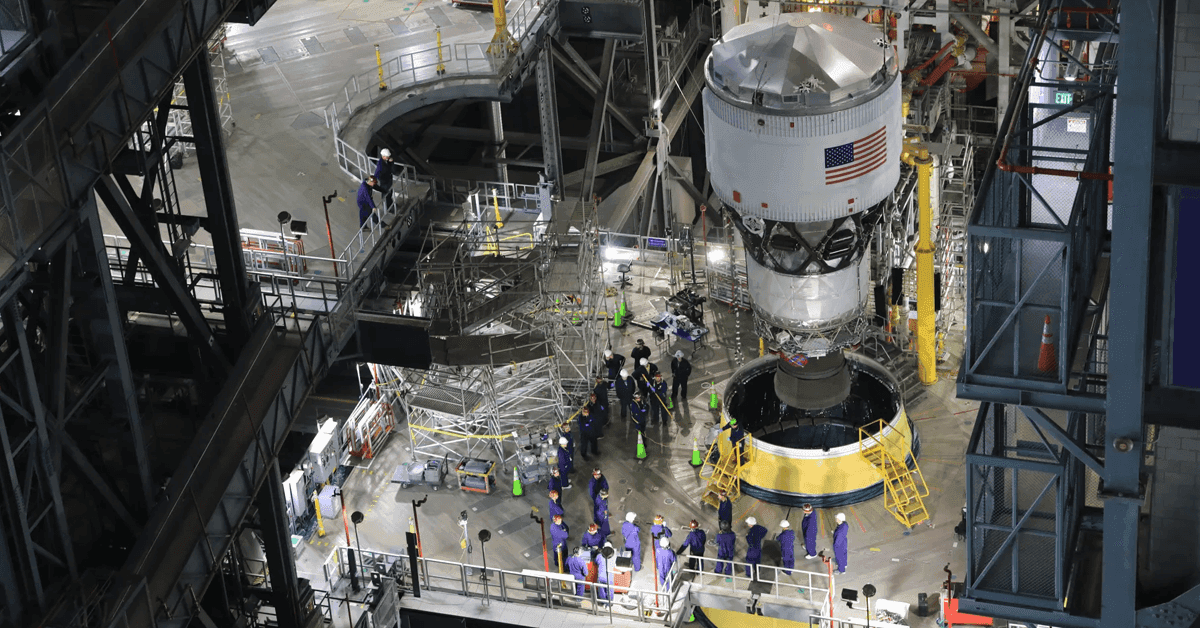
Before the next Orion spacecraft leaves Earth orbit, NASA engineers will replace the helium valves that have now failed in consecutive Artemis missions, a recurring flaw that has cost weeks of schedule and exposed a stubborn reliability gap in the program's plumbing.
The pattern is hard to ignore. During preparations for Artemis I in 2022, a helium check valve on the Interim Cryogenic Propulsion Stage sat stuck in a semi-open position, held there by a small piece of rubber from one of the mobile launcher's umbilical arms. Replacing it required rolling the entire rocket stack the four miles back from Launch Complex 39B to the Vehicle Assembly Building at Kennedy Space Center, a logistical detour that took roughly five to six weeks. Corrective actions were taken, NASA said, to minimize the chance of it happening again.
They were not sufficient. On February 21, 2026, while the Artemis II SLS rocket stood on the pad ahead of what was to be a March launch, engineers lost helium flow to the upper stage. Once again, the crawler-transporter hauled the stack back to the VAB, arriving February 25. Investigators focused on three possible culprits: a filter in the ground-to-rocket umbilical, a check valve, and a stage-side solenoid valve. The fix, reseating a seal in the quick-disconnect fitting through which helium flows from ground systems to the rocket, pushed the launch window from March to April. Artemis II ultimately lifted off April 1 with Commander Reid Wiseman, pilot Victor Glover, and mission specialists Christina Koch and Jeremy Hansen aboard.
The valves in question are not incidental hardware. Helium, an inert gas that does not combust, performs three distinct functions critical to safe launch operations: it pressurizes propellant tanks to force fuel to the engine, purges lines and cavities to reduce fire risk, and dries out plumbing after cryogenic fueling. A failed check valve does not necessarily doom a mission, but it can halt countdown operations entirely and, crucially, cannot be reached while the rocket stands on the pad. The only fix requires the VAB, the platforms, and the weeks of work that come with both.
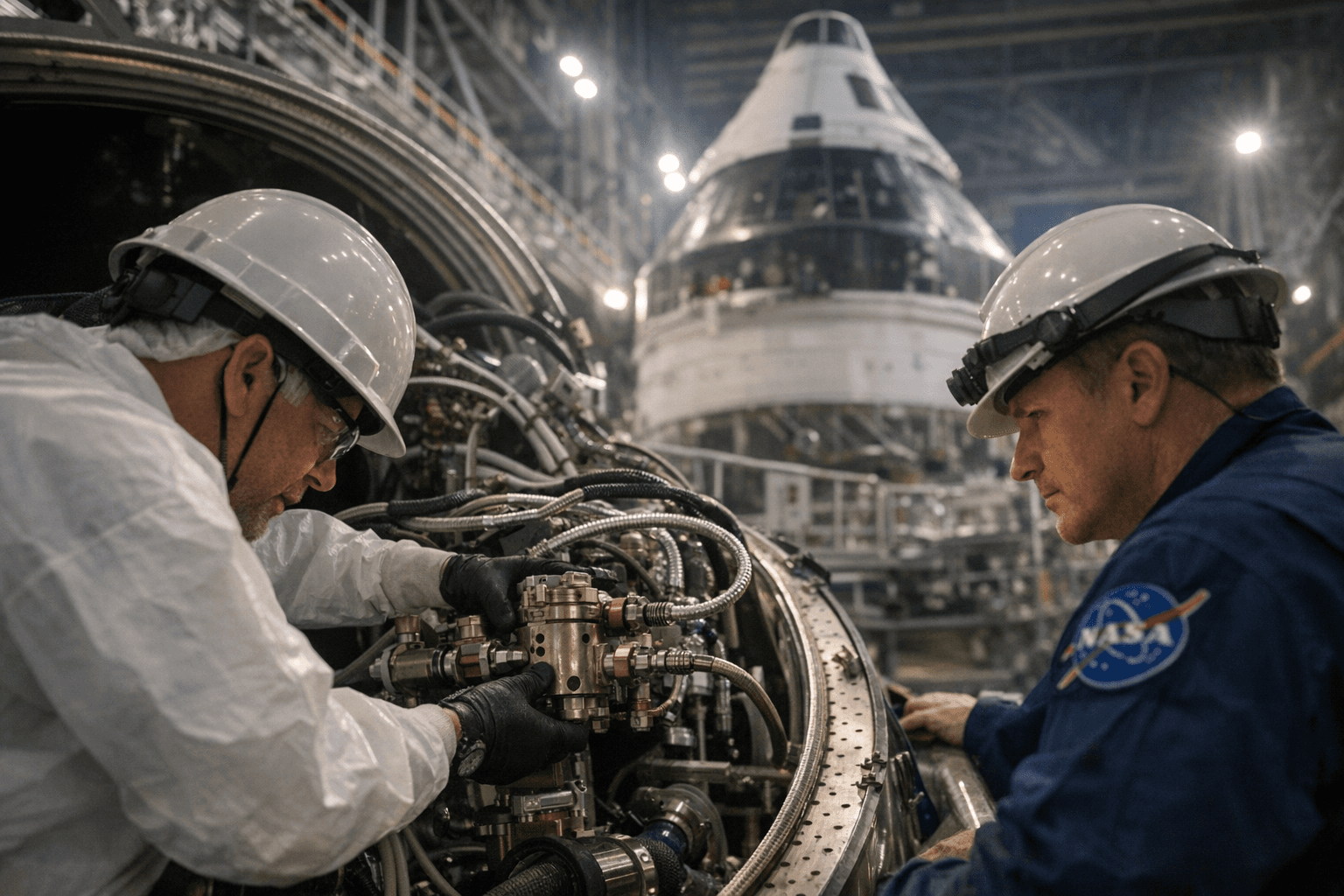
That inaccessibility is what converts a small part into a large program problem. NASA Administrator Jared Isaacman has been candid that the Space Launch System is not designed for the kind of rapid, repeated operations the agency ultimately needs. The Inspector General estimates Artemis has cost approximately $93 billion to date, with each SLS launch running around $4 billion. A single valve-driven rollback eats roughly six weeks off a launch window and pushes costs forward without advancing mission objectives.
The agency is now planning to address the issue structurally before Artemis III. NASA has confirmed it will replace the Interim Cryogenic Propulsion Stage, the source of the helium valve problems across both missions, with a new upper stage configuration. Artemis III's ICPS hardware was completed in August 2023, meaning whatever redesign is applied will require either significant rework of existing components or a fresh build. On February 27, Isaacman also announced that Artemis III's mission profile has been revised: rather than a lunar landing, it will conduct rendezvous and docking tests between Orion and commercial landers in Earth orbit, with Artemis IV now carrying the designation of first crewed Moon landing. The revised scope reduces the delta-v demands on the upper stage, but it does not reduce the need for a helium system that works without prompting a four-mile tow back to the assembly building.
The valve fix, straightforward in isolation, illustrates the central engineering challenge facing the Artemis program: hardware that performs adequately on a single test flight must be made reliable enough to fly on a defined cadence. Two missions in, the same component has failed twice. The next flight cannot afford a third repetition.
This article was produced by Prism’s automated news system from verified source data, official records, and press releases, then run through automated quality and moderation checks before publishing. The system is built and supervised by the people who set the standards it runs under. Read our full AI policy.
Did this article answer your question?


