NASA's Artemis II rocket returns to launch pad after helium repair
NASA rolled the Artemis II moon rocket back to its Florida launch pad overnight, targeting an April 1 window for the first crewed lunar mission in 50 years.
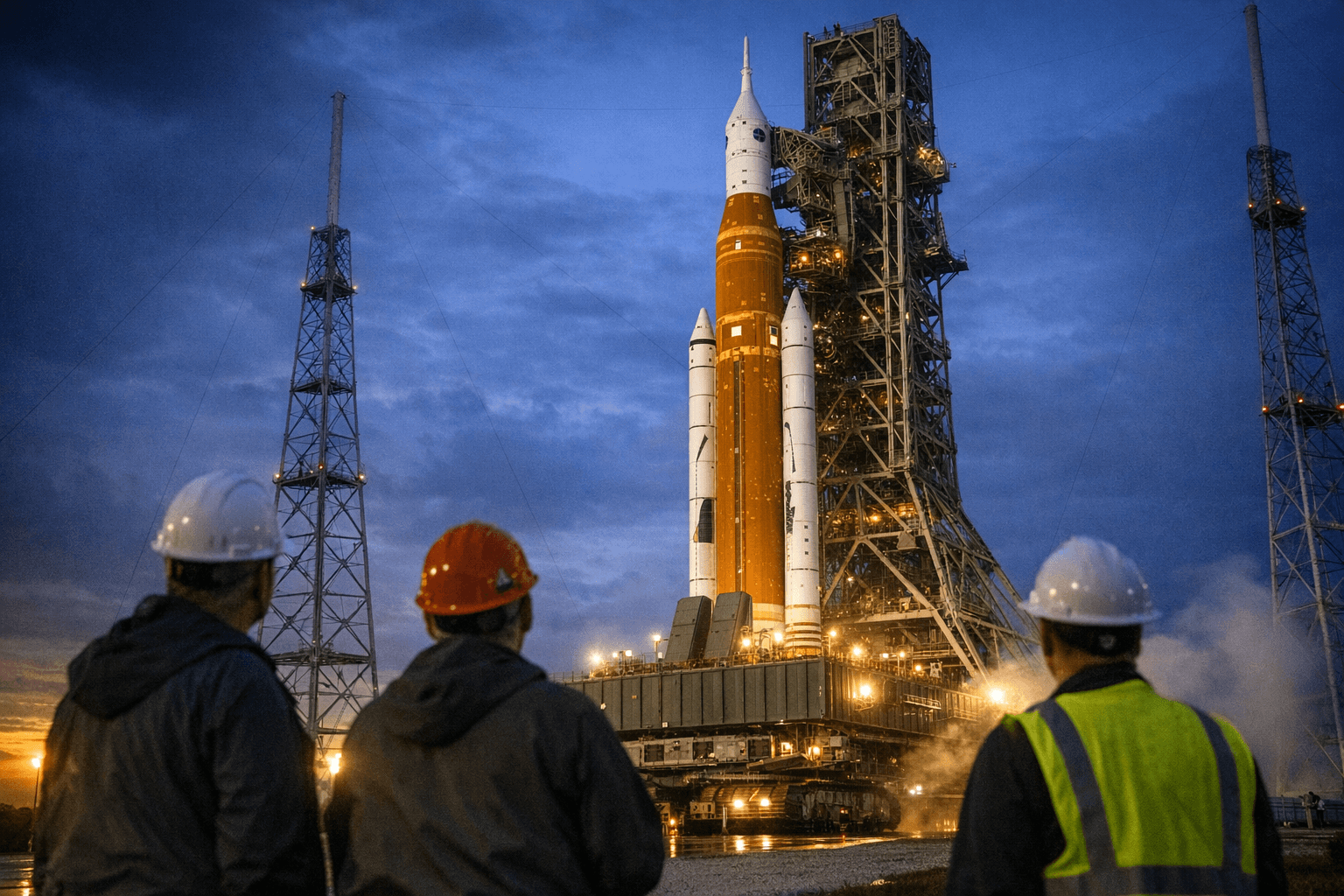
A 98-meter Space Launch System rocket carrying four astronauts' futures crawled back to Florida's Launch Complex-39B early Friday, completing an overnight journey that puts NASA's first crewed lunar mission in more than half a century back on track for an early-April liftoff.
Crawler-Transporter 2, a low-slung, caterpillar-tracked machine originally built in 1965 to move Saturn V rockets, began hauling the Artemis II stack out of the Vehicle Assembly Building at 12:20 a.m. EDT on March 20, carrying the rocket and its mobile launcher across roughly four miles of crawlerway to the pad. NASA said the trek was expected to take up to 12 hours; the rollout had been delayed earlier in the day due to high winds before proceeding under cover of darkness.
The return to the pad follows three weeks of repairs and system maintenance inside the Vehicle Assembly Building, forced by a problem identified during a wet dress rehearsal on Feb. 21. Engineers discovered the rocket's upper stage was not receiving helium, a critical gas used to pressurize propellant tanks; any fault in that system could affect the performance of the upper stage engine or the safe draining of the fuel. Rather than attempt repairs at the exposed pad, managers elected to roll the vehicle back to the VAB, where technicians would have full access.
The list of work completed inside the VAB was extensive. Engineers repaired the helium flow problem, replaced batteries on the upper stage, core stage, and solid rocket boosters, and activated a new set of flight termination system batteries. They also charged the Orion spacecraft's launch abort system batteries, replaced a seal on the core stage liquid oxygen feed line, and reassembled and retested the oxygen tail service mast umbilical plate to confirm a tight seal.
This is the second time the rocket has stood at LC-39B. It first arrived on Jan. 17, and teams completed one of two planned wet dress rehearsals before the helium issue halted the countdown campaign. With repairs confirmed and the vehicle back at the pad, NASA is aiming to run a final series of tests to verify readiness for the launch window that opens April 1.
The mission will carry NASA astronauts Reid Wiseman, Victor Glover, and Christina Koch, along with Canadian Space Agency astronaut Jeremy Hansen, on an approximately 10-day voyage around the Moon and back. It will be the first crewed flight of the Artemis program and the first time humans have traveled to lunar distance since the Apollo era.
The combined rocket and mobile launcher weigh roughly 5,000 tonnes. At 322 feet tall, the SLS dwarfs nearly every structure at Kennedy Space Center as it sits on the pad facing the Atlantic coast.
The outcome of the upcoming pad tests will determine whether April 1 holds as the opening of a genuine launch attempt, or whether the window shifts further into the month. NASA has not announced a specific launch date beyond confirming teams are working toward that opening day of the window.
This article was produced by Prism’s automated news system from verified source data, official records, and press releases, then run through automated quality and moderation checks before publishing. The system is built and supervised by the people who set the standards it runs under. Read our full AI policy.
Did this article answer your question?