NASA’s Roman telescope to map sky 1,000 times faster than Hubble
Roman will scan the sky up to 1,000 times faster than Hubble, reaching a billion galaxies and more than 1,000 exoplanets on a five-year mission.
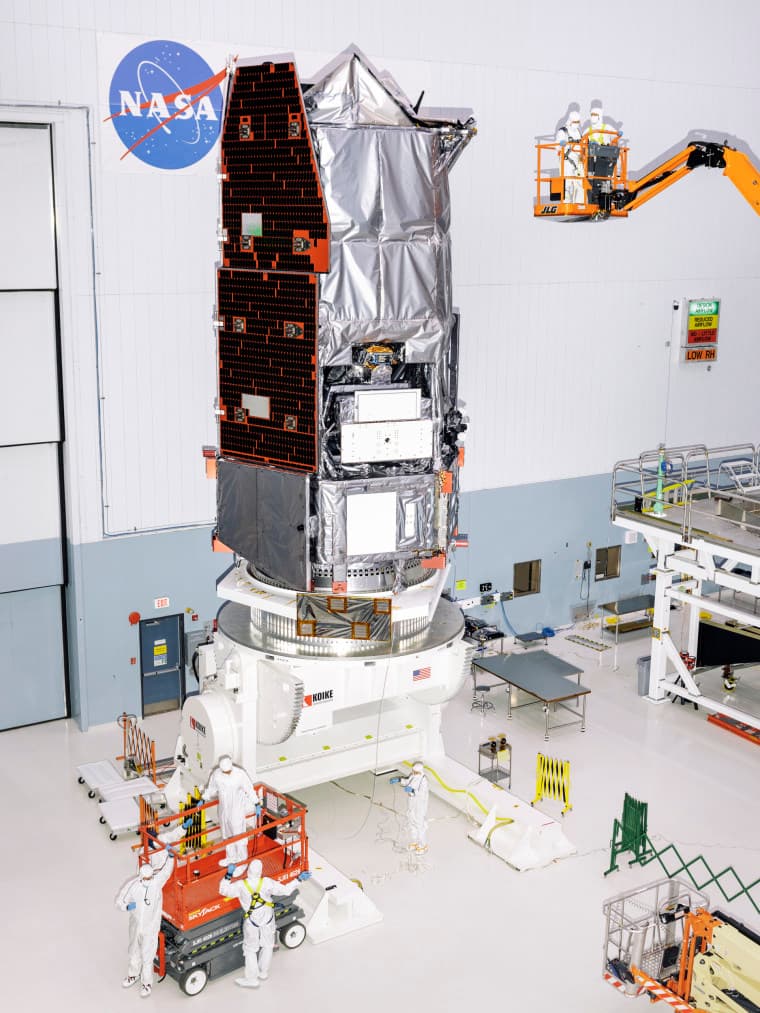
NASA’s Nancy Grace Roman Space Telescope is built to turn deep-space astronomy into a survey machine. When it launches from Kennedy Space Center, Florida, on a SpaceX Falcon Heavy rocket, the observatory is expected to map more of the sky than any space telescope before it, with a field of view at least 100 times larger than Hubble’s and a pace up to 1,000 times faster.
That speed is the scientific payoff. Roman’s 7.9-foot, 2.4-meter primary mirror is the same size as Hubble’s, but its Wide Field Instrument is designed to collect far more sky in each exposure, while keeping similar sensitivity and infrared resolution. Over the mission lifetime, NASA expects it to measure light from a billion galaxies and conduct a microlensing survey of the inner Milky Way to find more than 1,000 exoplanets.
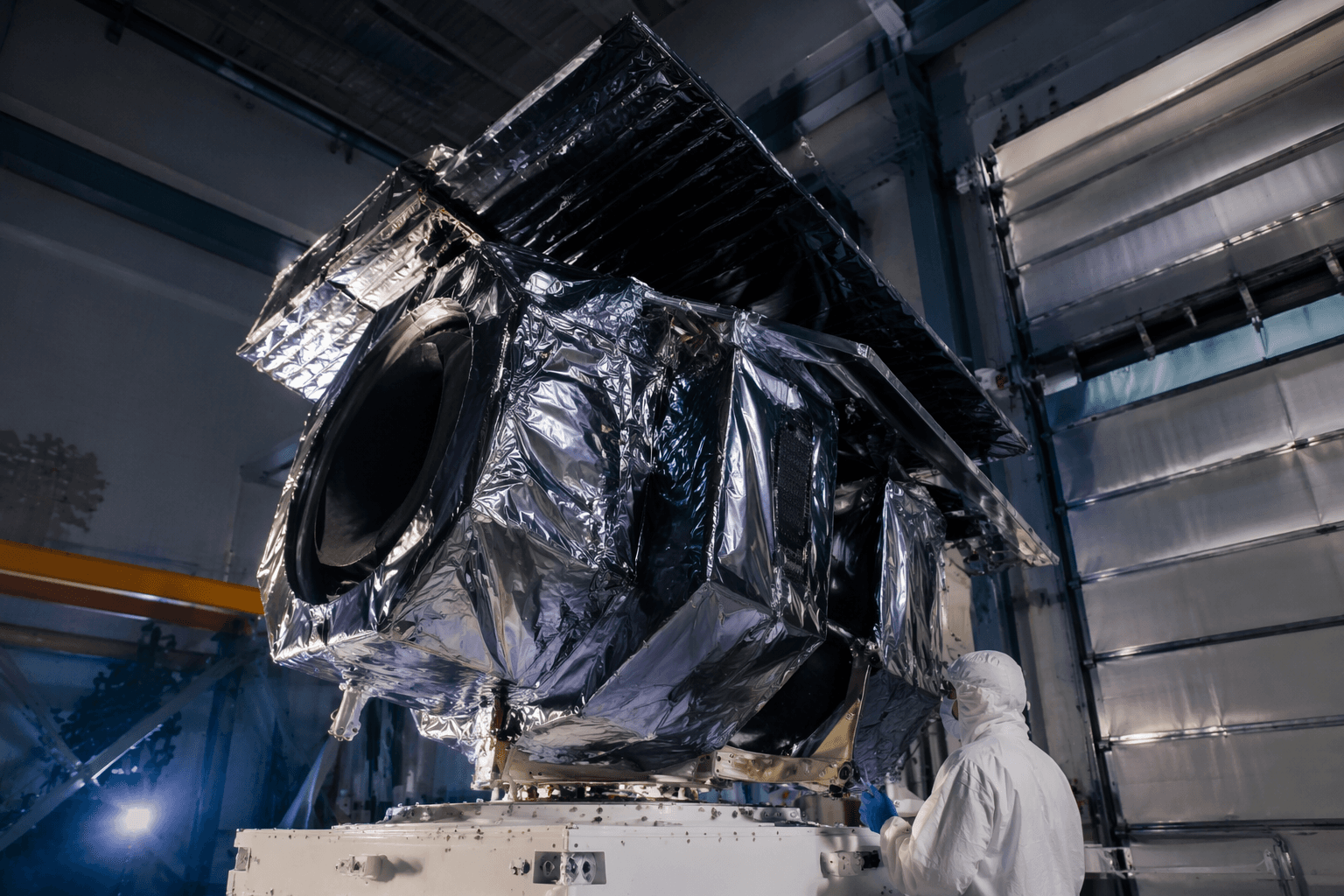
The telescope is aimed at some of the hardest questions in modern astronomy: how dark energy shapes the expansion of the universe, how planetary systems form, and how infrared light can reveal objects hidden by dust. NASA says Roman’s two instruments, the Wide Field Instrument and the Coronagraph Instrument technology demonstration, will support that work by combining wide-area surveys with tests of direct exoplanet imaging through blocked starlight.
Roman’s destination is the second Sun-Earth Lagrange point, known as L2, about four times farther from Earth than the Moon. NASA says the observatory’s primary mission will last five years, with a possible five-year extension, giving scientists a decade-scale window to build the biggest statistical maps yet of galaxies, planets and distant cosmic structure.
The mission has also been shaped by its naming and schedule. NASA renamed it from WFIRST to the Nancy Grace Roman Space Telescope in May 2020, honoring NASA’s first chief astronomer, widely known as the “Mother of Hubble.” Roman’s current launch target is August 30, 2026, an earlier timetable than the agency’s previous public deadline of no later than May 2027.
Engineers have been preparing the observatory with powered testing, rehearsals and fueling before installation on the Falcon Heavy rocket adapter. Once in space, Roman is expected to operate with downlink support from NASA and partner ground stations, extending the reach of a mission designed not just to look deeper, but to measure vastly more of the universe in one sustained survey.
This article was produced by Prism’s automated news system from verified source data, official records, and press releases, then run through automated quality and moderation checks before publishing. The system is built and supervised by the people who set the standards it runs under. Read our full AI policy.
Did this article answer your question?