National Mall shooting rare, despite heavy security and frequent visitors
A shooting near the Washington Monument was jarring, but it happened in one of Washington’s most heavily watched and statistically safest corridors.
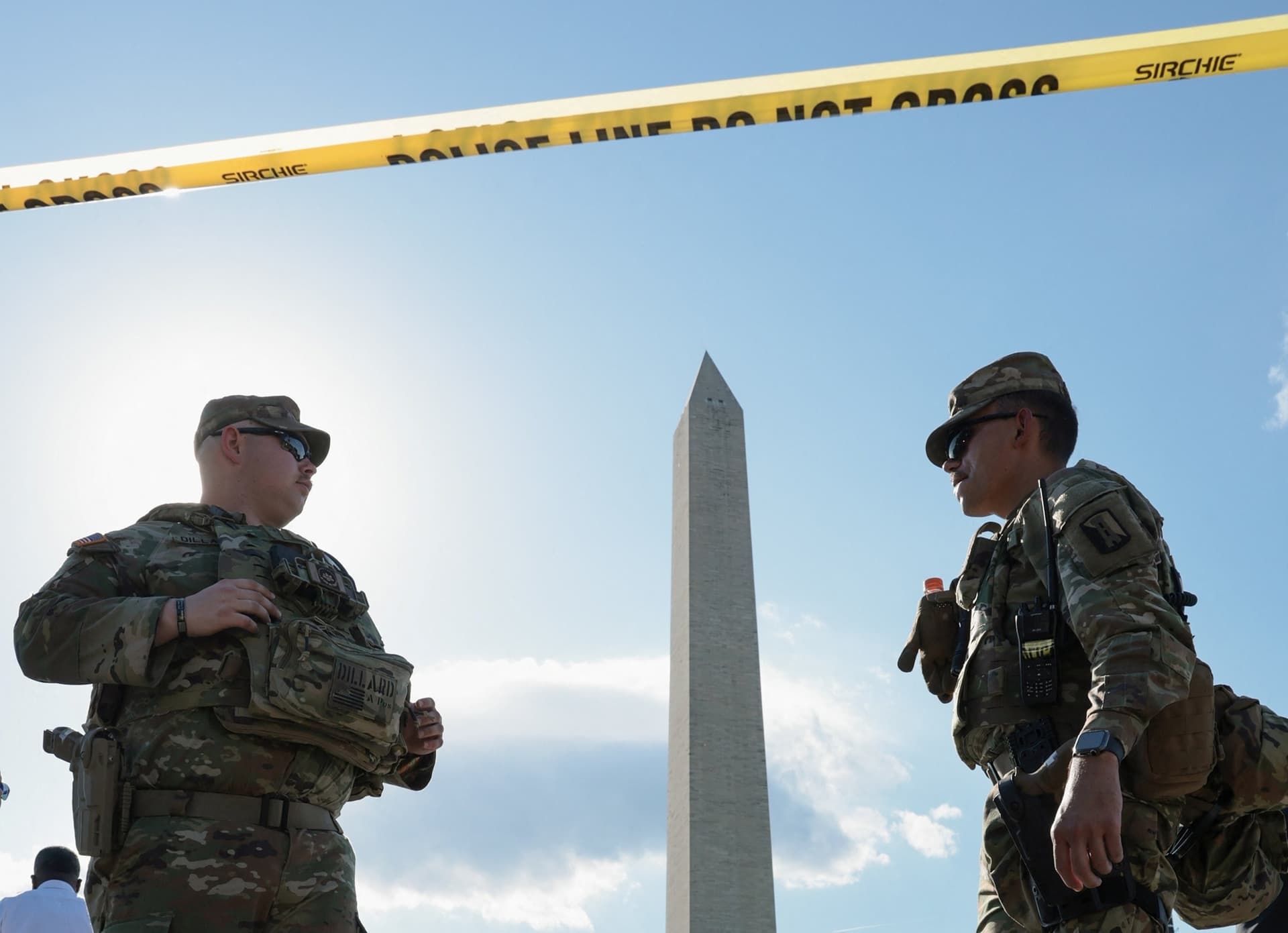
The shock comes from the setting, not the odds
A gunshot near the Washington Monument can feel like a rupture in the city’s sense of order, but the National Mall and its surroundings are still among Washington’s safest and most closely watched public spaces. That tension between perception and baseline reality is the key to understanding why the May 4 shooting drew so much attention.
The National Mall and Memorial Parks cover more than a dozen units of the National Park System and more than 100 unique monuments and memorials. The National Park Service describes it as “America’s Front Yard,” and says millions of people come each year to recreate, commemorate presidential legacies, honor veterans, and make their voices heard.
Why the Mall carries a heavier security footprint
The security posture around the Mall is unusually dense because the space is both symbolic and operationally complicated. The U.S. Park Police, the oldest federal uniformed police force, has jurisdiction in National Park Service areas and is responsible for policing many major events on the Mall. That means security here is not handled like an ordinary neighborhood patrol; it is layered, federal, and built for crowds, ceremonies, protests, and high-profile visits.
The National Park Service also tells visitors to stay aware of their surroundings and says emergency help on the Mall is available by contacting the U.S. Park Police or calling 911. That advice sounds routine, but it reflects the reality of an active urban environment where millions of visitors, large events, and iconic federal sites overlap in a relatively compact space.
Rare violence, but not zero risk
Even with that security presence, crimes can happen near the Mall. Shootings there are rare, which is exactly why each one lands so hard. The incidents that do occur tend to stand out not because they are common, but because they happen in a place that carries enormous national visibility.
One of the most serious past cases came on June 10, 2009, when James Wenneker von Brunn entered the U.S. Holocaust Memorial Museum just off the Mall and fatally shot special police officer Stephen Tyrone Johns. The attack was widely treated as a hate-crime attack, and it remains one of the clearest reminders that symbolic spaces can attract acts of targeted violence as well as random danger.
Another gunfire incident came on August 19, 2022, when shots were fired near the 1600 block of Constitution Avenue NW at about 1:15 a.m. Police said a juvenile with a gun and two adults were taken into custody, three unoccupied vehicles were struck, no injuries were reported, and no monuments were damaged. That case underscored an important distinction: gunfire near the Mall does not automatically mean a mass-casualty event or a threat to the landmarks themselves.
What happened near the Washington Monument
The May 4 shooting near the Washington Monument followed the same pattern of high alarm, limited physical harm. A Secret Service officer shot one person near 15th Street SW and Independence Avenue SW, and a juvenile bystander suffered a graze wound. Officials said the bystander’s injury was likely caused by the suspect’s gunfire, the injuries were not life-threatening, and there was no indication that Vice President JD Vance’s motorcade nearby was targeted.
That detail matters because it shows how quickly a scene near the Mall can trigger assumptions about a broader attack. In reality, officials were dealing with a tightly bounded incident in an area already designed for rapid law-enforcement response. The fact that the injury pattern was limited, and that no indication emerged of a target on the vice president’s motorcade, is central to understanding the event without inflating its scope.
How officials think about risk in iconic public spaces
Risk on the Mall is assessed less like a permanent battlefield and more like a high-traffic civic zone where visibility, access, and symbolism all matter. Officials have to account for the possibility of ordinary crime, isolated gunfire, crowd-related problems, and the security needs of visiting dignitaries, memorials, and daily tourists. That is why the presence of the Park Police, the Secret Service, and other agencies around the Mall is not incidental; it is part of the structure of the place.
The jurisdictional overlap also helps explain why these events can appear confusing from the outside. Federal land, memorial sites, visitor traffic, and protective details can all converge in a single block, and that makes rapid coordination essential. When something goes wrong, the response is shaped as much by who has authority over the space as by the event itself.
What the data says about the Mall’s safety baseline
The strongest reality check is this: the National Mall is not free of violence, but it is still one of the safest and most heavily secured parts of Washington. Millions of people visit each year, yet shootings remain uncommon enough that each one becomes a major news event. That rarity should not be mistaken for invulnerability, but it does show that the Mall’s day-to-day risk is far lower than the fear generated by a single dramatic incident might suggest.
The setting is built to absorb crowds, ceremonies, and protests, and the security architecture is built around that mission. The Park Service, Park Police, and other federal agencies treat the Mall as a place where symbolism and safety have to coexist. That is why a shooting there feels uniquely alarming, even when the underlying record shows that such incidents are rare and the broader area remains heavily protected.
The Mall’s public meaning is exactly what makes any gunfire so unsettling. But the data, the security posture, and the history all point in the same direction: this is a highly watched civic landscape where danger is taken seriously, risk is managed aggressively, and isolated violence does not define the whole place.
This article was produced by Prism’s automated news system from verified source data, official records, and press releases, then run through automated quality and moderation checks before publishing. The system is built and supervised by the people who set the standards it runs under. Read our full AI policy.
Did this article answer your question?

