Nationwide Verizon Outage Leaves Baltimore Customers With SOS, 911 Concerns
A nationwide Verizon outage left many Baltimore customers with phones showing "SOS," disrupting service for hundreds of thousands and raising concerns about 911 callbacks.
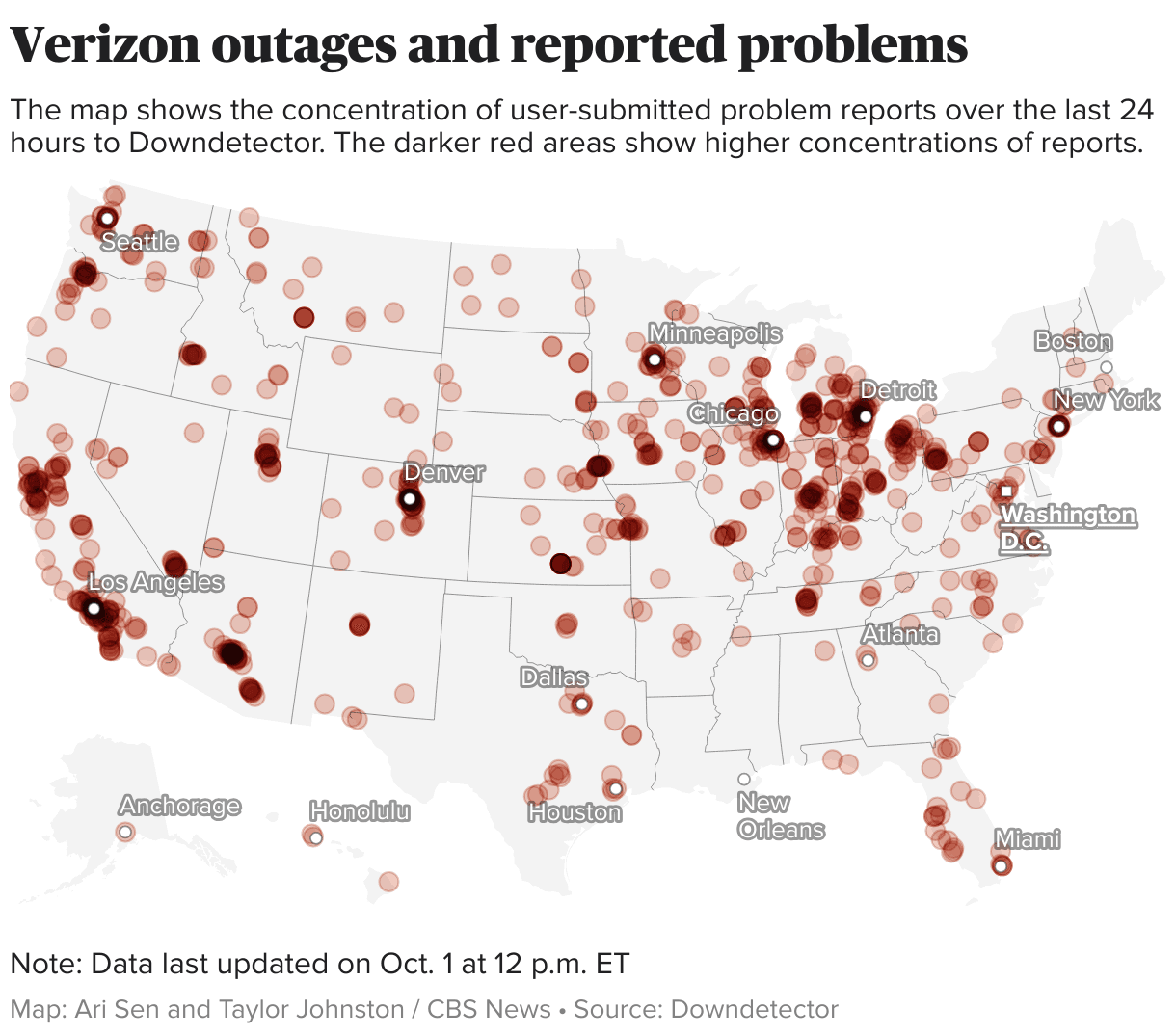
Hundreds of thousands of Verizon customers across the country lost cellular service during a nationwide outage that affected the Baltimore region, leaving some phones displaying "SOS" and complicating emergency communications. Outage-monitoring tools showed roughly 180,000 reports at the outage peak and about 76,000 reports by mid-afternoon; by late evening some users still saw their phones display SOS.
Verizon said engineers were working to restore service and that impacted customers would receive account credits. Cybersecurity and telecom specialists assessed the failure as confined to Verizon’s network and likely the result of a network or software problem rather than a cyberattack. The technical explanation points to internal routing or signaling issues - faults that can cascade quickly through mobile infrastructure and affect voice, text and data simultaneously.
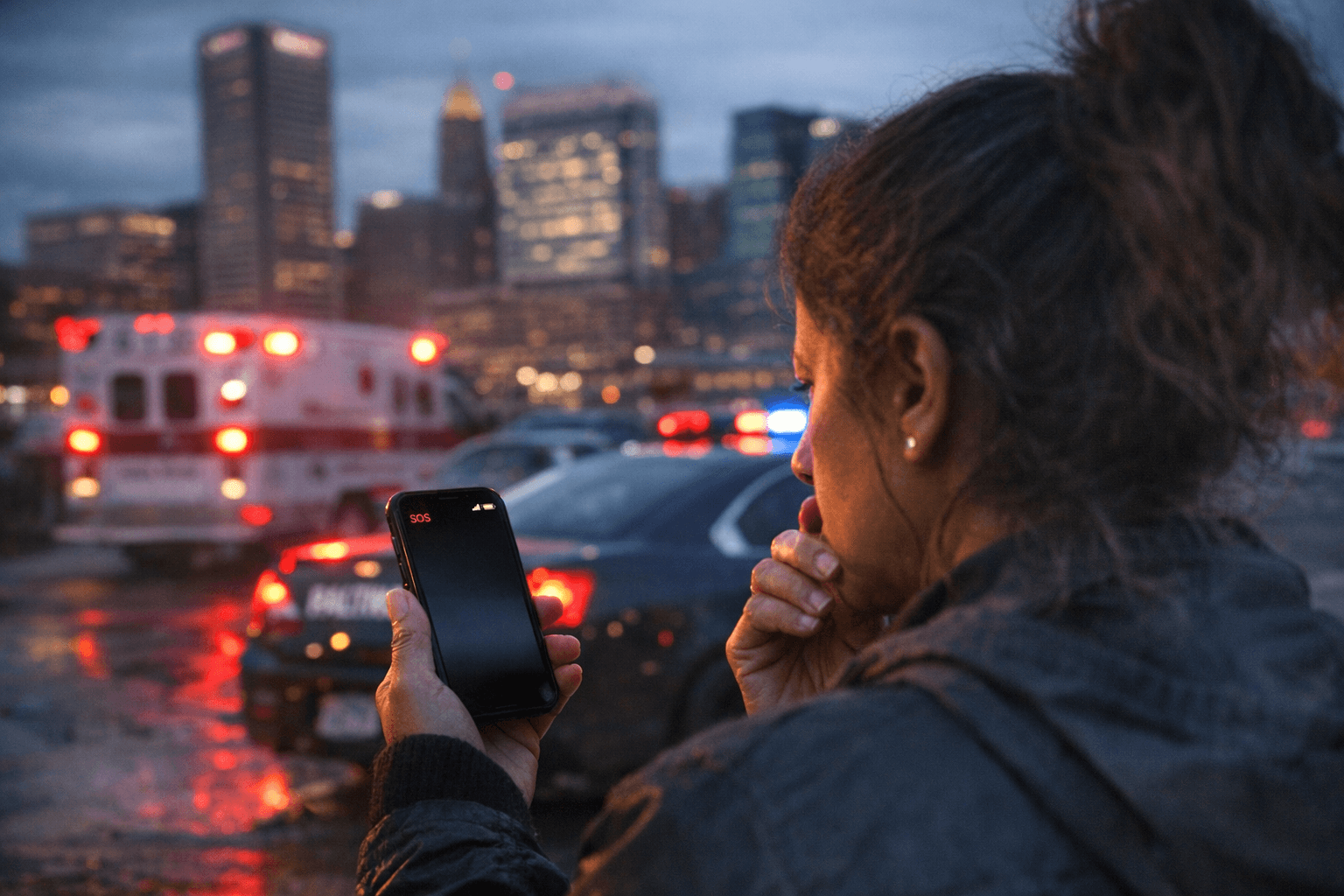
Local authorities in Baltimore City warned that while 911 calls could be completed during the outage, dispatchers may not be able to call back numbers whose phones showed SOS. During the disruption, officials recommended texting as an alternative when possible. That guidance underlines a critical vulnerability in urban emergency response: when dispatchers cannot return a call, verifying location and patient condition becomes more difficult and slower.
The outage highlights both immediate and longer-term implications for Baltimore residents and businesses. In the short term, commuters, small retailers and clinicians who rely on mobile connectivity faced delays and interruptions. For residents who use phones as their primary means to reach family members, ride services, or medical monitoring, the event was a blunt reminder of how dependent the city is on wireless infrastructure.
From a market and policy perspective, the disruption could erode customer trust and increase pressure on Verizon to bolster redundancy in core network systems. Account credits offer a modest financial remedy for consumers, but widespread outages tend to raise regulatory scrutiny; telecom regulators and public-safety officials commonly seek post-mortem reports and remediation plans after incidents that impair emergency communications.
The episode also fits a broader trend: as urban services and commerce migrate to mobile-first models, single-network failures carry outsized costs. For Baltimore, the outage underscores the need for multiple contingency plans at individual and institutional levels - from maintaining landlines or spare devices to enabling Wi‑Fi calling where available - and for municipal emergency systems to plan for asymmetric communication breakdowns.
For readers, the immediate takeaway is practical: follow local guidance to text 911 if voice callbacks are uncertain, watch for account credits from Verizon, and consider simple redundancies for critical communications. In the months ahead, expect calls for clearer outage reporting, network hardening, and cooperative plans between telecom providers and Baltimore City emergency services to reduce the risk that a single interruption leaves residents unreachable.
Know something we missed? Have a correction or additional information?
Submit a Tip