Natural selection favored red hair in humans over 10,000 years
A 16,000-person ancient-DNA study traced red-hair biology and hundreds of other variants, showing selection kept changing as farming spread.
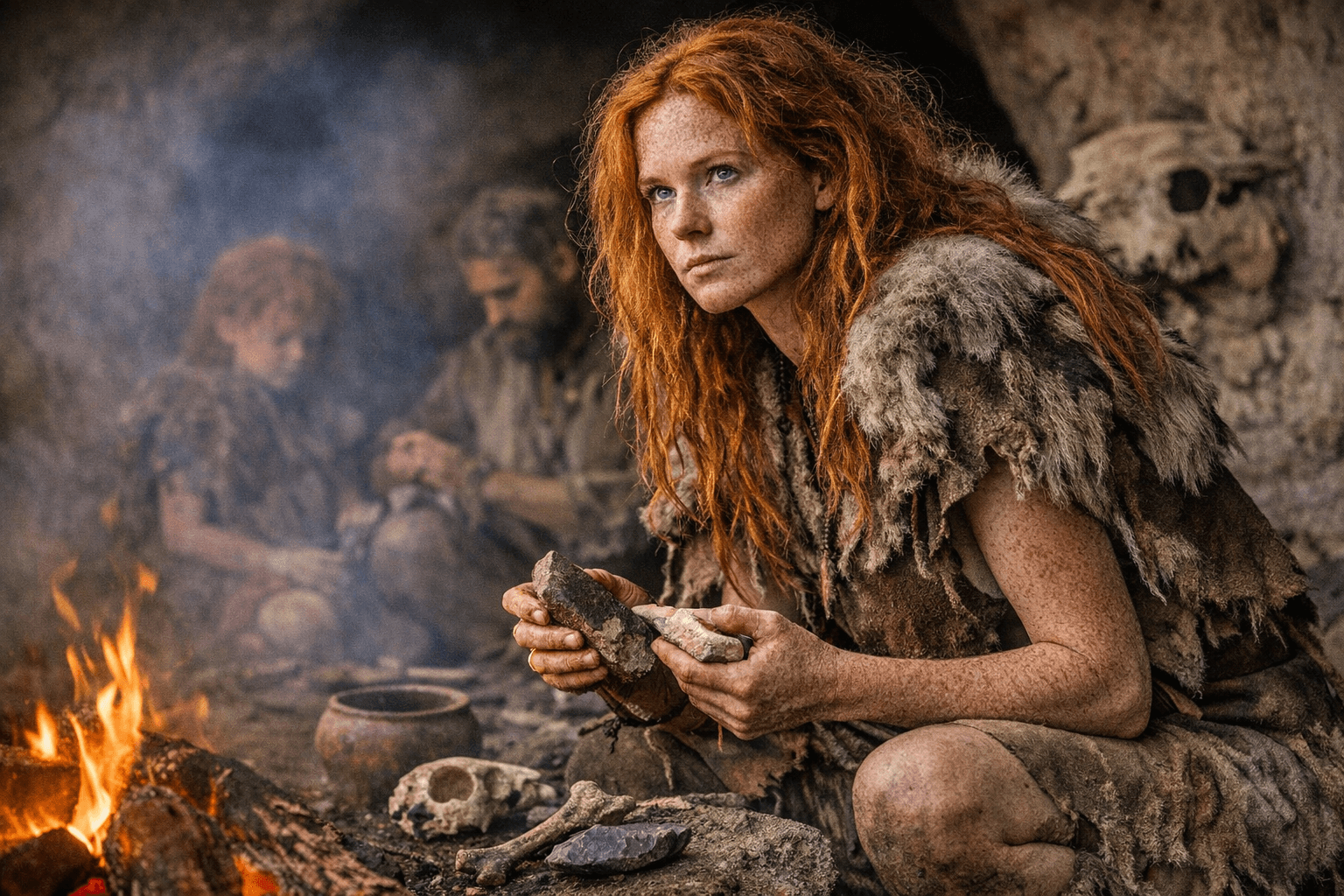
A vast ancient-DNA analysis has pushed back against the idea that human evolution slowed to a crawl after the Stone Age. By tracking nearly 16,000 people across more than 10,000 years in West Eurasia, Harvard-led researchers found directional natural selection acted on hundreds of gene variants, not just the few dozen that older studies had been able to detect.
The headline-grabbing result points to the MC1R pigmentation pathway, the gene system long tied to red hair and fair skin. In Harvard Medical School’s account of the work, MC1R variants account for the red-hair phenotype in about 1 to 2 percent of redheads, and the same pathway shapes skin pigment as well. That matters because pigmentation genes sit at the intersection of environment, physiology and survival, especially in places with low ultraviolet light where vitamin D production may have given lighter skin an advantage.
But the study is more cautionary than sensational. Its strength lies in time-series ancient DNA, which lets scientists watch variants rise and fall over millennia rather than guessing from today’s genomes alone. That also means the finding does not prove a simple story of “red hair was favored” in the modern sense. It shows that one branch of pigmentation biology changed under selection while populations moved, mixed and adapted across Europe, the Middle East, the Caucasus, Central Asia and North Africa.
The broader picture is even more important. The team, led by David Reich and first author Ali Akbari, said selection accelerated after humans shifted from hunting and gathering to farming. Harvard and the Broad Institute said the dataset revealed hundreds of genes under directional selection, far more than the roughly 21 clear examples previously identified in ancient-DNA studies. More than half of those genes are linked today to disease risk or other traits, a reminder that genetic labels from the present do not always map neatly onto prehistoric lives.
The study also points to changes beyond pigmentation, including immunity-related variants and a decline in variants associated with male-pattern baldness. Contemporary coverage said the analysis flagged genes tied to resistance to HIV and leprosy, underscoring how diet, crowding, settlement and infectious disease likely reshaped selection as agriculture spread.
That is the real lesson here. Ancient DNA can reveal that natural selection kept working hard over the last 10,000 years, but it cannot turn human history into a tidy set of single-gene stories. The genetics are real, the adaptation is real, and so are the limits of what those genes can tell us about the lives, risks and migrations of the people who carried them.
This article was produced by Prism’s automated news system from verified source data, official records, and press releases, then run through automated quality and moderation checks before publishing. The system is built and supervised by the people who set the standards it runs under. Read our full AI policy.
Did this article answer your question?