NBC poll finds voters trust GOP more on immigration and crime
A new NBC News poll shows Republicans hold double-digit leads on immigration, crime and border security while voters are tied on the economy, reshaping midterm messaging and community risks.

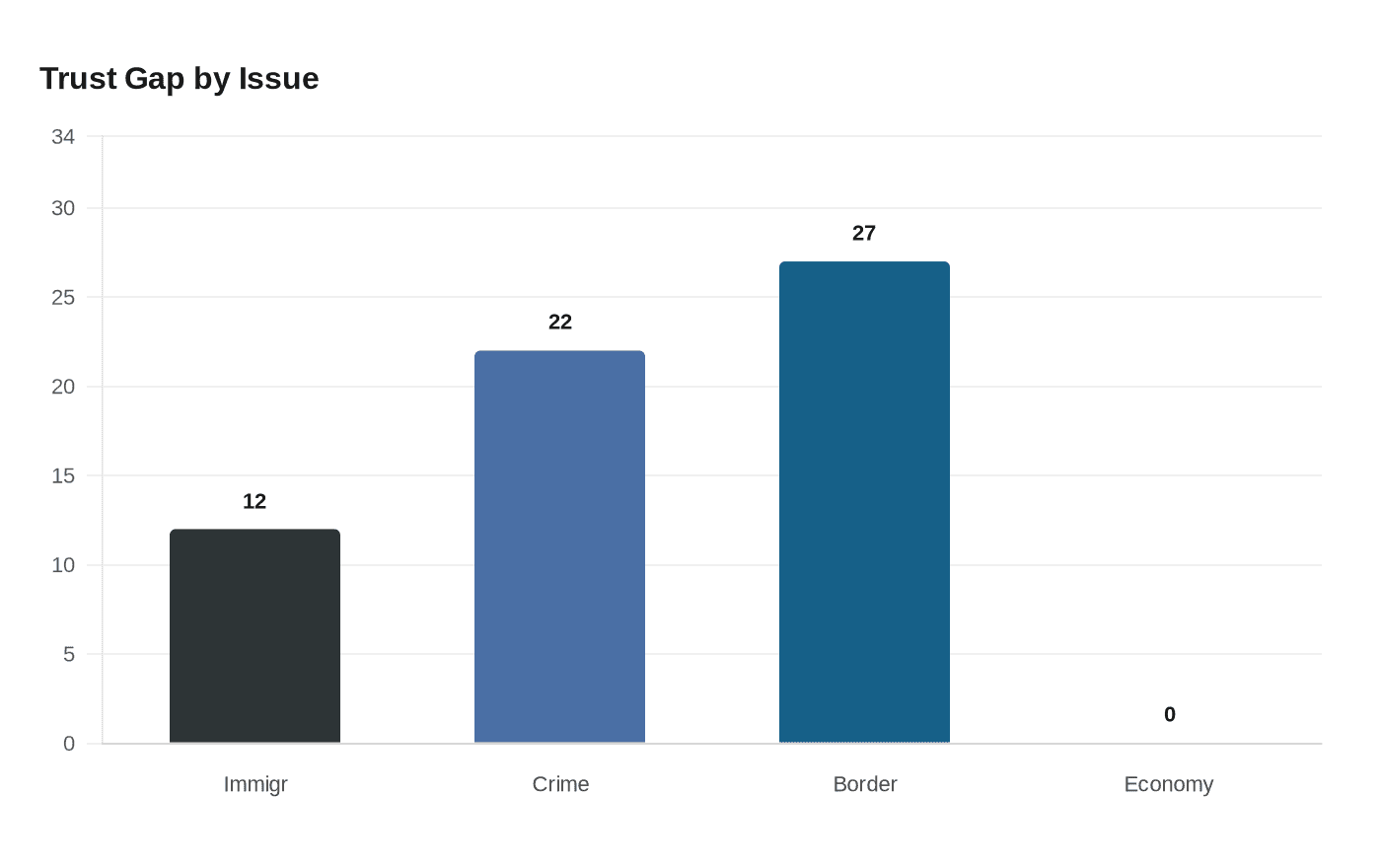
A new NBC News poll shows Americans trust Republicans more than Democrats on immigration by 12 points, on crime by 22 points and on border security by 27 points, while voters are tied on which party handles the economy best. Conservative influencers are highlighting the results as evidence of renewed momentum for Republican midterm prospects, even as the party faces other political headwinds.
The survey shifts the terrain of the midterm campaign toward security and enforcement themes that are already dictating advertising buys and floor speeches. Republican strategists are likely to invest in messaging that emphasizes border control and law and order, and Democratic leaders must decide whether to counterpunch on competence or reframe the debate around community safety and economic opportunity.
Beyond electoral arithmetic, the poll points to immediate public health and equity concerns. Harder-line immigration policy proposals that may gain traction in response to voter sentiment can translate quickly into operational changes at ports of entry, immigrant shelters and community clinics. Hospitals and local health departments along the border have repeatedly warned that surges in enforcement and detention can overwhelm capacity for urgent care, maternal services and behavioral health supports. When enforcement intensifies, mixed-status families commonly report delaying or avoiding medical care and public benefits out of fear, which reduces vaccination uptake, prenatal care and chronic disease management in communities already facing disparities.
Crime messaging also has real-world consequences for public safety strategies. A pivot toward more aggressive law enforcement and tougher sentencing, backed by electoral capital, risks amplifying racialized policing practices that public health researchers link to poorer mental health outcomes and reduced willingness of crime victims to report incidents. Conversely, investments in violence prevention, social services and community-based intervention programs, which research finds effective in lowering violence and improving health, may be deprioritized if political pressure favors punitive measures.
The tie on the economy complicates the narrative for both parties. For House Republican leaders and President Biden, who anchors the Democratic coalition, the poll signals that economic stewardship alone will not neutralize voters' worries about borders and crime. Campaign budgets will likely reflect that calculation, funneling money into issue-specific ad campaigns in key districts where public safety and immigration sentiment is strongest.
The policy consequences will be uneven across communities. Rural counties and some suburban districts that view immigration and crime as immediate problems may see expanded federal and state enforcement activity, while immigrant-rich urban neighborhoods could face greater barriers to care and cooperation with public health initiatives. That divergence threatens to widen existing health inequities tied to race, income and immigration status.
If political actors respond to the poll by prioritizing enforcement-centric solutions, the near-term effect will be measurable in clinics, emergency rooms and community safety programs. Policymakers who claim to care about public health and equity must weigh the electoral benefits of a security-first message against the documented harms such policies produce for the most vulnerable populations. The balance they strike this spring will shape both the midterm debate and the delivery of health and social services in communities across the country.
This article was produced by Prism’s automated news system from verified source data, official records, and press releases, then run through automated quality and moderation checks before publishing. The system is built and supervised by the people who set the standards it runs under. Read our full AI policy.
Did this article answer your question?

