Nearly 15,000 nurses walk out at major New York private hospitals
Nearly 15,000 NYSNA nurses struck multiple private hospitals, pressing demands on staffing, safety, benefits and pay in a citywide showdown.

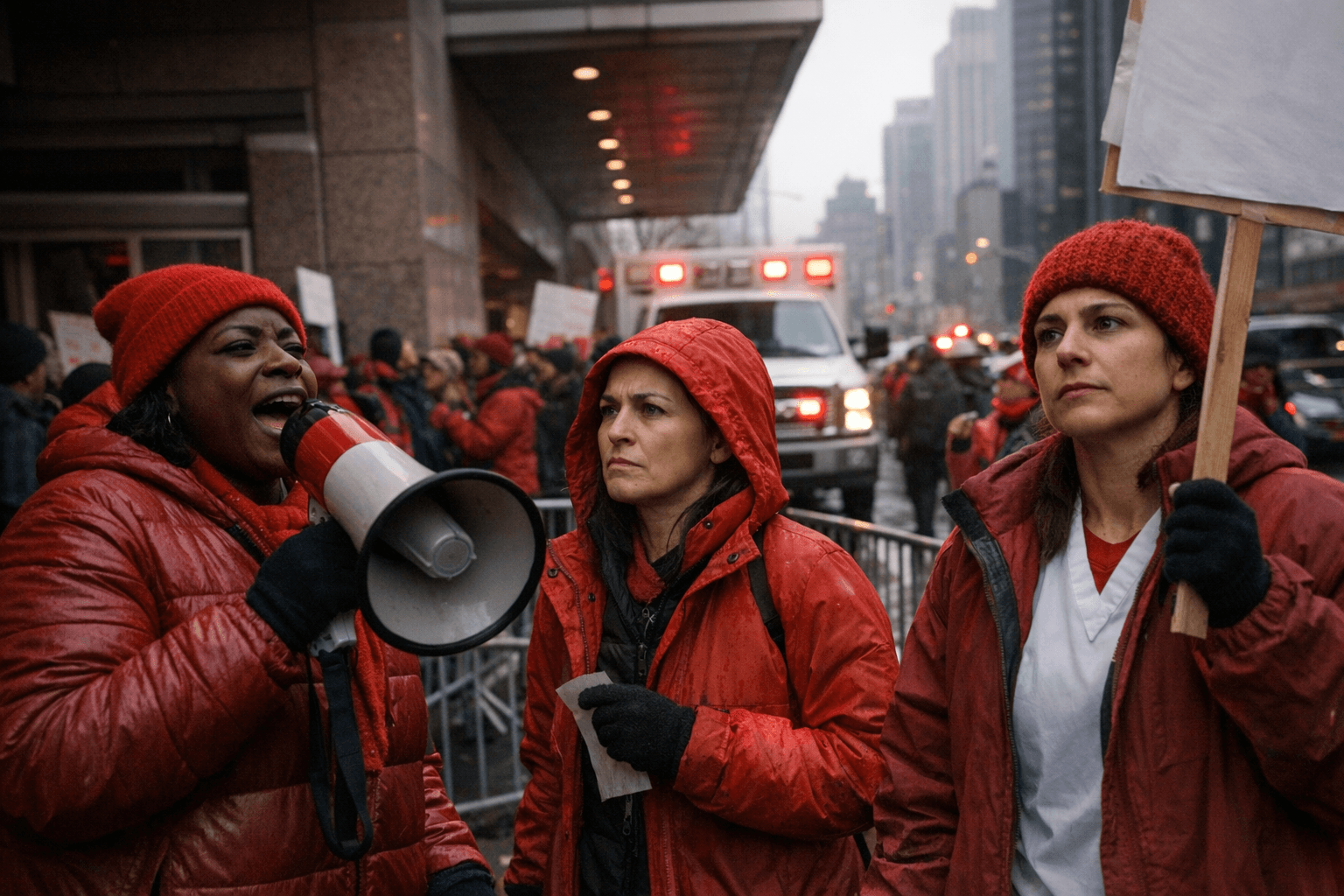
Nearly 15,000 nurses represented by the New York State Nurses Association walked off the job in a coordinated strike at major private New York City hospitals, a labor action union officials described as among the city’s largest in decades. The walkout, which began Monday, targeted flagship campuses across several systems and followed months of stalled contract talks and warnings that nearly 16,000 nurses were prepared to strike if no settlement was reached.
Picketers established daily lines beginning at 7 a.m. at Mount Sinai Hospital, Mount Sinai Morningside and Mount Sinai West, and similar actions were reported at NewYork-Presbyterian sites including Columbia University Irving Medical Center, and at Montefiore Medical Center campuses including Montefiore Einstein in the Bronx. NYSNA said strike lines would continue every day until management agrees to a contract the union says protects patients and preserves nurses’ health benefits. The union scheduled a press conference at Mount Sinai Hospital at 2 p.m. on the second day of action.
At the center of the dispute are demands for minimum staffing ratios with penalties for understaffing, stronger protections against workplace violence, preservation of health benefits and higher wages. NYSNA warned that cuts threatened by hospital management to nurses’ health coverage would affect roughly 44,000 nurses and their families across more than 50 hospitals enrolled in the union’s health-benefit plan.
Hospital management and the state moved quickly to limit disruptions to patient care. Hospital officials and their trade association said they had contracted with staffing agencies for travel nurses and reserved hotel rooms for agency staff to sustain operations during the walkout. Those contingency measures, while designed to preserve services, carry higher operating costs that will raise short-term spending for hospitals and could pressure margins for systems already facing inflationary wage and supply pressures.
The governor declared a state of emergency the Friday before the strike, warning that “a disaster is imminent” and urging both sides to continue bargaining because patient care could be jeopardized. New York City elected officials framed the dispute as a test of priorities in health care financing. Mayor Zohran Mamdani said there is “no shortage of wealth in the health care industry” as he criticized hospital executives’ handling of negotiations.
The strike has also highlighted acute legal and disciplinary disputes. NYSNA alleges that Mount Sinai unlawfully fired three labor-and-delivery nurses hours before the walkout and disciplined 14 other vocal nurse leaders. Mount Sinai initially denied firing the three, later said they were disciplined rather than fired, and then said the nurses were dismissed for “interfering with patient safety.” Hospital officials have accused some nurses of deliberate interference with emergency-preparedness drills and said security footage contradicts those accounts.
The union reported tentative settlements the prior week that averted strikes at several safety-net hospitals, and nurses at a trio of Long Island hospitals reached a tentative agreement, demonstrating negotiating leverage in some locales. Still, the walkout at New York’s largest private hospitals represents a concentrated escalation that could reverberate beyond immediate operations: prolonged disruptions to elective procedures and inpatient care would reduce short-term revenue for affected systems, while any resulting contractual gains for nursing staff would set a financial precedent for other labor negotiations across the health-care sector.
As the strike continues, its trajectory will depend on negotiation dynamics and potential state intervention. NYSNA says the action is legally protected and aimed at securing enforceable staffing and safety standards; hospitals say contingency plans will prevent care failures. The outcome will test whether private hospital systems absorb higher labor costs or accept contract terms that reshape staffing and benefits across New York’s health-care industry.
This article was produced by Prism’s automated news system from verified source data, official records, and press releases, then run through automated quality and moderation checks before publishing. The system is built and supervised by the people who set the standards it runs under. Read our full AI policy.
Did this article answer your question?