Nearly $180 Million to Transform Nevada Rural Health System
State and federal officials announced today that Nevada will receive nearly $180 million in federal funding to modernize and bolster the state’s rural health-care infrastructure. The investment targets workforce shortages, telehealth expansion, and chronic illness care—changes that could improve access and equity for residents across Nye County.

State and federal officials announced on January 9, 2026 that Nevada is set to receive nearly $180 million through the federal Rural Health Transformation Program, a new initiative funded by recent federal legislation to strengthen rural health systems. The award is intended to support infrastructure upgrades, recruitment and incentives for health care workers to serve in rural areas, expansion of technology and telehealth services, and programs to address chronic illnesses that disproportionately affect rural communities.
Officials described the grant as a landmark investment for Nevada’s rural communities. The program will distribute funding across states in initial and subsequent rounds, providing opportunities for sustained investment rather than a one‑time infusion.
For residents of Nye County, where long travel distances, limited specialty services, and workforce shortages have strained access to timely care, the funding could bring tangible changes. Investments in telehealth technology and related infrastructure can expand virtual access to specialists and chronic disease management tools for patients in Pahrump, Tonopah and smaller surrounding communities. Recruitment and incentive programs aim to increase the number of primary care clinicians, behavioral health providers and other essential staff willing to work in rural settings, which could reduce wait times and stabilize local clinics.
Beyond immediate access, the funding has public health implications for prevention and chronic disease control. Strengthened rural clinics and telehealth capacity can support medication management, remote monitoring, and early intervention for conditions such as diabetes, heart disease and respiratory illnesses that contribute to higher morbidity in rural populations. For vulnerable residents who face transportation barriers or economic hardship, closer-to-home or virtual care options can mean fewer missed appointments and better continuity of care.
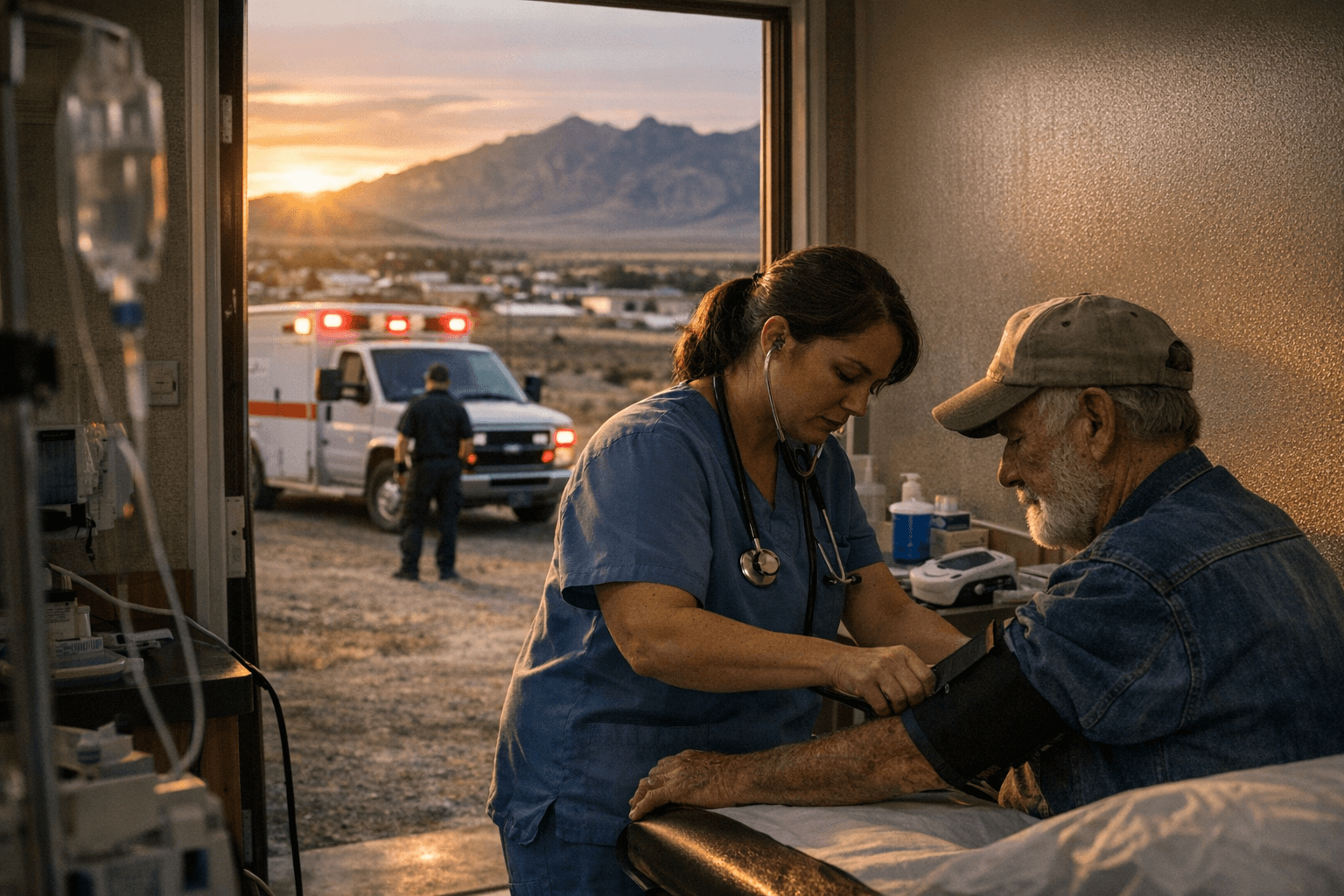
The award also foregrounds policy and equity questions. How the state allocates funds among counties, whether investments prioritize historically underserved neighborhoods or tribal communities, and how performance will be measured are crucial to ensuring the dollars reduce disparities rather than reinforce them. State and local health leaders, clinic operators and community advocates will need to work together to shape programs that prioritize retention of local staff, culturally competent services, and measurable improvements in health outcomes.
Officials noted the program’s phased distribution across states, signaling that additional funding rounds could follow. As details about allocation and local implementation emerge, Nye County health providers and community organizations will be closely watching for opportunities to apply resources toward durable improvements in access, workforce sustainability and chronic disease care for rural residents.
Sources:
Know something we missed? Have a correction or additional information?
Submit a Tip