NELP warns policy shifts could raise McDonald’s and fast-food wages to $30
NELP warns policy shifts could push fast-food wages — including jobs at McDonald’s — toward $30 per hour, mapping scenarios from local minimum-wage hikes to national campaigns.

The National Employment Law Project published an opinion piece outlining how policy shifts and organizing campaigns could push fast-food wages, including positions at McDonald’s, toward $30 per hour over time. NELP’s analysis surveys recent trends in wage campaigns and state and municipal minimum-wage changes to map plausible pathways to that level.
NELP frames the $30-per-hour scenario as the end point of layered policy action. The organization looks at sustained local minimum-wage increases, coordinated state-level legislation, and momentum from sector-wide wage campaigns as the mechanisms that could cumulatively raise hourly pay for fast-food workers. The piece focuses explicitly on worker pay in major chains such as McDonald’s rather than on any single franchise or market.
For McDonald’s employees, the $30 projection translates into a significant shift from prevailing pay rates in many markets. NELP connects that potential increase to a string of local ordinances and state increases that have already raised floor wages in some cities and states, arguing that continued policy activity could extend those gains into the fast-food sector. The organization’s scenario planning treats McDonald’s as representative of national chains that would feel direct upward pressure from higher statutory minimums plus targeted wage campaigns.
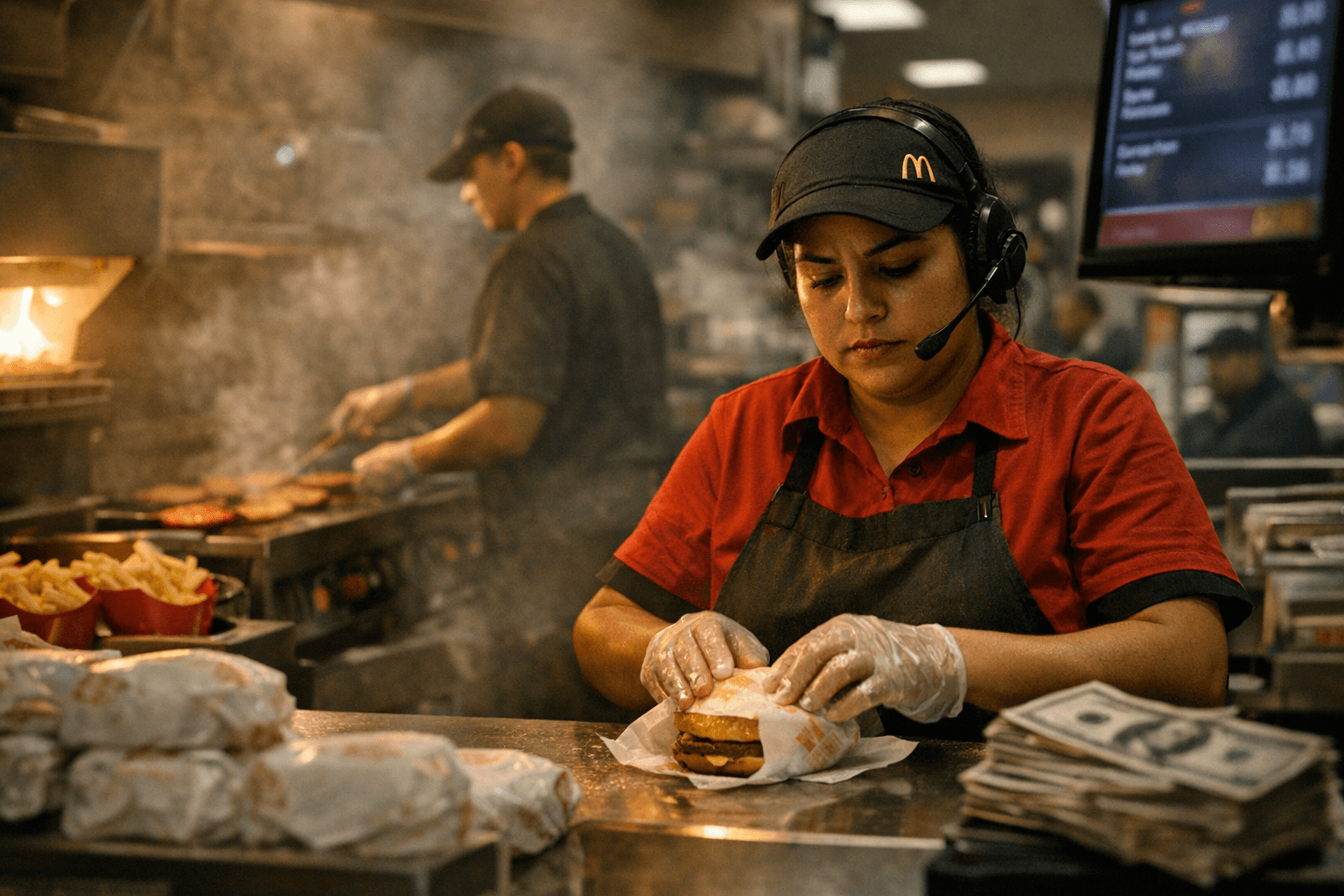
Franchise owners and corporate managers at McDonald’s are highlighted implicitly by the analysis as stakeholders who would face rising labor costs if multiple jurisdictions adopt higher floors or if sectoral campaigns succeed. NELP’s piece does not single out a specific timeline but presents the $30 figure as a realistic outcome of accumulated policy change rather than a single legislative event. The organization’s survey of trends emphasizes the interaction between municipal action, state-level statutes, and organized wage campaigns.
Workers and advocates are the focal point of NELP’s scenarios; the opinion piece details how coordinated campaigns and cascading minimum-wage increases could convert local wins into broader gains for fast-food payrolls. For readers at McDonald’s, the message is concrete: the combination of state and municipal minimum-wage shifts and ongoing wage campaigns is cast by NELP as a credible route to substantially higher hourly pay, with $30 per hour presented as an attainable endpoint under sustained policy momentum.
Know something we missed? Have a correction or additional information?
Submit a Tip