Netanyahu says Israeli troops crossed Lebanon’s Litani River ahead of talks
Netanyahu said Israeli troops crossed the Litani River, a line that has long defined the south, just as U.S.-backed cease-fire talks were due to resume.
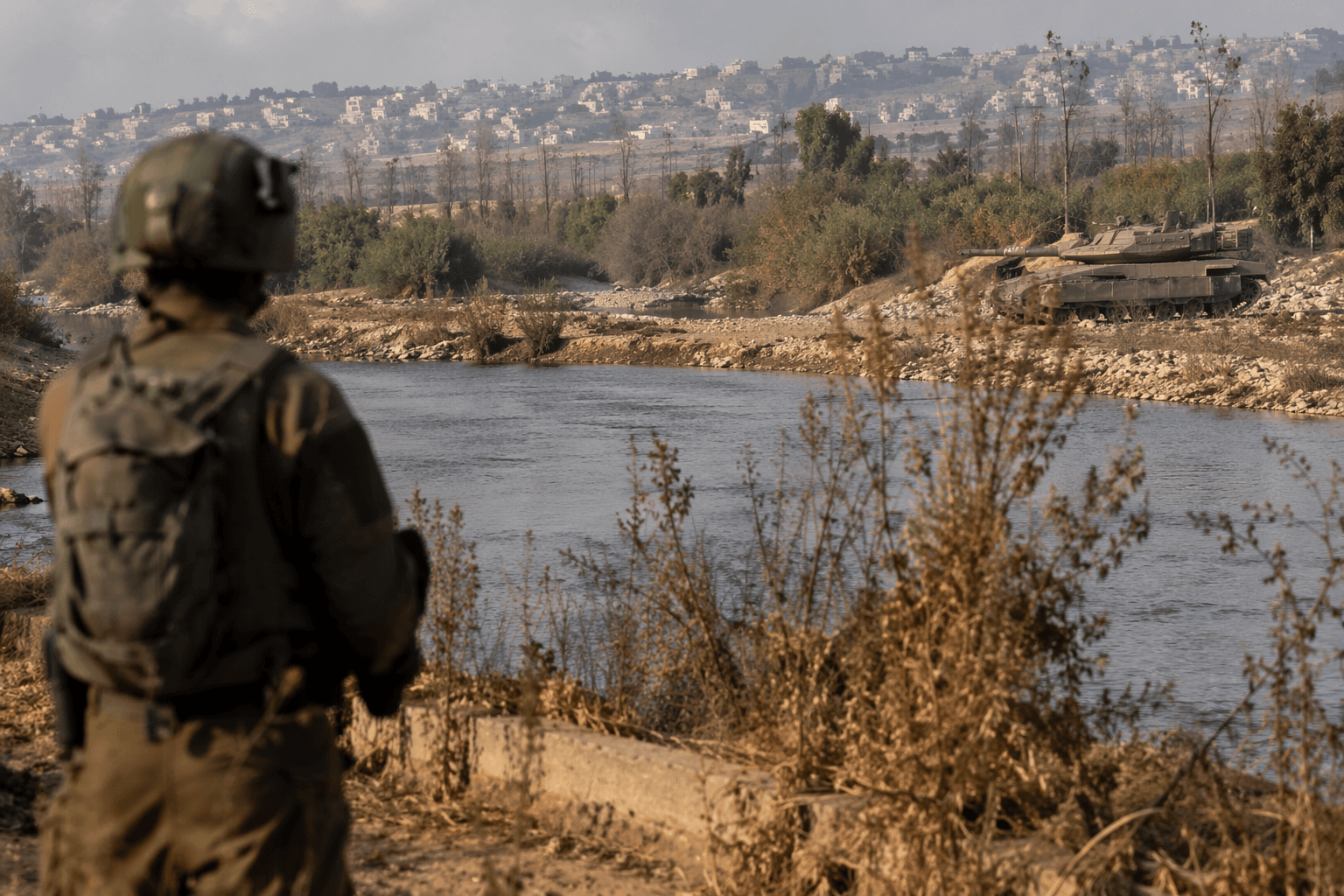
Benjamin Netanyahu said Israeli ground forces crossed Lebanon’s Litani River, a move that pushed the fighting deeper into territory long treated as the threshold of southern Lebanon and raised fresh doubts about the diplomatic track now opening under U.S. sponsorship.
The crossing matters because United Nations Security Council Resolution 1701, adopted in 2006, called for a demilitarized zone between the Blue Line and the Litani River, alongside the withdrawal of Israeli forces from southern Lebanon and the deployment of Lebanese forces and UNIFIL. For nearly two decades, that framework has served as the reference point for keeping the border from sliding into a wider war. If Israeli troops are operating beyond the river, the practical meaning of the cease-fire line is weakening even as negotiators try to restore it.
The escalation came after more than 120 Israeli airstrikes on May 26 and a declaration on May 27 that a new swathe of southern Lebanon was a combat zone, with residents told to move north. Netanyahu said Israel was expanding operations and seizing “strategic positions” and “controlling areas.” Hezbollah said its fighters clashed with Israeli troops along the Litani River and beyond the “yellow line,” signaling that both sides were now pressing claims well past the positions that had underpinned earlier restraint.
The timing was especially fraught because the United States said on May 14 and 15 that Israel and Lebanon had agreed to a framework for negotiations. Under that arrangement, political talks were due to resume on June 2 and June 3, while a security track was scheduled to begin at the Pentagon on May 29. Washington also said the two sides had begun a U.S.-facilitated cessation of hostilities on April 16 for an initial 10 days, then agreed on May 15 to extend it by 45 days.
Lebanon has framed the talks as a way to secure sovereignty and end Israeli attacks and occupation, while the United States has described the goal as a comprehensive peace and security agreement and support for Beirut’s effort to restore the state monopoly on force. That effort had already advanced on January 8, when the Lebanese army said the first phase of its plan to bring all non-state weapons in the south under state control was complete.

UN reporting in 2026 said the situation remained fragile, with Israel still retaining positions and buffer zones north of the Blue Line and continuing strikes in southern and eastern Lebanon. With troops crossing the Litani and diplomats heading into talks, the central question is whether battlefield gains are building leverage for a deal or making a cease-fire harder to salvage.
This article was produced by Prism’s automated news system from verified source data, official records, and press releases, then run through automated quality and moderation checks before publishing. The system is built and supervised by the people who set the standards it runs under. Read our full AI policy.
Did this article answer your question?