Netflix’s Little House reboot centers Ma and Osage perspectives
Netflix has already renewed its Little House reboot, which gives Ma and Osage characters a bigger role as it heads into a backlash-prone debut.
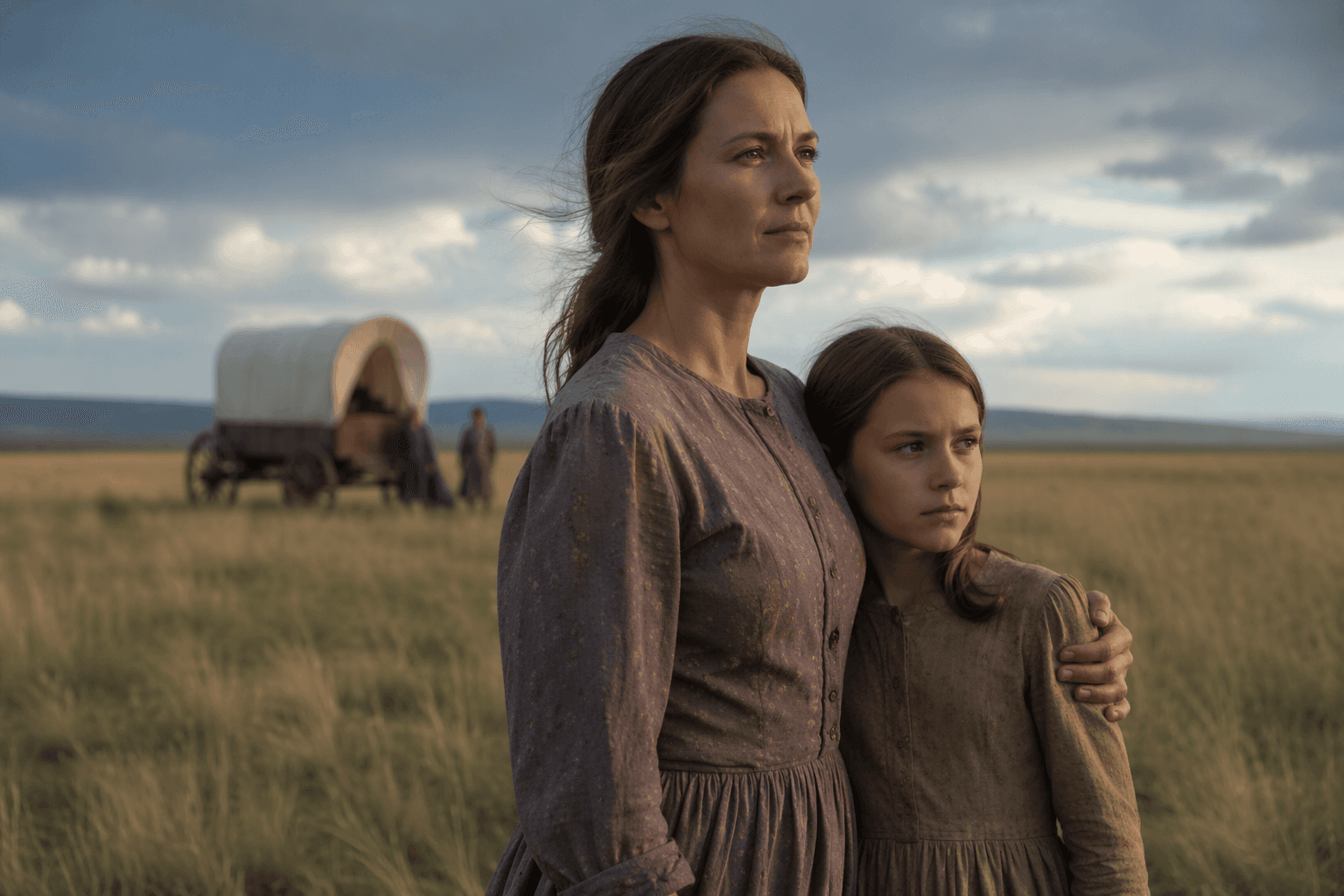
Netflix will launch its Little House on the Prairie reboot on July 9 and has already renewed it for a second season. The new version shifts the center of gravity toward Caroline Ingalls, or Ma, and adds Osage and Black characters to a tale that has long been told through the Ingalls family alone.
Rebecca Sonnenshine is the showrunner and executive producer. Season 1 follows Charles Ingalls, played by Luke Bracey; Caroline Ingalls, played by Crosby Fitzgerald; Mary Ingalls, played by Skywalker Hughes; and Laura Ingalls, played by Alice Halsey, as they leave Wisconsin for Independence, Kansas, in search of a fresh start and a new forever. The cast also includes Meegwun Fairbrother as William Mitchell, Alyssa Wapanatâhk as White Sun and Wren Zhawenim Gotts as Good Eagle.
The adaptation is built on the 1935 novel Little House on the Prairie, the third book in Laura Ingalls Wilder’s series, and on the wider Little House books published from 1932 to 1943. Those books drew on Wilder’s childhood in the American Midwest and on her family’s life in Wisconsin, Kansas, Minnesota, South Dakota and Missouri, but they have also faced long-running criticism for racial stereotyping and for presenting settlement as a story of white perseverance. Defenders have treated the books as historically grounded frontier narratives, while critics have argued that they reflect the Euro-American preemption of Native lands.
The real Ingalls family built its little house on Osage land, and the series broadens the prairie view to include Osage people who already lived there. Osage cultural consultant Julie O’Keefe said early conversations with members of the Osage Nation made one point clear: if the story is being told, both sides need to be told.
This article was produced by Prism’s automated news system from verified source data, official records, and press releases, then run through automated quality and moderation checks before publishing. The system is built and supervised by the people who set the standards it runs under. Read our full AI policy.
Did this article answer your question?