New F1 Rules One Month In: Key Lessons and Lingering Problems
Three races into F1's most ambitious regulatory overhaul in decades, the stress fractures are already visible, and one of them almost seriously injured a driver.
The First Month as a Stress Test
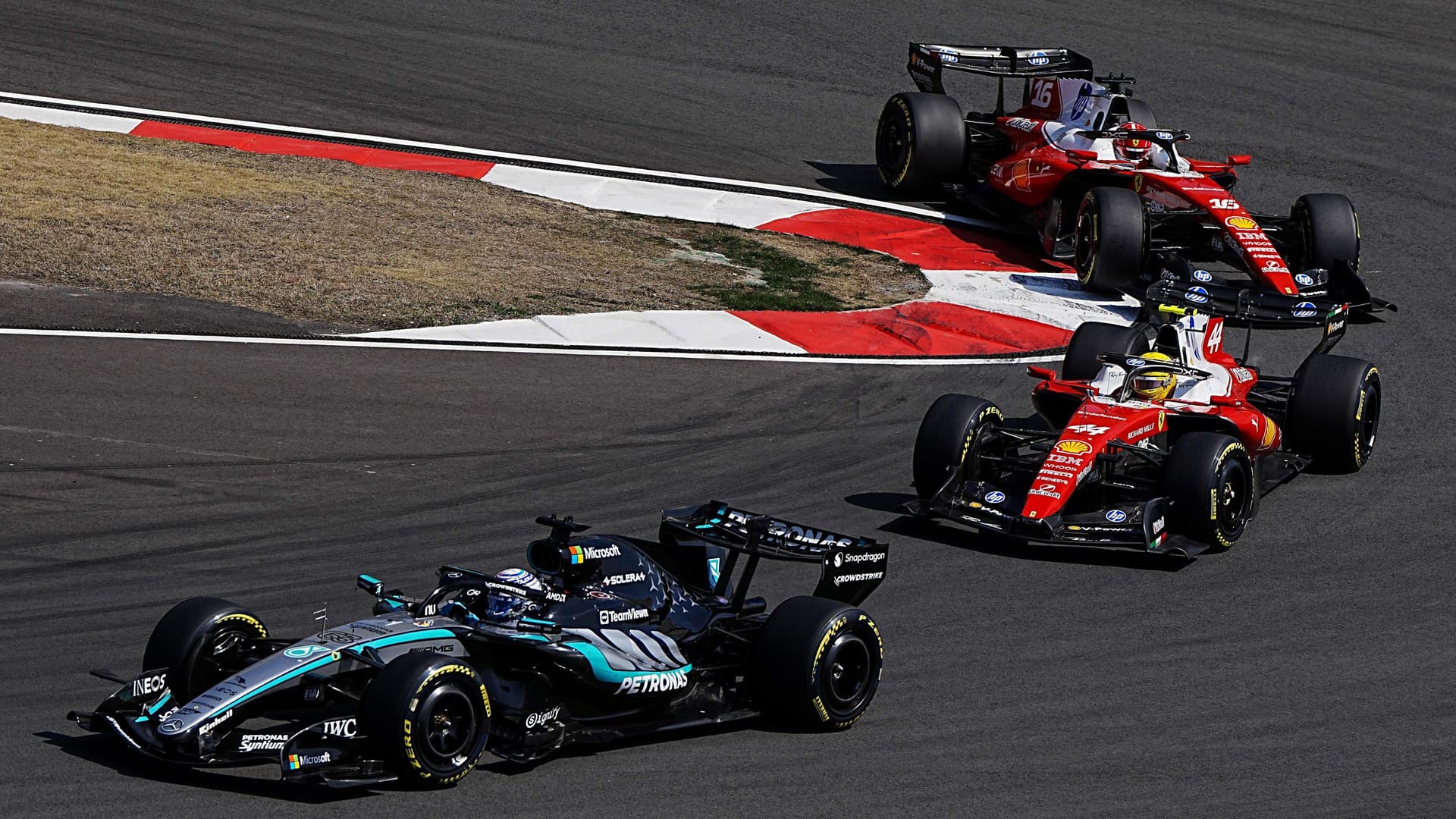
Three grands prix. Three circuits at opposite ends of the speed and layout spectrum. Australia's flowing Albert Park, Shanghai's sweeping infield complex, and Suzuka's unforgiving figure-of-eight. Formula 1 could not have asked for a more demanding early examination of its new regulations, and the 2026 ruleset has not passed cleanly. What has emerged from Melbourne, China, and Japan is a detailed picture of where the sport's boldest overhaul in a generation works, where it strains, and where it has come uncomfortably close to causing serious harm.
The changes themselves are genuinely radical. The new power units split output almost equally between the internal combustion engine and a massively enlarged electrical Motor Generator Unit for Kinetic energy (MGU-K), which now produces up to 350kW compared to the previous era's more modest contribution. The battery can absorb up to 9 megajoules per lap, more than double the 4MJ previously permitted. Chassis regulations mandate a 30% reduction in aerodynamic downforce and a 55% cut in drag; cars are narrower, lighter, and carry less floor area. The old DRS system has been replaced by Active Aero, where wing flaps open automatically on designated straights for every driver, not just those within one second of the car ahead. Being within that gap activates an additional Overtake Mode. On paper, this is the closer, cleaner racing F1 has promised for years. In practice, the tension between those ambitions is already visible.
The Super Clipping Problem
No phenomenon has generated more anxiety in the paddock over the first month than "super clipping." Under the new rules, teams discovered that the MGU-K can harvest electrical energy even when a driver is at full throttle, by drawing some of the power the combustion engine is generating rather than sending all of it to the rear wheels. This technique, deployed primarily in corners where drivers are on partial throttle and on the straights when the battery is full, creates a signature effect: a car accelerating normally before suddenly losing a slice of thrust as the MGU-K draws down power to recharge. The result, on a long straight, is a visible, sometimes dramatic speed variation within a single lap.
The strategic logic is sound. Teams that master super clipping arrive at the end of each lap with a fuller battery, giving them more electrical punch where it counts. But the competitive implications are asymmetric. Power unit architecture, software sophistication, and battery thermal management all determine how effectively a team can exploit the technique, meaning that super clipping has become one of the clearest dividing lines between the field's haves and have-nots. Lewis Hamilton flagged the broader complexity problem during pre-season testing. "None of the fans are going to understand it," he said. "It's ridiculously complex." Three races in, that assessment looks prescient.
Qualifying Fairness and the Algorithm Anomaly
Super clipping's most corrosive effect may be on qualifying. The sessions that should be F1's purest expression of single-lap speed have instead become exercises in energy management choreography, with engineers orchestrating precisely when and how the car harvests and deploys electrical power across a timed lap. That has been disorienting for fans and, it turns out, occasionally for the cars themselves.
In China, Charles Leclerc lost a qualifying lap time to an algorithmic failure inside his Ferrari's power unit. When Leclerc momentarily lifted from full throttle, the car's software registered that he had dropped below the energy threshold required to keep the Active Aero in its low-drag, open-wing position. The system closed the wing, the lap time was compromised, and Leclerc described the outcome as "a bit silly." It was a striking moment: a five-time grand prix winner unable to extract a clean qualifying lap not because of a driver error in the traditional sense, but because the rules had created an interaction between energy management and aerodynamics too complex for even the car's own control systems to navigate reliably.
The qualifying picture is further complicated by who benefits most from the current system. Teams with superior power unit management tools, primarily those aligned with the larger, better-resourced manufacturers, can pre-programme super clipping sequences that smaller operations cannot replicate with the same precision. A regulation designed to promote competition is, in qualifying at least, currently entrenching advantage.
Safety: The Bearman Crash Changes Everything
If the qualifying and racing quality debates are urgent, the safety dimension is existential. On 29 March 2026, at Suzuka's Spoon Curve, Oliver Bearman's Haas arrived behind Franco Colapinto's Alpine at a closing speed of approximately 50 kilometres per hour. Colapinto was in a lift-and-coast or energy-harvesting phase, effectively slowing sharply while still on what appeared to Bearman's eye to be a racing line. Bearman, travelling at 308km/h, had no viable reaction time. He swerved, crossed the grass on the inside of the corner, skidded back across the track, through the run-off, and into the barrier. The impact registered at 50G. He was taken to the medical centre and confirmed to have sustained no fractures.
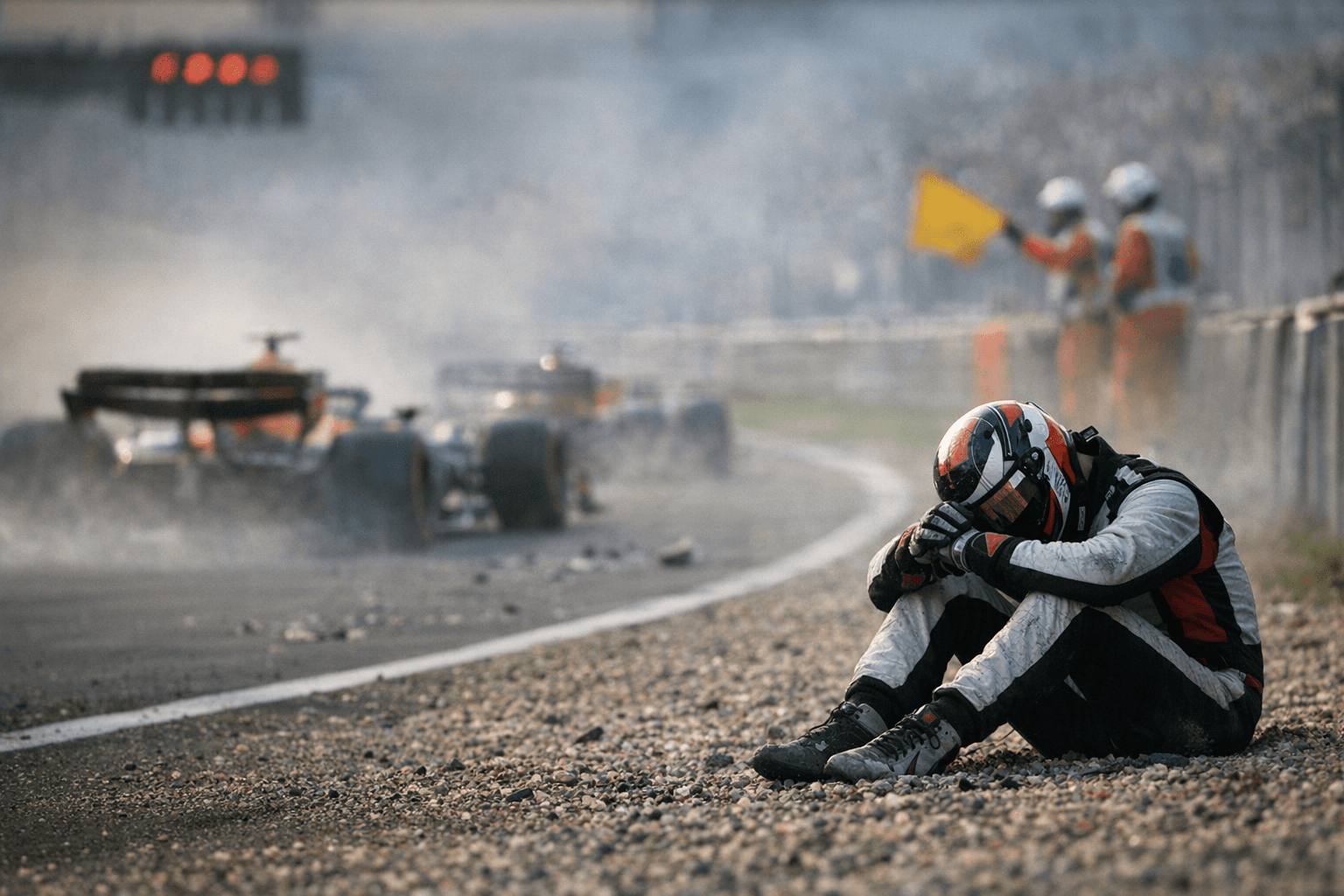
Bearman was characteristically direct about the cause. "It was a massive overspeed, 50kph, which is a real… it's a part of these new regulations that I guess we have to get used to," he said. The qualifying speed differentials are one thing; this was a race incident where a driver could not know, in real time, whether the car fifty metres ahead was about to slow by 50km/h or continue accelerating. There is a structural data gap in the 2026 framework: drivers have limited visibility into the energy modes of nearby competitors, making unpredictable closing speed events essentially undefendable. The FIA issued a formal statement after the race, acknowledging the role of closing speeds in the incident and confirming that "a number of meetings" would be held in April to review the regulations.
What Can Be Fixed Quickly
The FIA has scheduled a key meeting of technical directors for 9 April, and the list of potential rapid interventions is becoming clearer. These are changes to numerical parameters within the existing regulatory framework, which do not require the lengthy process of a full regulatory revision.
The most significant lever is the maximum recoverable energy per lap. Currently set at 9MJ, it was already trimmed on an emergency basis to 8MJ at Suzuka because the circuit's energy demands were particularly acute. Reducing that figure to as low as 6MJ per lap is being evaluated as a way to make it easier for all cars to reach their recharge limit naturally, removing much of the incentive for aggressive super clipping. If drivers can hit the battery ceiling through braking and lift-and-coast alone, the need to harvest at full throttle diminishes.
A parallel option is reducing the MGU-K's maximum output from 350kW to somewhere between 200kW and 250kW. This would ease the energy consumption per lap and shorten or eliminate the power-drop phases on the straights. It would also reduce the speed differential between a car in full deployment and one in harvesting mode, directly addressing the closing speed safety concern that Bearman's crash crystallised. Additionally, limiting the rate at which teams can ramp down battery output (currently permitted at up to 50 or 100kW per second depending on circuit) would smooth out the abruptness of power transitions. Fuel chemistry adjustments, specifically changes to the calorific value of the permitted fuel blend, and a simplification of the deployment mode rules to reduce algorithm complexity, are also under active discussion.
What Requires a Longer Regulatory Cycle
Not everything can be addressed with a parameter change in April. The 2026 aerodynamic rules represent a genuine engineering achievement in some respects: the reprofiled front wing and the addition of bargeboards ahead of the sidepods have measurably reduced the turbulent wake that made close following so difficult under the previous generation of cars. But the follow-up quality of racing still depends heavily on power unit behaviour, and until the energy management dynamics are tamed, the aero improvements are partly obscured.
A more fundamental rebalancing of the 50/50 power split between combustion and electric, potentially shifting back towards something closer to 20% electric and 80% combustion, would give engineers more predictable performance characteristics and reduce the dependence on battery state-of-charge management as a competitive variable. But that is a structural change requiring manufacturer consensus and simulation, not a meeting-room decision. Similarly, revising the track limits framework specifically to account for how Active Aero interacts with energy thresholds at corner exits, a problem the Leclerc China incident exposed, requires careful drafting to avoid creating new loopholes. And while the FIA's red flag and safety car restart protocols are not specifically 2026 creations, the closing speed issue demands that restart procedures explicitly account for scenarios where energy states between cars diverge sharply at the moment racing resumes.
Who Wins and Who Loses Right Now
Under the current interpretation of the rules, the competitive landscape is not neutral. Teams with the deepest software engineering resources, typically those with factory-level power unit programmes, are extracting more from super clipping than their customer rivals. In qualifying, that gap is quantifiable in tenths of seconds that the algorithmic complexity of the regulations makes essentially non-contestable. Leclerc's deleted China lap is an example where even a front-running factory team lost time to regulatory mechanics rather than performance. Smaller teams and their drivers face the compounded disadvantage of less precise energy management tools and less data on rival cars' modes, the combination that put Bearman in the barrier at 308km/h.
The fans, implicitly, are also losing under the current system. The Overtake Mode mechanism has produced passes that look clean on television but that drivers, journalists, and technical analysts have increasingly characterised as artefacts of the rules rather than genuine racing manoeuvres. The gap between what the 2026 regulations were designed to deliver and what three races have actually produced is real, it is documented, and the FIA's April 9 meeting represents the sport's first serious opportunity to close it. The question is whether the changes that can be made quickly are enough to stabilise the framework while the deeper structural solutions are designed, tested, and implemented over the coming regulatory cycle.
This article was produced by Prism’s automated news system from verified source data, official records, and press releases, then run through automated quality and moderation checks before publishing. The system is built and supervised by the people who set the standards it runs under. Read our full AI policy.
Did this article answer your question?