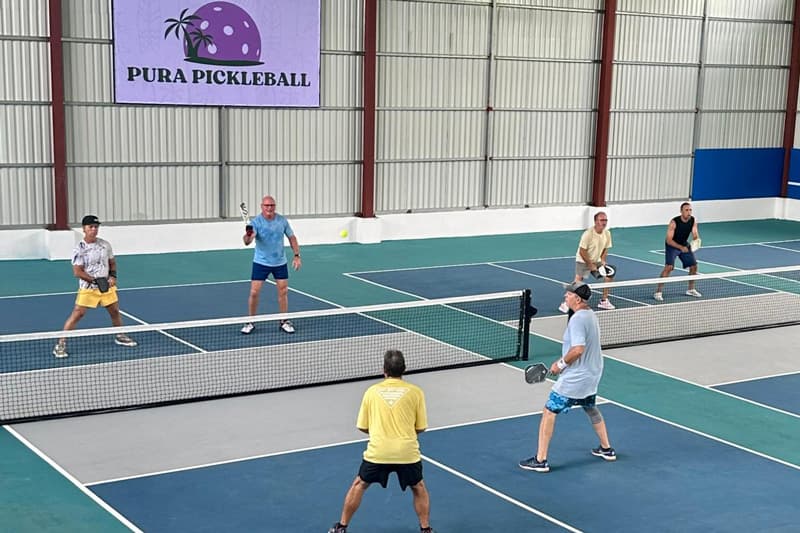
New Hong Kong Court-by-Court Pickleball Guide Lists Venues, Prices, Booking Tips
A refreshed, court-by-court pickleball guide for Hong Kong was published Feb. 23, 2026, promising updated addresses, price points and booking instructions across Hong Kong Island, Kowloon and the New Territories.
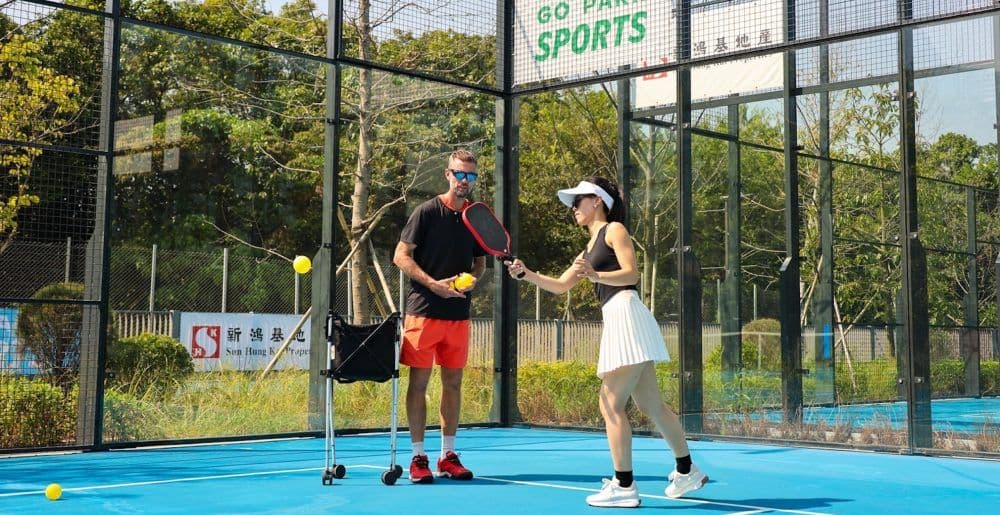
A refreshed Hong Kong court-by-court pickleball guide gives travelers, visiting coaches and retreat operators updated venue addresses, price points and booking instructions for Hong Kong Island, Kowloon and the New Territories, and was published Feb. 23, 2026. Below I lay out what the guide claims, what the packet contains, what’s missing, related official material found in the same file, and clear next steps for coaches, retreat operators and visiting players.
1. What the new pickleball guide says it is
The original report describes “a refreshed, practical court-by-court guide for pickleball in Hong Kong” published Feb. 23, 2026 and targeted at “travelers, visiting coaches and retreat operators.” It explicitly promises updated venue addresses, price points and booking instructions covering Hong Kong Island, Kowloon and the New Territories. The packet supplied to me contains that single-paragraph description but does not include the guide file itself or publisher contact details.
2. Geographic coverage: Hong Kong Island
The guide explicitly lists Hong Kong Island among its three geographic zones. The source material claims the island’s courts are updated with addresses and booking notes to help visiting coaches and retreat operators find and reserve slots quickly. The packet did not include the exact venue names or street addresses for any Hong Kong Island courts — that information must be retrieved from the guide or from venue operators before booking.
3. Geographic coverage: Kowloon
Kowloon is listed as a covered territory in the guide, and the report says price points and booking instructions for Kowloon courts are included. Because no venue list or price matrix is attached to the materials provided, confirm individual court access rules (public LCSD-managed courts vs private clubs) directly with operators to verify peak/off-peak rates and membership requirements.
4. Geographic coverage: New Territories
The guide specifically states it covers the New Territories alongside Hong Kong Island and Kowloon, indicating an intention to serve itineraries that span the whole territory. For retreat operators planning multi-site camps, the guide’s inclusion of the New Territories is useful — but the packet lacks the drill-down (court names, transport times, or maps), so factor in extra verification time when scheduling courts outside central districts.
5. What the guide promises about prices and booking instructions
The provided description promises updated “price points” and “booking instructions,” implying per-hour fees and reservation procedures are part of the guide’s remit. The packet does not supply concrete figures, booking platforms or step-by-step reservation procedures. To make operational use of the guide, you’ll need the publisher’s version to confirm whether pricing is per-hour, peak vs off-peak, membership-only, or subject to LCSD rules for government-managed courts.
6. Gaps in the packet — what’s missing and why it matters
Key elements are absent from the materials provided: the guide file itself, publisher name, venue list and addresses, concrete prices, photos or maps, and explicit booking platform names. Those gaps matter because retreat organizers and visiting coaches need confirmed court names, contact numbers, and booking steps (e.g., online LCSD reservation vs private-club booking) before they can commit deposits or itineraries. Treat the reported guide as a lead — not a booking tool — until you obtain the actual document.
- Obtain the guide file (PDF, webpage or print) from likely publishers such as the Hong Kong Pickleball Association, the Leisure and Cultural Services Department (LCSD), the Hong Kong Tourism Board, or private venue groups.
- Confirm publisher/author, full venue list, pricing (per hour; peak/off-peak; membership vs public) and booking platforms (phone, in-person, LCSD reservation system, third-party apps).
- Ask whether the guide includes restrictions (time slots, equipment hire, coach accreditation) and whether photos/maps can be reproduced for event flyers.
7. Immediate verification steps I recommend (practical outreach)
These follow-ups mirror the dossier’s recommended actions and are practical first steps before scheduling retreats or coach tours.
8. Who the guide is meant to help — operational implications
The guide targets “travelers, visiting coaches and retreat operators,” which signals an emphasis on portability (addresses, maps), predictable costs (price points) and reservation clarity (booking instructions). Retreat operators should treat the guide as a planning baseline: use it to shortlist courts, then validate availability windows, minimum booking durations and cancellation policies directly with venues. Visiting coaches should focus on booking lead times and any coach-accreditation requirements the guide may note.

9. The Judiciary’s Guide to Judicial Conduct is a separate document (do not conflate)
The packet also contains the Judiciary’s May 16, 2022 Guide to Judicial Conduct — a distinct publication unrelated to the pickleball guide unless the pickleball guide itself references it. The Judiciary guide is explicitly an update to a 2004 edition and addresses judicial standards; it was included in the same dossier but is not part of the sports guide. The separation is important: do not attribute privacy or recusal guidance from the Judiciary guide to the pickleball guide.
10. Key verbatim lines from the Judiciary guide (published May 16, 2022)
Use these lines only when discussing the Judiciary document itself. The packet quotes: “Under the Basic Law, the Hong Kong Judiciary is an independent judiciary that upholds the rule of law and administers justice without fear or favour, bias or prejudice. Judges and Judicial Officers (JJOs) hold positions of trust and responsibility with regard to the cases and other judicial work that they handle. We owe it as much to ourselves as to the public to observe at all times the highest standards of judicial conduct,” — Mr Andrew Cheung Kui-nung.
11. Judiciary guide: technology, privacy, social media and doxxing (verbatim summary)
The dossier includes the Judiciary excerpt: “The resulting revisions to the Guide are very much a product of the times. We continue to be well served by the Guiding Principles laid down in 2004, but new additions to the guidance in this edition are reflective of the information technology era in which we live. The need to respect privacy by avoiding unnecessary publication of personal details is now explicitly provided for, as well as entirely new material on social media and doxxing. The guidance on recusal and apparent bias has also been updated with reference to recent case law in this area.” Treat these statements as the Judiciary’s own summary of updates.
12. Judiciary guide: club and social facility guidance (paragraphs 113–114, verbatim)
The dossier reproduces paragraph 113 verbatim: “Judges should exercise care in relation to using clubs and other social facilities run by or for members of organisations such as the Police, the Independent Commission Against Corruption and Customs and Excise Department, which are, or whose members are, likely to appear frequently before the courts. Thus, while there is no objection to a judge occasionally accepting an invitation say, to dine at a police mess, it would be undesirable for him or her to frequent or become a member of such clubs or to be a regular user of such facilities.” Paragraph 114 appears as: “There is no prohibition against judges visiting pubs, bars, karaoke lounges or similar venues. But discretion should be exercised. [...]”
13. Working party and formal acknowledgement in the Judiciary guide
The Chief Justice thanked a Working Party including Mr Justice Jeremy Poon Shiu-chor, Mr Justice Thomas Au Hing-cheung, Mr Justice Godfrey Lam Wan-ho, His Honour Judge Justin Ko King-sau, and Mr So Wai-tak for carrying out the review; the Chief Justice’s statement is included in the packet as part of the Judiciary release. Use those names when referencing the Judiciary guide’s provenance.
14. Legal case metadata included in the packet (five entries)
The dossier also contains LexisNexis court-entry metadata that were provided as background for the Judiciary Guide’s “recent case law” references. These entries are separate items and include:
1. LQ (formerly known as LQ) v SF — citations 5 HKC 519; HKCU 4101; HKFC 123 — District Court matters heard 30 May 2025 and 14 July 2025 (His Honour Judge I Wong in Chambers).
2. THE LAW SOCIETY OF HONG KONG v SHAM YICK CHUN GARY & ORS — citations 5 HKC 626; HKCU 3742; HKCA 676 — Court of Appeal and Court of First Instance hearings in mid-2025 with judges including Hon Kwan VP, Barma JA and G Lam JA.
3. KWONG SIN YEE FLORENCE v CATHAY PACIFIC AIRWAYS LIMITED — citation 5 HKC 819; HKCU 4038; HKDC 1251 — District Court entry with hearing 7 May 2025 (Deputy District Judge J. Remedios).
4. CHEN JINHUI v WONG KAM SAN by guardian ad litem — citation 5 HKC 565; HKCU 3676; HKCA 646 — Court of Appeal matter with written submission dates in May–July 2025.
5. LAM PO YEE v YU SHUI MUI — citation 5 HKC 501; HKCU 3588; HKCFI 2734 — metadata included without further hearing details in the packet.
These case citations are included as-is in the dossier and explain the Judiciary Guide’s reference to “recent case law” — if you need to connect specific case law to the Guide’s recusal updates, retrieve the full reported judgments.
15. Practical checklist for retreat operators and visiting coaches (what to do next)
1. Request the guide from likely publishers: Hong Kong Pickleball Association, LCSD, Hong Kong Tourism Board, or private venue groups.
2. Once you obtain the guide, confirm venue names, street addresses, contact numbers, per-hour price points, peak/off-peak distinctions, and permitted booking platforms.
3. For government-managed courts, verify LCSD reservation rules; for private clubs, ask about membership or coach-accreditation requirements.
4. Test a booking flow on one representative venue (simulate or place a reservation) to confirm the instructions in the guide match reality.
These steps derive from the dossier’s suggested verification actions and will move you from planning to confirmed bookings.
16. Final note and forward-looking point
The Feb. 23, 2026 court-by-court pickleball guide promises a practical boost for players traveling with teams, coaches scheduling sessions and operators planning retreats across Hong Kong Island, Kowloon and the New Territories — but the packet provided to me is an announcement rather than the guide itself. Get the guide file, verify venue lists and price points, and cross-check booking steps with venue operators before locking in itineraries; meanwhile, the Judiciary’s 2022 Guide to Judicial Conduct remains a separate, fully documented update on judicial standards and privacy matters that surfaced in the same dossier and should not be conflated with the sports guide.
Know something we missed? Have a correction or additional information?
Submit a Tip