New Law Makes Selective Service Registration Automatic for All Eligible Men
A provision buried in the FY2026 defense bill shifts the burden of draft registration from individuals to the federal government, targeting full compliance by December 2026.
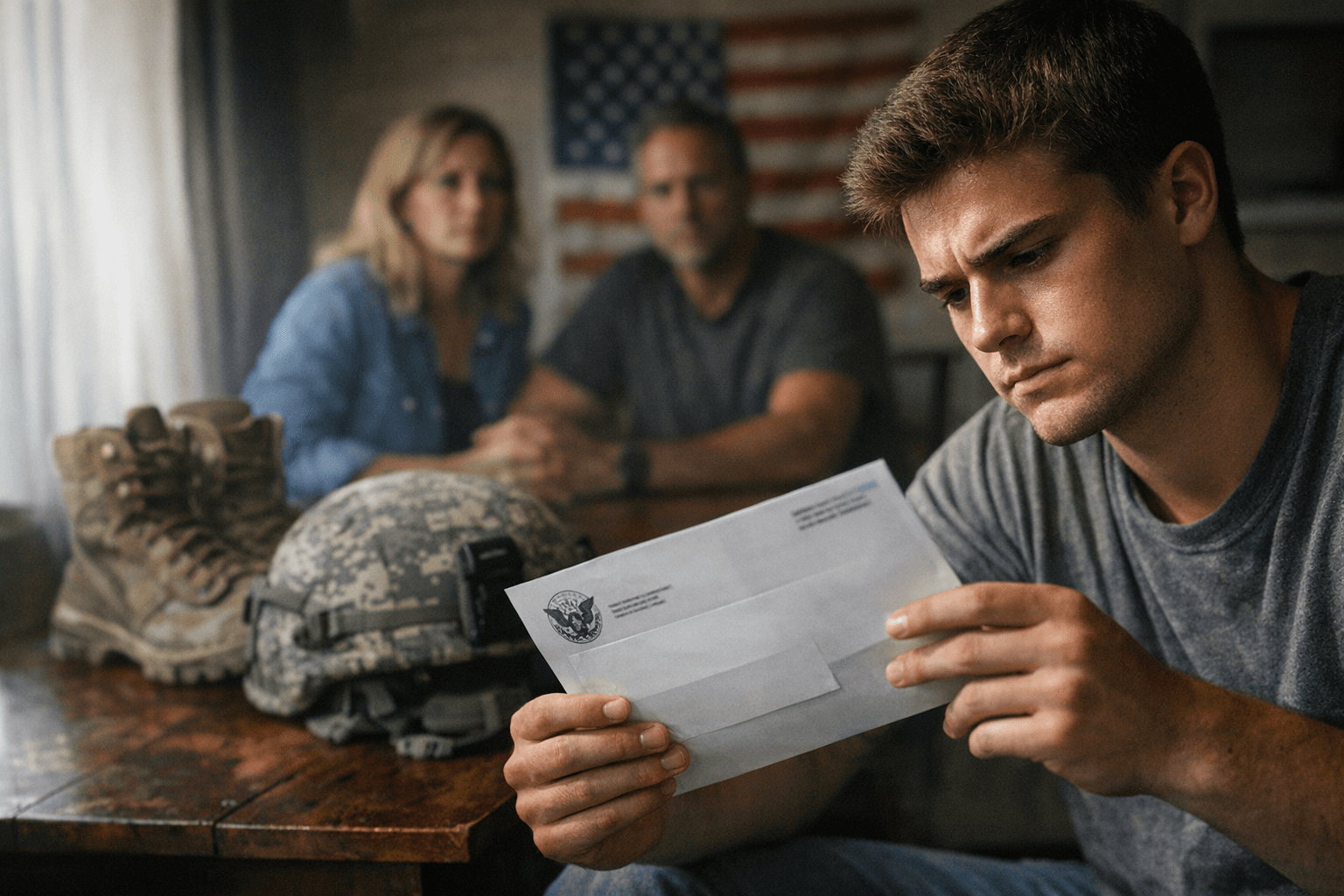
For the first time in the Selective Service System's modern history, the federal government will track down and register eligible men itself rather than waiting for them to comply. The shift, mandated by Section 535 of the fiscal year 2026 National Defense Authorization Act signed by President Donald Trump on December 18, 2025, transfers the registration burden away from individuals entirely. The Selective Service System has until December 2026 to have the new process operational, and submitted its proposed rule to the Office of Information and Regulatory Affairs on March 30, 2026.
Under the new framework, the Selective Service will draw on federal data sources, including Social Security Administration records, to identify, locate, and register all male U.S. residents, as assigned at birth, between the ages of 18 and 26. The agency has set a target implementation date of December 2026.
The change was driven in large part by a compliance problem that was getting worse. In 2024, only 81% of eligible men were registered, a three-percentage-point drop from 84% the prior year. The SSS and lawmakers attributed part of that decline to a 2022 decision to remove the Selective Service registration option from the FAFSA federal student aid application, which had served as a key enrollment channel. More than 60% of all registrations in 2023 flowed through state motor vehicle departments, which already operate automatic registration systems in 46 states and territories.
Rep. Chrissy Houlahan, a Pennsylvania Democrat who sponsored the automatic registration language in the NDAA, argued the change was both practical and a matter of fairness. "Making registration automatic not only saves taxpayer dollars by eliminating the need to advertise, but finally ensures that young men are not unknowingly penalized," she said. Houlahan also said the new system allows the SSS to "rededicate resources towards readiness and towards mobilization rather than towards education and advertising campaigns driven to register people."
Those penalties for non-registration are severe. Failing to register is a federal felony, punishable by a fine of up to $250,000 and up to five years in prison. Beyond criminal exposure, non-registrants can lose access to federal student loans, federal employment, and job training programs under the Workforce Innovation and Opportunity Act, with those consequences potentially lasting a lifetime.
Automatic registration does not mean automatic military service. In any future draft, men would be selected through a random lottery by birthday and year of birth, then individually evaluated for mental, physical, and moral fitness before induction. Critically, Congress would have to formally authorize a draft before one could take effect. No such plans exist. When asked about the possibility in March 2026, White House press secretary Karoline Leavitt said President Trump "keeps his options on the table."
The Selective Service's roots stretch back to the Selective Service Act of 1917, with the current governing statute, the Military Selective Service Act, passed in 1948. The U.S. last used the draft during the Vietnam War; the last inductee entered the Army on June 30, 1973. Registration was suspended in 1975, then reinstated in 1980 by President Jimmy Carter following the Soviet invasion of Afghanistan.
Not everyone believes the system should continue at all. In 2024, a bipartisan Senate coalition that included Oregon Democrat Ron Wyden, Kentucky Republican Rand Paul, and Wyoming Republican Cynthia Lummis introduced a bill to abolish Selective Service registration entirely. Paul was blunt in his argument: "It has been over 50 years since the draft was last used. I've long stated that if a war is worth fighting, Congress will vote to declare it and people will volunteer. This outdated government program no longer serves a purpose and should be eliminated permanently."
The new law also leaves unresolved the long-standing debate over whether women should be required to register. The Military Selective Service Act, as it currently stands, applies only to males as assigned at birth, and the FY2026 NDAA did not change that. While many other countries require women to register for national service or the draft, the U.S. has not taken that step, and the question remains politically contested. With automatic registration for men now set to take effect before the end of the year, the pressure on Congress to resolve the women's registration question may only intensify.
Sources:
Know something we missed? Have a correction or additional information?
Submit a Tip